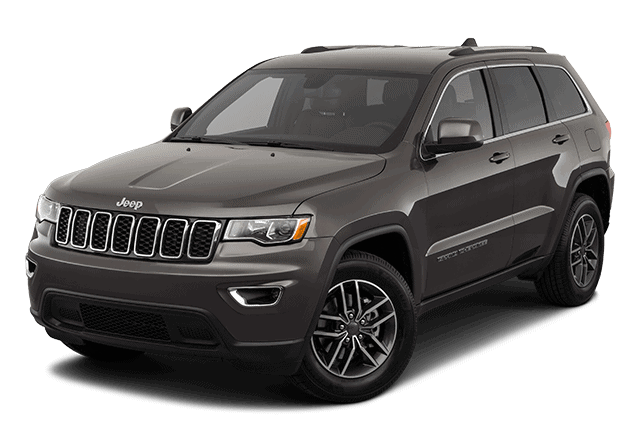
November 12, 2020 NHTSA CAMPAIGN NUMBER: 20V699000
EGR Cooler May Crack Internally
Combustion in the intake manifold can increase the risk of a fire.
NHTSA Campaign Number: 20V699
Manufacturer Chrysler (FCA US LLC)
Components ENGINE AND ENGINE COOLING
Potential Number of Units Affected 28,884
Summary
Chrysler (FCA US LLC) is recalling certain 2014-2019 Jeep Grand Cherokee vehicles equipped with the 3.0L EcoDiesel
engines. The Exhaust Gas Recirculation (EGR) cooler may crack and allow pre-heated vaporized coolant to enter the EGR system. This mixture may combust inside the intake manifold.
Remedy
FCA US LLC will notify owners, and dealers will replace the EGR cooler, free of charge. Dealers will also inspect and, as necessary, replace the intake manifold. Parts are not currently available. Owners were mailed an interim notification on December 21, 2021. A second notification will be mailed when parts are available, currently expected to be around March 11, 2021. The recall began March 11, 2021. Owners may contact FCA US LLC customer service at 1-800-853-1403. FCA US LLC’s number for this recall is W79.
Notes
Owners may also contact the National Highway Traffic Safety Administration Vehicle Safety Hotline at 1-888-327-4236 (TTY 1-800-424-9153), or go to www.safercar.gov.
Check if your Vehicle has a Recall
Revision 1 March 2021
Dealer Service Instructions for:
Safety Recall W79 / NHTSA 20V-699 Diesel EGR Cooler
NOTE: Added Inspection LOP
Remedy Available
| 2014 – 2019 | (WK) | Jeep Grand Cherokee |
NOTE: This recall applies only to the above vehicles equipped with a 3.0L Eco Diesel Engine (sales code EXF).
NOTE: Some vehicles above may have been identified as not involved in this recall and therefore have been excluded from this recall.
IMPORTANT: Some of the involved vehicles may be in dealer new vehicle inventory. Federal law requires you to complete this recall service on these vehicles before retail delivery. Dealers should also consider this requirement to apply to used vehicle inventory and should perform this recall on vehicles in for service. Involved vehicles can be determined by using the VIP inquiry process.
Subject
The Exhaust Gas Recirculation (EGR) cooler on about 34,000 of the above vehicles may be susceptible to thermal fatigue. Thermal fatigue may cause the cooler to crack internally over time. An EGR cooler with an internal crack will introduce pre-heated, vaporized coolant to the EGR system while the engine is running. In certain circumstances, this mixture interacts with other hydrocarbons and air in the system, potentially resulting in combustion within the intake manifold, which may lead to a vehicle fire. A vehicle fire may increase the risk of injury to occupants and persons outside of the vehicle, as well as property damage.
Repair
Replace the EGR cooler assembly. If Malfunction Indicator Lamp (MIL) is illuminated, inspect vehicle for either or both P0299 and P2D2F DTCs. If present, also perform section B. Intake Manifold Inspection and Leak Test. Replace Intake Manifold, if perforation is identified using test procedure.
NOTE: If a vehicle had a new Mopar provided replacement engine please inspect for a white or yellow mark on the front fuel pump cover (Figure Below). If a yellow or white mark is present it’s an indication the updated EGR cooler has been installed, NO EGR cooler replacement is necessary.
Alternate Transportation
Dealers should attempt to minimize customer inconvenience by placing the owner in a loaner vehicle if inspection determines that repair is required and the vehicle must be held overnight.
Parts Information
| Part Number | Description |
| CSNDVB12AA | Kit, EGR Cooler Installation |
| Each package contains the following components: | |
| Quantity | Description |
| 2 | Cooler Bushings with O-Rings |
| 2 | Gasket, ERG Tube |
| 2 | Nut |
| 2 | Bolt, Turbo to EGR Tube |
| 2 | O-Ring, Intake Support |
| 1 | Bolt, Torx Head |
| Part Number | Description |
| CSNDVB11AA | Kit, EGR Cooler |
| Each package contains the following components: | |
| Quantity | Description |
| 1 | Cooler, EGR |
| 68163849AB | Coolant, as required (MS12106) (MSQ of 4) (1 gallon services approximately 3 vehicles) |
NOTE: The following parts below are required only for vehicles that FAIL section A. Inspection procedure.
| Part Number | Description |
| CSNDVB13AA | Kit, High Pressure Fuel Lines |
| Each package contains the following components: | |
| Quantity | Description |
| 2 | Fuel Line, High Pressure |
| 3 | Fuel Lines |
| Part Number | Description |
| CSNDVB14AA | Kit, Intake Manifold and Gaskets |
| Each package contains the following components: | |
| Quantity | Description |
| 1 | Intake, Manifold |
Parts Return
No parts return required for this campaign.
Special Tools
The following special tools are required to perform this repair:
| wiTECH micro pod II |
| Laptop Computer |
| wiTECH Software |
| Remover-Installer, Fuel Rail Bolt |
| Kit, EELD and Accessory |
| Uview Airlift Cooling System Refill or equivilant |
Service Procedure
A. Inspection
- Start engine and observe if the “Malfunction Indicator Lamp” is illuminated.
a) Is the “Malfunction Indicator Lamp” (MIL) illuminated?
- NO – proceed to section Replace EGR Cooler, page 22.
- YES – proceed to step 2.
- Connect the wiTECH micro pod II to the vehicle data link connector.
- Place the ignition in the “RUN” position.
- Open the wiTECH 2.0 website.
- Enter your “User id” and “Password” and your “Dealer Code”, then select “Sign in” at the bottom of the screen. Click “Accept”.
- From the “Vehicle Selection” screen, select the vehicle to be updated.
- From the “Topology” tab, select the “PCM” module icon.
- Click “View DTCs”.
- Does the vehicle have one or both of the following DTC’s below?
- P0299 – Turbocharger Underboost Condition
- P2D2F – Cold Start Turbocharger Underboost Condition
YES – Proceed to section B. Intake Manifold Inspection and Leak Test
NO – Advise customer of any DTC(s) and proceed with section E. Replace EGR Cooler, page 22.
B. Intake Manifold Inspection and Leak Test
- Position the passenger seat fully forward.
- Open the battery access cover located under the passenger front seat and disconnect the negative battery cable (Figure 1).
NOTE: Depending on the type of smoke machine used, it may be necessary to reconnect the battery cable to provide 12v power to the smoke machine.
- Remove the engine cover (Figure 2).
- Remove TMAP sensor (boost pressure sensor) from the back of the intake and inspect the tip for signs of melting (Figure 3 and Figure 4).
Does the sensor show signs of melting?
- YES – Go to section Intake Manifold Removal.
- NO – Go to Step 5.
- Insert the smoke machine hose into the TMAP hole of the intake manifold and allow the intake to build up smoke (Figure 5).
- Visually check the air intake system for any smoke leaks. Especially around the intake manifold. You should be able to see large amounts of smoke escaping from around or under the intake manifold if perforation is present.
- Inspect the cooler, and all hoses for source of the leak. Was the leak isolated to the Intake Manifold?
- Yes – Proceed to section Intake Manifold Removal.
- No – Further diagnosis and repair are required. Repair as necessary per normal, published repair and warranty guidelines.
C. Intake Manifold Removal
- Disconnect the electrical connector from the Mass Air Flow (MAF) sensor
- Loosen clamp and disconnect the intake air tube from air cleaner housing (Figure 6).
- Unclip the top of the Air Cleaner Housing and remove the top housing (Figure 6).
- Loosen the air intake clamp at the turbocharger intake at the back of the engine and remove the turbocharger air intake tube (Figure 6).
NOTE: Air intake clamp loosening is a blind operation.
- Remove the Crank Case Ventilation (CCV) hose from the oil vapor separator cover. (During removal of the CCV hose do NOT disconnect CCV hose at the Air Tube (Figure 7).
- Disconnect the (CCV) hose heater wire harness connector (Figure 8).
NOTE: Disconnecting the electrical connector is a blind operation, it’s located near the turbo air inlet elbow.
- Remove the right fuel injector silencer pad (Figure 9).
- Remove the nut securing the left Charge Air Cooler (CAC) hose (Figure 9).
- Loosen the tube clamp and disconnect the CAC hose at the resonator (Figure 9).
- Release the retaining lock (1) and disconnect the CAC (2) hose from the turbocharger elbow and remove the hose (Figure 9).
- Remove the EGR bolts (2) at the intake manifold (Figure 11).
- Remove the EGR tube and DISCARD the metal gasket (Figure 10).
- Disconnect the turbocharger outlet temperature sensor wire harness connector (Figure 12).
NOTE: It is recommended to use a 5-inch-long stem 5mm ball-end Hex Bit socket to assist in removing the turbocharger outlet elbow bolts.
- Remove the 2 bolts securing the wire harness loom (Figure 14).
- Remove the bolt that secures the fuel cross-over line to the intake manifold (Figure 15).
- Remove the fuel rail cross-over line and DISCARD the line (Figure 15).
NOTE: The crossover fuel tube is a onetime use only. The fuel tube must be discarded and a NEW tube must be installed.
- Remove the 4 bolts and the fuel injection pump blocker shield (Figure 16).
- Unscrew the union nuts and remove the left side high pressure fuel supply tube.
- Disconnect the EGR Vacuum Solenoid harness electrical connector (1) (Figure 17).
- Remove the 2 fasteners from the EGR solenoid (Figure 17).
- Disconnect the inlet air temperature sensor wire harness connector (Figure 18).
- Disconnect the wire harness connector next to EGR air flow control valve (Figure 19).
- Remove the bolts and position the EGR airflow control valve forward to access the wire harness connector (Figure 20).
- Disconnect the following left side wire harness connectors:
- Swirl valve wire (left front).
- Fuel pressure solenoid.
- Oil vapor pressure sensor.
- Camshaft position sensor.
- Fuel injectors.
- Turbocharger actuator.
- Glow plugs.
- Oil pressure sensor.
- Oil Temp sensor.
- Install protective caps on the fuel injectors and the fuel rail.
- Disconnect the following right side wire harness connectors:
- Swirl valve wire (right rear).
- Fuel pressure sensor.
- Glow plugs.
- Fuel injectors.
- Remove the fasteners securing the wire harness to right cylinder head cover and position aside the wire harness.
- Using a shop vacuum, vacuum around the perimeter of the intake manifold.
- Using the Remover-Installer, Fuel Rail Bolt 2025400090 remove the bolts and the left fuel rail (Figure 21).
- Remove the 11 bolts and the intake manifold.
Tip: Use shallow swivel socket to aid in bolt removal.
CAUTION: Do Not rest the intake manifold on the swirl valve actuator. Care must be taken when handling the swirl valve assembly.
- Transfer the intake manifold wiring harness onto the NEW intake manifold (Figure 22).
- Continue to section D. Intake Manifold Installation.
D. Intake Manifold Installation.
- Clean the intake gasket sealing surfaces.
- Install the intake manifold and tighten the bolts finger tight.
- Using the tightening sequence shown, tighten the bolts to 12 N·m (9 ft. lbs.) (Figure 23).
NOTE: Fuel tubes are a one-time only use and must be replaced anytime they have been removed.
- Install the left side fuel rail.
a. Install the fuel rail. Using the Remover-Installer, Fuel Rail Bolt 2025400090, tighten the bolts to 25 N·m (18 ft. lbs.) (Figure 21).
- Position the wire harness to the engine and securely tighten the fasteners securing the wire harness to right cylinder head cover.
- Connect the following right side wire harness connectors:
- Swirl valve wire (right rear).
- Fuel pressure sensor.
- Glow plugs.
- Fuel injectors.
- Install the engine wire harness assembly to the intake manifold and push down to seat the wire harness retainers, and tighten the bolts to 11 N·m (8 ft. lbs.) (Figure 14).
- Connect the following left side wire harness connectors:
- Swirl valve wire (left front).
- Fuel pressure solenoid.
- Oil vapor pressure sensor.
- Camshaft position sensor.
- Fuel injectors.
- Turbocharger actuator.
- Glow plugs.
- Oil pressure sensor.
- Oil temp sensor.
- Remove the protective caps on the fuel injectors and the fuel rail.
NOTE: Use a backing wrench on the fuel injector when tightening the union nut.
NOTE: The fuel tubes are a one-time only use and must be replaced anytime they have been removed.
- Install the NEW left side fuel tubes and tighten the union nuts finger tight.
- Tighten the union nuts at the fuel rail to 5 N·m (44 in. lbs.) plus an additional 75 degrees turn.
- Tighten the union nuts at the fuel injectors to 11 N·m (8 ft. lbs.) plus an additional 75 degrees turn.
NOTE: Use a backing wrench on the fuel injector when tightening the union nut.
WARNING: Observe the following precautions when working on fuel systems: No sparks, open flames or smoking. Avoid inhaling and swallowing fuel. Avoid eye and skin contact with fuel. Pour fuels only into suitable and appropriately marked containers. Wear protective clothing. Failure to observe these precautions may result in fire, explosion, property damage, and serious or fatal injury.
WARNING: High-pressure lines deliver diesel fuel under extreme pressure from the injection pump to the fuel injectors. This may be as high as 2000 bar (29,008 psi). Use extreme caution when inspecting for high-pressure fuel leaks. Fuel under this amount of pressure can penetrate skin causing personal injury or death. Inspect for high-pressure fuel leaks with a sheet of cardboard. Wear safety goggles and adequate protective clothing when servicing fuel system.
- Install the EGR airflow control valve and tighten the bolts to (9 N·m 80 in. lbs.). (Figure 20).
- Connect the inlet air temperature sensor wire harness connector (Figure 18).
- Install the EGR bypass solenoid and tighten the bolts to 9 N·m (80 in. lbs.) (Figure 17).
- Connect the wire harness connector next to EGR air flow control valve (Figure 19).
- Install the NEW left high pressure fuel tube and tighten union nuts finger tight:
- Tighten the union nut at the fuel rail to 5 N·m (44 in. lbs.) plus an additional 75 degrees turn.
- Tighten the union nut at the fuel pump to 11 N·m (8 ft. lbs.) plus an additional 75 degrees turn.
NOTE: Fuel tubes are a one-time only use and must be replaced anytime they have been removed.
- Install the fuel line bracket and tighten the nut to 8 N·m (71 in. lbs.) (Figure 15).
- Install the fuel injection pump blocker shield and tighten the bolts to 25 N·m (18 ft. lbs.) (Figure 16.)
- Install the NEW cross-over fuel tube and tighten the union nuts finger tight (Figure 15).
- Tighten the union nuts to 5 N·m (44 in. lbs.) plus an additional 75 degrees turn.
- Install the bolt securing the fuel cross over line and tighten to 11 N·m (8 ft. lbs.) (Figure 15).
- Be sure the O-ring seal is seated in the turbocharger outlet flange.
- Install the turbocharger outlet elbow and tighten the bolts to 11 N·m (8 ft. lbs.).
- Connect the outlet temperature sensor wire harness connector.
- Connect the boost pressure sensor wire harness connector (TMAP).
- Install the left fuel injector silencer.
- Connect the Charge Air Cooler (CAC) hose to the turbocharger elbow (Figure 12).
- Install the CAC hose and securely tighten the clamp (Figure 9).
- Install the nut securing the left CAC hose and tighten securely (Figure 9).
- Proceed to section Replace EGR Cooler
E. Replace EGR Cooler
- Disconnect and isolate the negative battery cable (Figure 24).
- Remove coolant pressure cap (Figure 25).
- Raise and support the vehicle.
- If equipped: remove the front skid plate (Figure 26).
- Use the following steps to drain the cooling system.
NOTE: It is not necessary to completely drain the cooling system.
WARNING: Make sure engine cooling system is cool before servicing. Do not remove any clamps or hoses, pressure cap, or open the radiator draincock. When the system is hot and under pressure serious burns from coolant can occur.
NOTE: DO NOT WASTE reusable coolant. If the solution is clean, drain the coolant into a clean container for reuse.
NOTE: When servicing the cooling system, it is essential that coolant does not drip onto the accessory drive belts and/or pulleys. Shield the belts with shop towels before working on the cooling system. If coolant contacts the belts or pulleys, flush both with clean water.
a. Position a clean drain pan under draincock location.
b. Open radiator draincock located at the lower left side of radiator. Turn draincock counterclockwise until it stops and allow to drain (Figure 27).
c. Tighten the radiator draincock (Figure 27).
- If equipped: Install the front skid plate and tighten the bolts to 18 N·m (13 ft. lbs.).
- Lower the vehicle.
- Remove the engine cover (Figure 28).
- Remove the right side fuel injector silencer (Figure 29).
- Remove the (2) EGR tube bolts (Figure 30).
- Remove and discard the metal gasket (Figure 30).
- Disconnect EGR temperature sensor wire harness connector (Figure 32).
- Disconnect the EGR valve wire harness connector (Figure 33).
- Disconnect the EGR cooler vacuum bypass hose (Figure 34).
- Remove the bolts and the tube from the EGR cooler (Figure 35).
- Remove the top bolt at the rear of the EGR cooler bypass valve support bracket (Figure 36).
NOTE: Do not remove the lower bolt from the support bracket.
- Remove the two nuts and bolt and the EGR cooler assembly (Figure 37).
- Remove and DISCARD the O-ring seals (Figure 38).
- Clean the O-ring sealing surfaces.
- Lubricate the (2) NEW O-ring seals attached to EGR cooler bushings and install them onto the EGR cooler ports.
NOTE: Only use clean coolant to lubricate the O-rings and avoid using any petroleum products on the O-rings.
- Install the NEW EGR cooler assembly and tighten the nuts and bolt to 25 N·m (18 ft.lbs.).
- Install the NEW bolt at the rear EGR cooler bypass valve support bracket and tighten to 25 N·m (18 ft. lbs.) (Figure 36).
- Install the exhaust tube and NEW metal gasket and tighten the bolts to 25 N·m (18 ft. lbs.) (Figure 35).
- Connect the EGR cooler vacuum bypass hose (Figure 34).
IMPORTANT
NOTE: The rubber sleeve on the vacuum hose must be inserted to the full depth of the slot on top of the vacuum actuator. To facilitate insertion use P80 or a similar lubricant (soapy water).
- Connect the EGR valve wire harness connector (Figure 33).
- Connect EGR temperature sensor wire harness connector (Figure 32).
- Using the following steps install the EGR tube.
- Clean all gasket sealing areas.
- Install a NEW EGR tube adapter pipe metal gasket (Figure 30).
- Install the EGR tube to the intake manifold and tighten the bolts to 11 N·m (8 ft. lbs.).
- Install the fuel injector silencer (Figure 29).
- Install the engine cover.
- Connect the negative battery cable.
- Continue to section Fill the Cooling System.
F. Fill the Cooling System
- Use the following steps to evacuate air and refill the cooling system.
a. Using Refractometer 8286 or equivalent, following the manufacturer’s instructions, test the coolant freeze point (Figure 39).
- If the coolant tested is between -25°F and – 50°F (-31°C and -45°C) and is free of contamination, reuse the original the coolant.
- If the coolant tested is contaminated, refill the cooling system with new
- If the coolant tested is not between -25°F and – 50°F (-31°C and -45°C) and is free of contamination, use the chart below to add the appropriate amount of new coolant prior to completely refilling the cooling system with the remaining original coolant (Figure 40).
| COOLANT ADJUSTMENT CHART TO MAINTAIN RECOMMENDED FREEZE POINT PROTECTION | ||||||||||||||||||
| Freeze Point (°F) vs. Percent Premix Coolant | ||||||||||||||||||
| EXAMPLE: FOR A VEHICLE WITH A SINGLE RADIATOR AND A -20°F FREEZE POINT, 4 QUARTS OF NEW PREMIXED COOLANT MUST REPLACE 4 QUARTS OF ORIGNAL COOLANT PRIOR TO COMPLETING THE REFILL PROCEDURE. | Acceptable Concentrations | |||||||||||||||||
| Freeze Point, °F1 | +32 | +25 | +20 | +15 | +10 | +5 | 0 | -5 | -10 | -15 | -20 | -25 | -30 | -35 | -50 | -65 | -75 | -84 |
| EG Content, vol% | 0% | 10% | 16% | 21% | 25% | 29% | 33% | 36% | 39% | 42% | 44% | 46% | 48% | 50% | 55% | 60% | 65% | 70% |
| Drain Coolant and Add New Premixed Coolant (Quarts) | ||||||||||||||||||
| Single Radiator | 20 | 18 | 16 | 14 | 14 | 12 | 10 | 8 | 8 | 6 | 4 | 6 | 10 | 12 | ||||
| Dual Radiators | 24 | 22 | 20 | 18 | 16 | 14 | 12 | 10 | 8 | 6 | 6 | 8 | 12 | 14 | ||||
| 1) The specified refractometer shows freeze point (FP) values down to ~-84°F. For FPs below -84F (off the scale), replace all of the coolant with New Premixed Coolant.
2) 1 Gallon = 4 Quarts or 3.8 Liters | ||||||||||||||||||
Figure 40 – Coolant Adjustment Chart
NOTE: Evacuating or purging air from the cooling system involves the use of a pressurized air operated vacuum generator. The vacuum created allows for a quick and complete coolant refilling while removing any airlocks present in the system components.
WARNING: Antifreeze is an ethylene glycol base coolant and is harmful if swallowed or inhaled. If swallowed, drink two glasses of water and induce vomiting. If inhaled, move to fresh air area. Seek medical attention immediately. Do not store in open or unmarked containers. Wash skin and clothing thoroughly after coming in contact with ethylene glycol. Keep out of reach of children. Dispose of glycol based coolant properly. Contact your dealer or government agency for location of collection center in your area. Do not open a cooling system when the engine is at operating temperature or hot under pressure; personal injury can result. Avoid radiator cooling fan when engine compartment related service is performed; personal injury can result.
WARNING: WEAR APPROPRIATE EYE AND HAND PROTECTION WHEN PERFORMING THIS PROCEDURE.
NOTE: The service area where this procedure is performed should have a minimum shop air requirement of 80 PSI (5.5 bar) and should be equipped control should be set to the heat position (ignition may need to be turned to with an air dryer system.
NOTE: For best results, the radiator should be empty. The vehicle’s heater the on position but do not start the motor).
b. Refer to the Mopar Essential Tools and Service Equipment Tool, UView Airlift™ Cooling System Refill 399-550000 or equivalent and follow tool’s operating manual for specific assembly steps.
c. Choose an appropriate adapter cone that will fit the vehicle’s radiator filler neck or reservoir tank.
d. Attach the adapter cone to the vacuum gauge.
e. Make sure the vacuum generator/venturi ball valve is closed and attach an airline hose (minimum shop air requirement of 80 PSI (5.5 bar) to the vacuum generator/venturi.
f. Position the adaptor cone/vacuum gauge assembly into the radiator filler neck or reservoir tank. Ensure that the adapter cone is sealed properly.
g. Connect the vacuum generator/venturi to the positioned adaptor cone/vacuum gauge assembly.
h. Open the vacuum generator/venturi ball valve.
NOTE: Do not bump or move the assembly as it may result in loss of vacuum. Some radiator overflow hoses may need to be clamped off to obtain vacuum.
i. Let the system run until the vacuum gauge shows a good vacuum through the cooling system. Refer to the tool’s operating manual for appropriate pressure readings.
NOTE: If a strong vacuum is being created in the system, it is normal to see the radiator hoses collapse.
j. Close the vacuum generator/venturi ball valve.
k. Disconnect the vacuum generator/venturi and airline from the adaptor cone/vacuum gauge assembly.
l. Wait approximately 20 seconds, if the pressure readings do not move, the system has no leaks. If the pressure readings move, a leak could be present in the system and the cooling system should be checked for leaks and the procedure should be repeated.
m. Place the tool’s suction hose into the coolant’s container.
NOTE: Ensure there is a sufficient amount of coolant, mixed to the required strength/protection level available for use. For best results and to assist the refilling procedure, place the coolant container at the same height as the radiator filler neck. Always draw more coolant than required. If the coolant level is too low, it will pull air into the cooling system which could result in airlocks in the system.
n. Connect the tool’s suction hose to the adaptor cone/vacuum gauge assembly.
o. Open the suction hose’s ball valve to begin refilling the cooling system.
p. When the vacuum gauge reads zero, the system is filled.
NOTE: On some remote pressurized tanks, it is recommended to stop filling when the proper level is reached.
q. Close the suction hose’s ball valve and remove the suction hose from the adaptor cone/vacuum gauge assembly.
r. Remove the adaptor cone/vacuum gauge assembly from the radiator filler neck or reservoir tank.
s. With heater control unit in the HEAT position, operate the engine with container cap in place.
t. After engine has reached normal operating temperature, shut the engine off and allow it to cool. When engine is cooling down, coolant will be drawn into the radiator from the pressure container.
u. Add coolant to the recovery bottle/container as necessary. Only add coolant to the container when the engine is cold. Coolant level in a warm engine will be higher due to thermal expansion. Add necessary coolant to raise container level to the COLD MINIMUM mark after each cool down period.
v. Once the appropriate coolant level is achieved, attach the radiator cap or reservoir tank cap.
- Start and warm the engine until cooling fan comes on and check for leaks.
- Complete Proof of Corrections Form for California residents.
- Return the vehicle to the customer.
SEOCONTENT-START
This notice applies to your vehicle,
W79/NHTSA 20V-699
YOUR SCHEDULING OPTIONS
1. Visit recalls.mopar.com to sign up
for email or SMS notifications for
when remedy parts become
available. You will be asked to
provide your Vehicle Identification
Number (VIN), provided above
2. Scan below using your smartphone
or tablet to sign up to be notified
when remedy parts become
available
3. Wait for FCA US to contact you
again, by mail, with a follow-up
recall notice when remedy parts are
available
4. Call the FCA Recall Assistance
Center at 1-800-853-1403. An
agent can sign you up to be notified
when remedy parts become
available, or answer any other
questions you may have
DEALERSHIP INSTRUCTIONS
Please reference Safety Recall W79.
IMPORTANT SAFETY RECALL
Diesel EGR Cooler
Dear [Name],
This notice is sent to you in accordance with the National Traffic and Motor Vehicle Safety
Act.
FCA US has decided that a defect, which relates to motor vehicle safety, exists in certain
[2014 – 2019 Model Year (WK) Jeep Grand Cherokee] vehicles.
WHY DOES MY VEHICLE NEED REPAIRS?
The Exhaust Gas Recirculation (EGR) cooler on your vehicle [1] may be susceptible to thermal
fatigue. Thermal fatigue may cause the cooler to crack internally over time. An EGR cooler
with an internal crack will introduce pre-heated, vaporized coolant to the EGR system while
the engine is running. In certain circumstances, this mixture interacts with other hydrocarbons
and air in the system, potentially resulting in combustion within the intake manifold, which
may lead to a vehicle fire. A vehicle fire may increase the risk of injury to occupants and
persons outside of the vehicle, as well as property damage.
HOW DO I RESOLVE THIS IMPORTANT SAFETY ISSUE?
The remedy for this condition is not currently available. We are making every effort to
finalize the remedy as quickly as possible, and will service your vehicle free of charge (parts
and labor). In the interim, customers are advised to monitor their coolant level: if
consistently low, they are advised to contact their dealers.
FCA US will contact you again, by mail, with a follow-up recall notice when the remedy is
available. Once you receive your follow-up notice, simply contact your Chrysler, Jeep®,
Dodge or RAM dealer right away to schedule a service appointment [2]. Additional options for
your next steps are included on the left side of this notification. We appreciate your patience.
WHAT IF I ALREADY PAID TO HAVE THIS REPAIR COMPLETED?
If you have already experienced this specific condition and have paid to have it repaired, you
may visit www.fcarecallreimbursement.com to submit your reimbursement request online [3].
Once we receive and verify the required documents, reimbursement will be sent to you within
60 days. If you have had previous repairs performed and/or already received reimbursement,
you may still need to have the recall repair performed.
We apologize for any inconvenience, but are sincerely concerned about your safety. Thank
you for your attention to this important matter.
Customer Assistance/Field Operations
FCA US LLC
VEHICLE PICTURE
[Model Year and Model]
VIN XXXXXXXXXXXXXXXXX
LOGO
QR Code
[1] If you no longer own this vehicle, please help us update our records. Call the FCA Recall Assistance Center at 1-800-853-1403 to update your information.
[2] If your dealer fails or is unable to remedy this defect without charge and within a reasonable time, you may submit a written complaint to the Administrator, National
Highway Traffic Safety Administration, 1200 New Jersey Ave., S.E., Washington, DC 20590, or you can call the toll-free Vehicle Safety Hotline at 1-888-327-4236
(TTY 1-800-424-9153), or go to safercar.gov.
[3] You can also mail in your original receipts and proof of payment to the following address for reimbursement consideration: FCA Customer Assistance, P.O. Box 21-
8004, Auburn Hills, MI 48321-8007, Attention: Recall Reimbursement.
Note to lessors receiving this recall notice: Federal regulation requires that you forward this recall notice to the lessee within 10 days.
Mr. Mrs. Customer
1234 Main Street
Hometown, MI 48371
***********************************************************************************************************
11/19/2020
_____________________________________________________________________
New Safety Recall Advanced Communication – W79
FCA US LLC (FCA US) has announced a safety recall on certain 2014 through 2019 Model Year (WK) Jeep® Grand Cherokee vehicles equipped with a 3.0L Eco Diesel engine.
VINs identified as being involved in this campaign are currently live and searchable. Stop sale is in effect for the above-identified vehicles.
Vehicles impacted by a stop sale are eligible for reimbursement allowance through the Recall Floorplan Reimbursement Policy (RFPRP), which can be requested upon recall claim submission.
REASON FOR THIS SAFETY RECALL
Some of the above vehicles may have been built with Exhaust Gas Recirculation (EGR) coolers that are susceptible to thermal fatigue. Thermal fatigue may cause the cooler to crack internally over time. An EGR cooler with an internal crack will introduce pre-heated, vaporized coolant to the EGR system while the engine is running. In certain circumstances, this mixture interacts with other hydrocarbons and air in the system, potentially resulting in combustion within the intake manifold, which may lead to a vehicle fire. A vehicle fire may increase the risk of injury to occupants and persons outside of the vehicle, as well as property damage.
SERVICE ACTION
FCA US will conduct a voluntary safety recall to replace the Exhaust Gas Recirculation (EGR) cooler and if necessary inspect the intake manifold for leakage. Dealers will be notified of the launch of this safety recall by way of established communication methods. This recall is estimated to launch in the 1st Quarter of 2021.
We ask that you please take the time to ensure that your personnel are aware of this communication and are prepared to execute a customer friendly process for inquiries regarding involved vehicles.
Customer Services Field Operations
FCA US LLC IMPORTANT: Some of the involved vehicles may be in dealer new vehicle inventory. Federal law requires you to complete this recall service on these vehicles before retail delivery. Violation of this requirement by a dealer could result in a civil penalty of up to $21,000 per vehicle. Involved vehicles can be determined by using the VIP inquiry process.
***********************************************************************************************************
11/19/2020
_____________________________________________________________________
New Safety Recall Advanced Communication – W79
FCA US LLC (FCA US) has announced a safety recall on certain 2014 through 2019 Model Year (WK) Jeep® Grand Cherokee vehicles equipped with a 3.0L Eco Diesel engine.
VINs identified as being involved in this campaign are currently live and searchable. Stop sale is in effect for the above-identified vehicles.
Vehicles impacted by a stop sale are eligible for reimbursement allowance through the Recall Floorplan Reimbursement Policy (RFPRP), which can be requested upon recall claim submission.
REASON FOR THIS SAFETY RECALL
Some of the above vehicles may have been built with Exhaust Gas Recirculation (EGR) coolers that are susceptible to thermal fatigue. Thermal fatigue may cause the cooler to crack internally over time. An EGR cooler with an internal crack will introduce pre-heated, vaporized coolant to the EGR system while the engine is running. In certain circumstances, this mixture interacts with other hydrocarbons and air in the system, potentially resulting in combustion within the intake manifold, which may lead to a vehicle fire. A vehicle fire may increase the risk of injury to occupants and persons outside of the vehicle, as well as property damage.
SERVICE ACTION
FCA US will conduct a voluntary safety recall to replace the Exhaust Gas Recirculation (EGR) cooler and if necessary inspect the intake manifold for leakage. Dealers will be notified of the launch of this safety recall by way of established communication methods. This recall is estimated to launch in the 1st Quarter of 2021.
We ask that you please take the time to ensure that your personnel are aware of this communication and are prepared to execute a customer friendly process for inquiries regarding involved vehicles.
Customer Services Field Operations
FCA US LLC IMPORTANT: Some of the involved vehicles may be in dealer new vehicle inventory. Federal law requires you to complete this recall service on these vehicles before retail delivery. Violation of this requirement by a dealer could result in a civil penalty of up to $21,000 per vehicle. Involved vehicles can be determined by using the VIP inquiry process.
This notice applies to your vehicle,
W79/NHTSA 20V-699
YOUR SCHEDULING OPTIONS
1. Visit recalls.mopar.com to sign up for email or SMS notifications for when remedy parts become available. You will be asked to provide your Vehicle Identification Number (VIN), provided above
2. Scan below using your smartphone
or tablet to sign up to be notified when remedy parts become available 3. Wait for FCA US to contact you again, by mail, with a follow-up recall notice when remedy parts are available 4. Call the FCA Recall Assistance Center at 1-800-853-1403. An agent can sign you up to be notified when remedy parts become available, or answer any other questions you may have DEALERSHIP INSTRUCTIONS Please reference Safety Recall W79.
IMPORTANT SAFETY RECALL Diesel EGR Cooler Dear [Name],
This notice is sent to you in accordance with the National Traffic and Motor Vehicle Safety Act. FCA US has decided that a defect, which relates to motor vehicle safety, exists in certain [2014 – 2019 Model Year (WK) Jeep Grand Cherokee] vehicles. WHY DOES MY VEHICLE NEED REPAIRS?
The Exhaust Gas Recirculation (EGR) cooler on your vehicle [1] may be susceptible to thermal fatigue. Thermal fatigue may cause the cooler to crack internally over time. An EGR cooler with an internal crack will introduce pre-heated, vaporized coolant to the EGR system while the engine is running. In certain circumstances, this mixture interacts with other hydrocarbons and air in the system, potentially resulting in combustion within the intake manifold, which may lead to a vehicle fire. A vehicle fire may increase the risk of injury to occupants and persons outside of the vehicle, as well as property damage. HOW DO I RESOLVE THIS IMPORTANT SAFETY ISSUE? The remedy for this condition is not currently available. We are making every effort to finalize the remedy as quickly as possible, and will service your vehicle free of charge (parts and labor). In the interim, customers are advised to monitor their coolant level: if consistently low, they are advised to contact their dealers. FCA US will contact you again, by mail, with a follow-up recall notice when the remedy is available. Once you receive your follow-up notice, simply contact your Chrysler, Jeep®,
Dodge or RAM dealer right away to schedule a service appointment [2]. Additional options for your next steps are included on the left side of this notification. We appreciate your patience. WHAT IF I ALREADY PAID TO HAVE THIS REPAIR COMPLETED?
If you have already experienced this specific condition and have paid to have it repaired, you may visit www.fcarecallreimbursement.com to submit your reimbursement request online [3].
Once we receive and verify the required documents, reimbursement will be sent to you within 60 days. If you have had previous repairs performed and/or already received reimbursement, you may still need to have the recall repair performed. We apologize for any inconvenience, but are sincerely concerned about your safety. Thank you for your attention to this important matter. Customer Assistance/Field Operations FCA US LLC VEHICLE PICTURE [Model Year and Model]
VIN XXXXXXXXXXXXXXXXX
LOGO QR Code
[1] If you no longer own this vehicle, please help us update our records. Call the FCA Recall Assistance Center at 1-800-853-1403 to update your information. [2] If your dealer fails or is unable to remedy this defect without charge and within a reasonable time, you may submit a written complaint to the Administrator, National Highway Traffic Safety Administration, 1200 New Jersey Ave., S.E., Washington, DC 20590, or you can call the toll-free Vehicle Safety Hotline at 1-888-327-4236 (TTY 1-800-424-9153), or go to safercar.gov. [3] You can also mail in your original receipts and proof of payment to the following address for reimbursement consideration: FCA Customer Assistance, P.O. Box 21-
8004, Auburn Hills, MI 48321-8007, Attention: Recall Reimbursement. Note to lessors receiving this recall notice: Federal regulation requires that you forward this recall notice to the lessee within 10 days. Mr. Mrs. Customer 1234 Main Street Hometown, MI 48371
***********************************************************************************************************
11/13/2020
_____________________________________________________________________
New Safety Recall Advanced Communication – W79
FCA US LLC (FCA US) has announced a safety recall on certain 2014 through 2019 Model Year (WK) Jeep® Grand Cherokee vehicles equipped with a 3.0L Eco Diesel engine.
REASON FOR THIS SAFETY RECALL
Some of the above vehicles may have been built with Exhaust Gas Recirculation (EGR) coolers that are susceptible to thermal fatigue. Thermal fatigue may cause the cooler to crack internally over time. An EGR cooler with an internal crack will introduce pre-heated, vaporized coolant to the EGR system while the engine is running. In certain circumstances, this mixture interacts with other hydrocarbons and air in the system, potentially resulting in combustion within the intake manifold, which may lead to a vehicle fire. A vehicle fire may increase the risk of injury to occupants and persons outside of the vehicle, as well as property damage.
SERVICE ACTION
FCA US will conduct a voluntary safety recall to replace the Exhaust Gas Recirculation (EGR) cooler and if necessary inspect the intake manifold for leakage. Dealers will be notified of the launch of this safety recall by way of established communication methods. This recall is estimated to launch in the 1st Quarter of 2021.
We ask that you please take the time to ensure that your personnel are aware of this communication and are prepared to execute a customer friendly process for inquiries regarding involved vehicles.
Customer Services Field Operations
FCA US LLC
***********************************************************************************************************
Safety Recall W79 – Diesel EGR Cooler Page 36
This recall is subject to the State of California Registration Renewal/Emissions Recall Enforcement Program. Complete a Vehicle Emission Recall Proof of Correction Form (Form No. 81-016-1053) and supply it to vehicle owners residing in the state of California for proof that this recall has been performed when they renew the vehicle registration.
Process Steps to obtain the California Proof of Correction form:
a. Access the “DealerCONNECT” website.
b. Select the “Service” tab.
c. Under the “Publications” heading, select the “ePublishing” link.
d. Sign in using your Dealer Code and Password.
e. Select the “Proof of Correction form”.
Complete Proof of Correction Form for California Residents
Safety Recall W79 – Diesel EGR Cooler Page 37
Claims for vehicles that have been serviced must be submitted on the DealerCONNECT Claim Entry Screen located on the Service tab. Claims paid will be used by FCA to record recall service completions and provide dealer payments.
Use one of the following labor operation numbers and time allowances:
Labor Operation Time
Number Allowance
Inspect Injection Pump Cover for Paint Mark 25-W7-91-81 0.0 hours
Check fault Codes and replace EGR Cooler 25-W7-91-82 1.6 hours
Check fault Codes, Intake Manifold Inspection
leak test and Replace EGR Cooler 25-W7-91-83 1.8 hours
Check Fault Codes, Intake Manifold Inspection
leak test, and Replace EGR Cooler
and Intake Manifold 25-W7-91-84 4.6 hours
Related Operation
Handling Fee for Inspecting Paint Mark on Fuel Injection Pump Cover
ONLY TO BE USED ON Service Engine Replacement to close recall. 95-23-30-57
Floor Plan Reimbursement Calculate See Below 95-95-95-97
Floor Plan Reimbursement represents the vehicle’s average daily allowance (see table below) multiplied by the number of days the vehicle was in dealer inventory and not available for sale. This reimbursement is limited to the number of days from the date of the stop sale to the date that the remedy was made available. Note: If the vehicle was received by your dealership (KZX date) AFTER the stop sale date, you will use the KZX date instead of the stop sale date. For this Recall, the stop sale was initiated on 11/19/2020 and the remedy was made available on 03/04/2021, therefore, the number of days cannot exceed 104 days.
Vehicle
Average Daily Allowance
2018 (WK) Jeep Grand Cherokee Completion Reporting and Reimbursement
Safety Recall W79 – Diesel EGR Cooler Page 38
NOTE: See the Warranty Administration Manual, Recall Claim Processing Section, for complete recall claim processing instructions.
To view this notification on DealerCONNECT, select “Global Recall System” on the Service tab, then click on the description of this notification.
All involved vehicle owners known to FCA are being notified of the service requirement by first class mail. They are requested to schedule appointments for this service with their dealers. A generic copy of the owner letter is attached.
All involved vehicles have been entered into the DealerCONNECT Global Recall System (GRS) and Vehicle Information Plus (VIP) for dealer inquiry as needed.
GRS provides involved dealers with an updated VIN list of their incomplete vehicles. The owner’s name, address and phone number are listed if known. Completed vehicles are removed from GRS within several days of repair claim submission.
To use this system, click on the “Service” tab and then click on “Global Recall System.” Your dealer’s VIN list for each recall displayed can be sorted by: those vehicles that were unsold at recall launch, those with a phone number, city, zip code, or VIN sequence.
Dealers must perform this repair on all unsold vehicles before retail delivery. Dealers should also use the VIN list to follow up with all owners to schedule appointments for this repair.
Recall VIN lists may contain confidential, restricted owner name and address information that was obtained from the Department of Motor Vehicles of various states. Use of this information is permitted for this recall only and is strictly prohibited from all other use.
Dealer Notification Owner Notification and Service Scheduling Vehicle Lists, Global Recall System, VIP and Dealer Follow Up
Safety Recall W79 – Diesel EGR Cooler Page 39
If you have any questions or need assistance in completing this action, please contact your Service and Parts District Manager.
Customer Services / Field Operations
FCA US LLC Additional Information
This notice applies to your vehicle,
W79/NHTSA 20V-699
YOUR SCHEDULING OPTIONS
1. RECOMMENDED OPTION
Call your authorized Chrysler / Dodge / Jeep® / RAM Dealership
2. Call the FCA Recall Assistance Center at 1-800-853-1403. An agent can confirm part availability and help schedule an appointment
3. Visit recalls.mopar.com, scan the QR code below, or download the Mopar Owner’s Companion App.
Get access to recall notifications, locate your nearest dealer, and more through this website or Mopar Owner’s Companion App. You will be asked to provide your Vehicle Identification Number (VIN) to protect and verify your identity. The last eight characters of your VIN are provided above.
DEALERSHIP INSTRUCTIONS
Please reference Safety Recall W79.
IMPORTANT SAFETY RECALL
Diesel EGR Cooler
Dear [Name],
This notice is sent to you in accordance with the National Traffic and Motor Vehicle Safety Act.
FCA US has decided that a defect, which relates to motor vehicle safety, exists in certain [2014 – 2019 Model Year (WK) Jeep Grand Cherokee] vehicles.
It is extremely important to take steps now to repair your vehicle to ensure the safety of you and your passengers.
WHY DOES MY VEHICLE NEED REPAIRS?
The Exhaust Gas Recirculation (EGR) cooler on your vehicle [1] may be susceptible to thermal fatigue. Thermal fatigue may cause the cooler to crack internally over time. An EGR cooler with an internal crack will introduce pre-heated, vaporized coolant to the EGR system while the engine is running. In certain circumstances, this mixture interacts with other hydrocarbons and air in the system, potentially resulting in combustion within the intake manifold, which may lead to a vehicle fire. A vehicle fire may increase the risk of injury to occupants and persons outside of the vehicle, as well as property damage.
HOW DO I RESOLVE THIS IMPORTANT SAFETY ISSUE? FCA US will repair your vehicle [2] free of charge (parts and labor). To do this, your dealer will replace the EGR cooler with a new EGR cooler that is not susceptible to thermal fatigue. In the event the intake manifold is damaged, the intake manifold will also be replaced. The estimated repair time is about 2 hours. However, additional time will be necessary if the Intake Manifold needs to be replaced. In addition, your dealer will require your vehicle for proper check-in, preparation, and check-out during your visit, which may require more time. Your time is important to us, so we recommend that you schedule a service appointment to minimize your inconvenience. Please bring this letter with you to your dealership.
TO SCHEDULE YOUR FREE REPAIR,
CALL YOUR CHRYSLER, DODGE, JEEP OR RAM DEALER TODAY
CALIFORNIA RESIDENTS
The State of California requires the completion of emission recall repairs prior to vehicle registration renewal. Your dealer will provide you with a Vehicle Emission Recall Proof of Correction Form after the Emission Recall service is performed. Be sure to save this form since the California Department of Motor Vehicles may require that you supply it as proof that the Emission Recall has been performed.
In order to ensure your full protection under the emissions warranty provisions, it is recommended that you have your (vehicle or engine) serviced as soon as possible. Failure to do so could be determined as lack of proper maintenance of your (vehicle or engine).
WHAT IF I ALREADY PAID TO HAVE THIS REPAIR COMPLETED?
If you have already experienced this specific condition and have paid to have it repaired, you may visit www.fcarecallreimbursement.com to submit your reimbursement request online. [3] Once we receive and verify the required documents, reimbursement will be sent to you within 60 days. If you have had previous repairs performed and/or already received reimbursement, you may still need to have the recall repair performed.
We apologize for any inconvenience, but are sincerely concerned about your safety. Thank you for your attention to this important matter.
Customer Assistance/Field Operations
FCA US LLC
[Model Year and Model]
VIN XXXXXXXXXXXXXXXXX
LOGO
VEHICLE PICTURE
QR Code
[1] If you no longer own this vehicle, please help us update our records. Call the FCA Recall Assistance Center at 1-800-853-1403 to update your information.
[2] If your dealer fails or is unable to remedy this defect without charge and within a reasonable time, you may submit a written complaint to the Administrator, National Highway
Traffic Safety Administration, 1200 New Jersey Ave., S.E., Washington, DC 20590, or you can call the toll-free Vehicle Safety Hotline at 1-888-327-4236 (TTY 1-800-424-
9153), or go to safercar.gov.
[3] You can also mail in your original receipts and proof of payment to the following address for reimbursement consideration: FCA Customer Assistance, P.O. Box 21-8004,
Auburn Hills, MI 48321-8007, Attention: Recall Reimbursement.
Note to lessors receiving this recall notice: Federal regulation requires that you forward this recall notice to the lessee within 10 days.
Mr. Mrs. Customer
1234 Main Street
Hometown, MI 48371
***********************************************************************************************************
SEOCONTENT-END
6 Affected Products
Vehicle
| MAKE | MODEL | YEAR |
| JEEP | GRAND CHEROKEE | 2014-2019 |
15 Associated Documents
Remedy Instructions and TSB – Service Instructions re Safety Recall W79 / NHTSA 20V-699 Diesel EGR Cooler
RCRIT-20V699-5780.pdf 4715.88KB
ISSUED Owner Notification Letter(Part 577) (Already Repaired)
RCONL-20V699-4399.pdf 57.466KB
Remedy Instructions and TSB
RCRIT-20V699-2359.pdf 4785.498KB
ISSUED Owner Notification Letter(Part 577)
RCONL-20V699-0754.pdf 586.982KB
Recall Quarterly Report #1, 2021-1
RCLQRT-20V699-3653.PDF 211.144KB
Interim Owner Notification Letter(Part 577)
RIONL-20V699-4910.pdf 56.384KB
Recall 573 Report
RCLRPT-20V699-5290.PDF 215.107KB
Manufacturer Notices(to Dealers,etc) – Dealer Notification re New Safety Recall Advanced Communication – W79
RCMN-20V699-3511.pdf 156.162KB
Recall Acknowledgement
RCAK-20V699-8302.pdf 244.289KB
Manufacturer Notices(to Dealers,etc) – Media Release re FCA US LLC (FCA US) has announced a safety recall on certain 2014 through 2019 Model Year (WK) Jeep® Grand Cherokee vehicles equipped with a 3.0L Eco Diesel engine.
RCMN-20V699-7286.pdf 101.021KB
Defect Notice 573 Report
RCLRPT-20V699-8227.PDF 215.036KB
Manufacturer Notices(to Dealers,etc) – Media Release re FCA US LLC (FCA US) has announced a safety recall on certain 2014 through 2019 Model Year (WK) Jeep® Grand Cherokee vehicles equipped with a 3.0L Eco Diesel engine.
Recall Quarterly Report #2, 2021-2
RCLQRT-20V699-7048.PDF 211.25KB
ISSUED Renotification Notice
RCRN-20V699-9163.pdf 1559.914KB
Recall Quarterly Report #3, 2021-3
RCLQRT-20V699-3485.PDF 211.342KB
Latest Recalls Documents
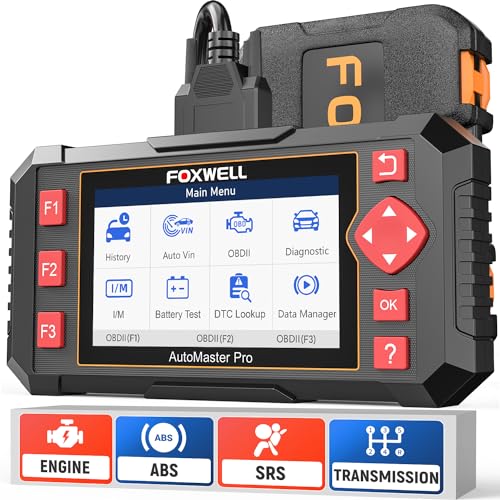
- [Easy to Use—Work Out of the Box] + [FOXWELL 2026 New Version] FOXWELL NT604 Elite scan tool is the 2026 new version from FOXWELL, designed for car owners who want to figure out the cause of issues before fixing car problems by scanning common systems like ABS, SRS, engine, and transmission. The NT604 Elite obd2 scanner diagnostic tool comes with the latest software—no need to waste time downloading software first. Plug the scanner into the OBDII port with OBDII cable to start the diagnosis.
- [Affordable] + [Reliable Car Health Monitor] Will you be confused what happens when the warning light of ABS/SRS/transmission/check engine flashes? Instead of taking your cars to dealership, this FOXWELL scanner will help you do a thorough scanning and detection for your cars and pinpoint the root cause. Note:The device is a diagnostic tool, not a repair tool. To turn off a warning light, you must first physically repair the issue causing it. Only then can the scanner be used to clear the corresponding fault code.
- [5 in 1 Car Diagnostic Scanner] Compared with obd scanners (50-100), NT604 Elite code scanner not only includes their OBDII diagnosis but also serves as ABS/SRS scanner, transmission and check engine code reader. When it’s an odb2 scanner, you can use it to check if your car is ready for annual test through I/M readiness menu. In addition, live data stream, built-in DTC library, data play back and print, all these features are a big plus for it. Note: doesn't support maintenance functions like reset or relearn. For the SRS system, NT604 Elite can read and clear common fault codes not caused by a crash, but crash/collision data cannot be cleared.
- [Fantastic AUTOVIN] + [No extra software fee] Through the AUTOVIN menu, this NT604 Elite car scanner allows you to get your V-IN and vehicle info rapidly, no need to take time to find your V-IN and input one by one. What's more, the NT604 Elite ABS SRS scanner supports 60+ car brands from worldwide (America/Asia/Europe). You don’t need to pay extra software fee. AUTOVIN may not work on some older vehicles or certain vehicle brands. If AUTOVIN fails, please input the vin code manually or go to the Diagnostic Menu to select your vehicle model.
- [Solid protective case KO plastic carrying bag] + [Lifetime update] Almost all same price-level car scanner diagnostic tool only offers plastic bag to hold the scanner.However, NT604 Elite automotive scanner is equipped with solid protective case, preventing your obd2 scanner from damage. Then you don’t need to pay extra money to buy a solid toolbox.
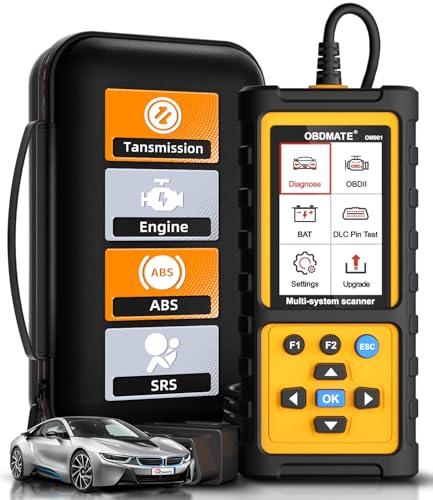
- 【Reset ABS/SRS/Transmission/Engine Lights】 More than an check engine code reader, OBDMATE OM901 obd2 scanner performs comprehensive diagnostics for the 4 most-used systems (ABS/SRS/Engine/Transmission). It quickly clears fault codes, turns off warning lights, read data stream and auto VIN.
- 【3.5" Handheld Scanner with 4 System Diagnose】 3.5" Super large TFT screen equipped displays an intuitive menu and clear readings of various sensors from ABS, SRS, ECM and TCM systems. It arrived with a silicone protective case and hard-shell carrying case, ensuring long-lived durability and drop resistance. The car diagnostic tool is plug-to-play designed, plug it and get diagnosis started without any batteries or updates required.
- 【One-Click I/M Readines&Full OBD2 Functions】 Press F1 to get an intuitive corloured form about whether various emissions-related systems on the vehicle are operating properly. Help you get smog-check ready quickly. OM901 car scanner supports all essential OBD2 functions you need: read & clear codes, view freeze frame, read I/M readiness, retrieve VIN, live data stream (with graphing display), O2 sensor test, onboard monitoring mode, and EVAP leak test.
- 【Battery Voltage Check&DLC Pin Test】 It allows you to monitor battery health by monitoring current battery voltage. Plus, this obd2 diagnostic tool features DLC 16-PIN test to check current voltage of every pin.
- 【Automotive Scanner Diagnostic Kit】 The package comes with 1 car scanner, 1 USB-type c cable, 1 hard storage bag and 1 user manual(en). Free to update without any hidden fees. 5 languanges available in setting including English, French, Italian, German and Espanish. Valuable and Portable, making it a great tool kit for car owners, DIY enthusiasts, and professional mechanics.
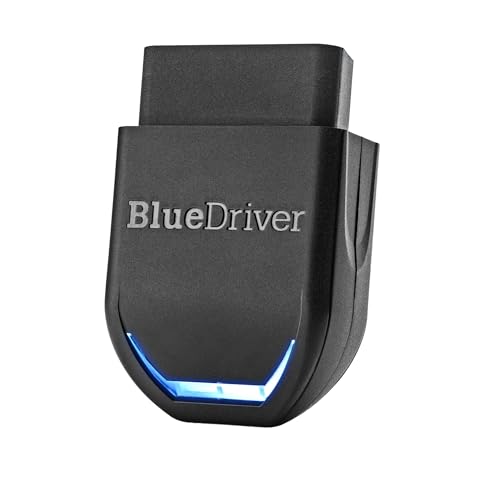
- [Diagnose Like a Pro] BlueDriver Pro Next-Gen is a professional OBD2 scanner and diagnostic tool that helps you scan, understand, and clear vehicle trouble codes with confidence. Turn your phone into a powerful car diagnostic scanner—no guesswork, no unnecessary repairs.
- [Read and Clear More Codes Than Ever] Read and clear more codes than basic car code readers. Access enhanced diagnostics for Check Engine, ABS, SRS, Airbag, TPMS, Transmission, and more on supported vehicles, including expanded coverage on newer model years.
- [Verified Fixes and Real-Time Data] Get unlimited, technician-verified repair reports matched to your VIN, with definitions, causes, and confirmed fixes. Monitor live vehicle data as you drive, view freeze frames, check smog readiness, and analyze Mode 6 test results.
- [Expanded Make & Model Coverage] Optimized for today’s vehicles with strong support for GM, Ford, Stellantis (RAM, Jeep, Chrysler), Toyota, Honda, Nissan, Mazda, Subaru, Hyundai, Mercedes-Benz, BMW, and VW. Enhanced communication on select 2024+ Nissan and Mazda models (see compatibility chart).
- [Gas Vehicles 1996+ & Select Light-Duty Trucks] Works with all gas-powered vehicles made in 1996 or newer, plus select light-duty trucks and diesels, including F-250, RAM 2500, Silverado, and Sierra. Built for daily drivers, family vehicles, and real-world truck use.
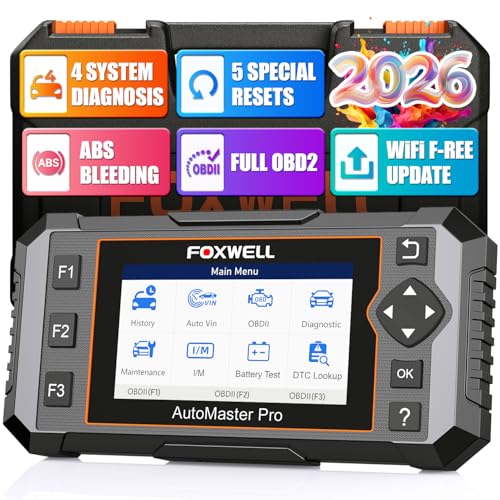
- PAID FOR ITSELF ON FIRST USE - SAVE ON EVERY DIAGNOSIS: Avoid expensive shop fees and take control of vehicle repairs at home. The NT614 Elite delivers professional-level diagnostics for Engine, ABS, SRS Airbag, and Transmission systems, helping you quickly identify the real cause of warning lights and avoid unnecessary repairs. With 5 essential service resets including Oil Reset, EPB, ABS Bleeding, SAS Calibration, and Throttle Relearn, you can complete everyday maintenance and repairs without paying dealership visit. Features WiFi updates, no registration required, and plug-and-play setup with no extra power cord
- 5 ESSENTIAL RESETS FOR REAL DIY MAINTENANCE: More than just a diagnostic tool, the NT614 Elite gives you the service functions DIYers actually need to avoid expensive shop visits. Perform Oil Reset, EPB brake service, ABS bleeding, steering angle calibration, and throttle relearn to fix common maintenance issues at home with confidence. Reset warning lights, replace brake pads, restore throttle performance, and complete essential maintenance without paying dealership labor costs. Note: Function availability varies by vehicle make, model, year, engine type, and system configuration. Please confirm compatibility before purchase.
- SAME 4-SYSTEM DIAGNOSTICS AS NT604: Built on the trusted NT604, the NT614 Elite delivers full diagnostics for Engine, ABS, SRS Airbag, and Transmission systems-helping you identify the root cause behind warning lights instead of guessing. Read and clear codes, view live data graphs, monitor engine temperature, wheel speed sensors, transmission temperature, and more for accurate troubleshooting at home
- LIVE DATA GRAPHING - FIND PROBLEMS BEFORE THEY GET EXPENSIVE: See what basic scanners miss with real-time data displayed in easy-to-read graphs. Monitor fuel trims, oxygen sensors, engine load, RPM, battery voltage, and transmission temperature to detect intermittent or hidden problems before they become costly repairs. Diagnose faster and make smarter repair decisions with visual data insights
- AUTO VIN + LIFETIME WI-FI UPDATES + WIDE COVERAGE: AutoVIN instantly identifies your vehicle for faster setup and fewer errors. Generate professional vehicle health reports for maintenance tracking, used car inspections, or sharing with mechanics. Stay updated with lifetime free Wi-Fi updates-no subscriptions or hidden fees. Supports 90+ brands and 10,000+ models including Ford, Toyota, BMW, Mercedes-Benz, Honda, Nissan, Volkswagen, Hyundai, Subaru, and more for long-term reliable use


- [All System Diagnostics, Professional-Level Scanner] - BLCKTEC 460T is the ultimate OBD2 diagnostic tool for home mechanics and professionals. It supports all 10 OBD2 modes, reads and clears Engine/Transmission/ABS/SRS codes, performs All-System Diagnostics, offers workshop reset tools, and provides real-time live data. It helps you pinpoint issues, assess your car's condition, and prepare for SMOG checks with ease. NOTE: Function availability depends on your vehicle. Before you buy, be sure to use the Compatibility Checker on BLCKTEC website or contact our customer support to verify that the features you need are supported for your vehicle’s specific year, make, and model.
- [12+ Most Popular Reset Functions] - BLCKTEC 460T OBD2 scanner offers 12+ dealer-level service functions, including Oil Maintenance Reset, ABS Bleeding, EPB Reset, SAS(Steering Angle Sensor) Recalibration, DPF(Diesel Particulate Filter) Reset, Throttle Body Relearn, Battery Reset/Initialization, TPMS Relearn, Transmission Reset, Fluid Change Reset, Maintenance Reset and more, enabling you to perform workshop services like a pro. NOTE: Function availability depends on your vehicle. Be sure to use the Compatibility Checker on BLCKTEC website to verify that the features you need are supported for your vehicle.
- [Real-Time OBD2 and OEM Live Data, Freeze Frame Data] - BLCKTEC 460T helps diagnose vehicle issues when warning lights like Check Engine Light or ABS/SRS Light appear. It offers detailed DTC info, ECU Freeze Frame Data, and real-time OBD2 and advanced OEM live data, including Engine, Transmission, ABS, SRS, and more, making it easy to diagnose and resolve vehicle problems. You can view, graph, record, replay, and overlay up to four live data streams in a single graph for better analysis.
- [AutoVIN, AutoReLink, AutoScan, 3X Faster] - Equipped with AutoVIN technology, 460T automatically retrieves the VIN to save you time. Its AutoScan and AutoReLink features scan all of the vehicle's ECUs and detect any fault codes immediately after you plug the scanner into the vehicle's OBD2 port - no button presses required. Additionally, it regathers DTC and I/M readiness information every 30 seconds, simplifying monitor tests. 460T's advanced technology makes it 3X faster than other products.
- [Get RepairSolutions2, the #1 Auto Repair App for Free] - When paired with RepairSolutions2(RS2) App, 460T becomes even more powerful. RS2's Verified Fix Database built by master technicians, provides the parts needed for the repair. Additionally, RS2 gives you access to OEM warranty info, maintenance schedules, TSB, and dealership recall info, making car care easier than ever. RS2 is free with no subscription fees and it stores your car scan reports in the cloud, allowing you to access, share, or print them anytime and anywhere.
Last update on 2026-06-15 / Affiliate links / Images from Amazon Product Advertising API
This product presentation was made with AAWP plugin.