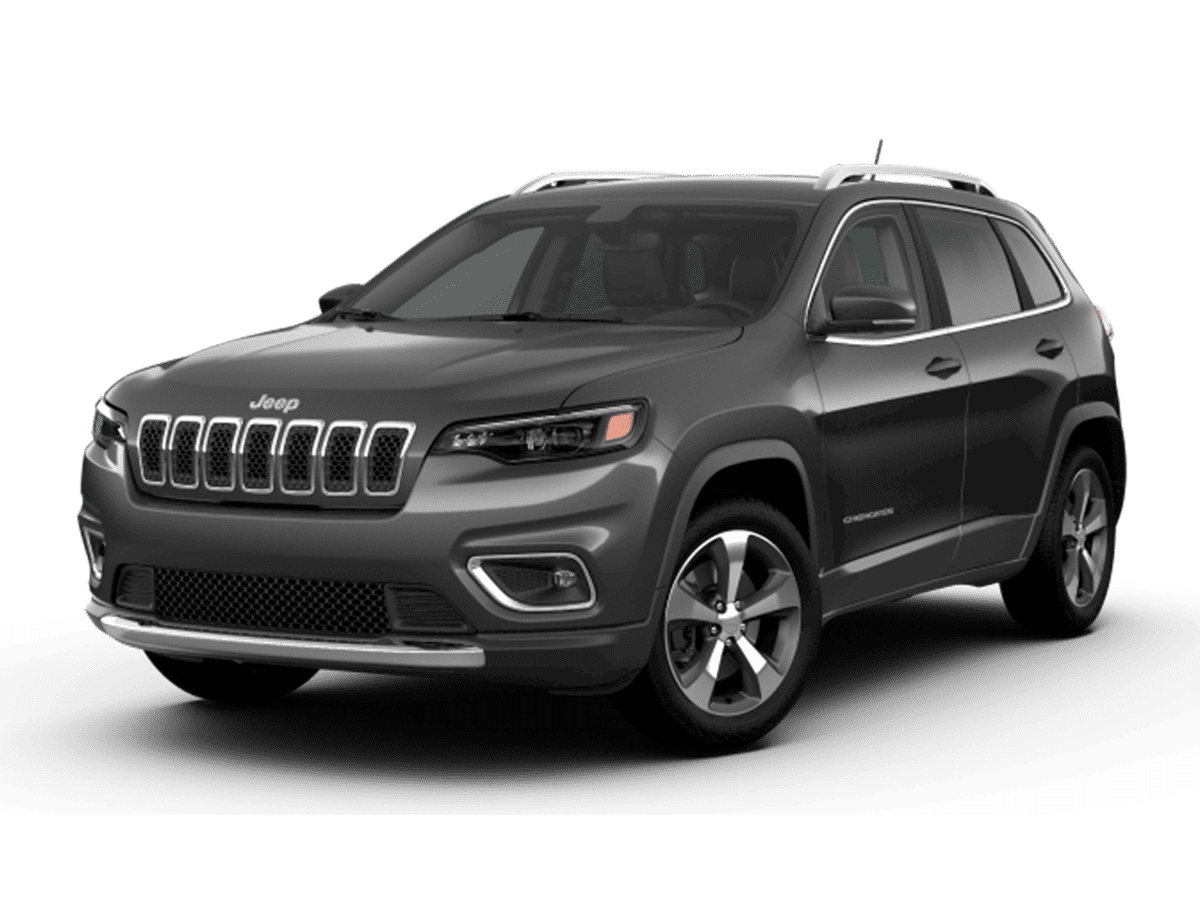
June 13, 2019 NHTSA CAMPAIGN NUMBER: 19V449000
Loss of Air Bag Acceleration Sensor Connection
In the event of a crash, the inability to properly detect a crash may result in improper air bag deployment, increasing the risk of injury.
NHTSA Campaign Number: 19V449
Manufacturer Chrysler (FCA US LLC)
Components AIR BAGS
Potential Number of Units Affected 41,169
Summary
Chrysler (FCA US LLC) is recalling certain 2019 Jeep Cherokee vehicles. The impact and acceleration sensors may fail and reduce the air bag system’s ability to properly detect certain crash events.
Remedy
Chrysler will notify owners, and dealers will replace the affected sensors, free of charge. The recall began August 8, 2019. Owners may contact Chrysler customer service at 1-800-853-1403. Chrysler’s number for this recall is V63.
Notes
Owners may also contact the National Highway Traffic Safety Administration Vehicle Safety Hotline at 1-888-327-4236 (TTY 1-800-424-9153), or go to www.safercar.gov.
Check if your Vehicle has a Recall
August 2019
Dealer Service Instructions for:
Safety Recall V63 / NHTSA 19V-449 Acceleration Sensors
Remedy Available
| 2019 | (KL) | Jeep Cherokee |
NOTE: Some vehicles above may have been identified as not involved in this recall and therefore have been excluded from this recall.
IMPORTANT: Some of the involved vehicles may be in dealer new vehicle inventory. Federal law requires you to complete this recall service on these vehicles before retail delivery. Dealers should also consider this requirement toapply to used vehicle inventory and should perform this recall on vehicles in for service. Involved vehicles can be determined by using the VIP inquiry process.
Subject
The Occupant Restraint Controller (ORC) on about 41,100 of the above vehicles may lose communication between one or more of the acceleration sensors. This may result in a diminished capability of the air bag system to properly detect certain crash events which may result in degraded inflator outputs, late air bag deployment, or a failure to deploy. If an acceleration sensor loses communication with the ORC, the air bag warning lamp will illuminate in the instrument panel indicating a malfunction in the occupant restraint system. If this warning is not heeded, this condition may increase the risk of injury to vehicle occupants in the event of a crash.
Repair
Replace the affected acceleration sensors (impact sensors).
Parts Information
| Description | Part Number |
| Kit, Accelerator Sensors | CSFKV631AA |
| Each package contains the following components: | |
| Description | Quantity |
| Sensor, Accelerator (Engine compartment) (974AA) | 2 |
| Sensor, Accelerator (B and C-Pillars) (975AA) | 4 |
Parts Return
No parts return required for this campaign.
Special Tools
The following special tools are required to perform this repair:
| ➢ NPN | wiTECH micro pod II |
| ➢ NPN | Laptop Computer |
| ➢ NPN | wiTECH Software |
Service Procedure
A. Replace Front Impact Sensors
WARNING: To avoid serious or fatal injury on vehicles equipped with airbags, disable the Supplemental Restraint System (SRS) before attempting any steering wheel, steering column, airbag, Occupant Classification System (OCS), seat belt tensioner, impact sensor or instrument panel component diagnosis or service. Disconnect and isolate the battery negative (ground) cable, then wait two minutes for the system capacitor to discharge before performing further diagnosis or service. This is the only sure way to disable the SRS. Failure to follow these instructions may result in accidental airbag deployment.
WARNING: To avoid serious or fatal injury, never strike or drop the front impact sensor, as it can damage the impact sensor or affect its calibration. The front impact sensor enables the system to deploy the front supplemental restraints. If an impact sensor is accidentally dropped during service, the sensor must be scrapped and replaced with a new unit. Failure to observe this warning could result in accidental, incomplete, or improper front supplemental restraint deployment.
NOTE: The front and the side impact sensors are NOT interchangeable.
- Adjust the driver and passenger side front seats to the most forward position for easiest access to the B-pillar trim for section B.
- Disconnect and isolate the negative battery cable. If equipped with an Intelligent Battery Sensor (IBS), disconnect the IBS connector first before disconnecting the negative battery cable. Wait two minutes for the system capacitor to discharge before continuing service (Figure 1).
- For the right impact sensor if equipped with 2.4L only, remove the engine air cleaner resonator from the right side of the engine compartment.
a. Remove the two screws (Figure 2).
b. Remove the bolt (Figure 2).
c. Remove the resonator (Figure 2).
- Locate the front impact sensors mounted on the engine compartment side of the Front End Module (FEM) carrier, below the upper radiator cross member and just outboard of the cooling module (Figure 3).
- Disconnect the FEM wire harness connectors from both right and left front impact sensors.
- Remove the bolts that secure the sensors to the back of the FEM carrier.
- Gently pry the sensor away from the FEM carrier far enough to disengage the latch feature of the locator pin on the back of the sensor from the locator hole in the FEM carrier.
- Remove and DISCARD the front impact sensors from the vehicle.
NOTE: The front and the side impact sensors are NOT interchangeable. Front impact sensors are identified with the letter F. Side impact sensors are identified with the letter S (Figure 4)
- Position the NEW right and left front impact sensors to the back of the Front End Module (FEM) carrier just outboard of the cooling module.
- Be certain to engage the locating pin integral to the back of the sensor into the locating hole in the FEM carrier.
- Install the bolts that secure the NEW right and left sensors. Tighten the bolts to 9 N·m (80 in. lbs.).
- Connect the FEM wire harness connectors to the impact sensors.
- For the right impact sensor if equipped with 2.4L only, install the engine air cleaner resonator.
a. Position the resonator between the air inlet tube and the air cleaner body.
b. Install the bolt and tighten to 9 N·m (80 in. lbs.).
c. Install and securely tighten the two screws.
- Do not connect the negative battery cable at this time. Continue to Section B. Replace Side B-Pillar Impact Sensors.
B. Replace Side B-Pillar Impact Sensors
NOTE: Left side shown, right side similar.
- Starting on the left side, remove the trim from the inside of the B-pillar.
a. Using a small flat bladed tool or equivalent, remove the trim cap (Figure 5).
b. Remove the screw.
c. Using C-4755 or equivalent, pry the upper portion of the B-pillar trim to disengage the retaining clips. Seat belt remains routed through B-pillar trim.
d. Remove the upper B-pillar trim and position to the side (Figure 5).
e. Using a trim stick or equivalent, remove the instrument panel end cap (Figure 6).
f. Using a trim stick or equivalent, remove the A-pillar extension (Figure 6).
g. Using a trim stick and equivalent, disengage the retaining clips securing the front door sill scuff panel to the door sill and lower B-pillar (Figure 6).
h. Remove the front door sill scuff panel (Figure 6).
i. Using a trim stick or equivalent, disengage the retaining clips securing the rear door sill scuff panel (Figure 7).
j. Remove the rear door sill scuff panel (Figure 7).
k. Using a trim stick, pry the upper portion of the lower B-pillar trim to disengage the retaining clips (Figure 8).
l. Using trim stick, pry up on the lower portion of the B-pillar trim and position to the side for access to the sensor (Figure 8).
- Disconnect the body wire harness connector from the side impact sensor (Figure 9).
- Remove the nut that secures the sensor to the weld stud on the lower B-pillar (Figure 9).
- Gently pry the sensor away from the inner B-pillar far enough to disengage the latch feature of the locator pin from the locator hole (Figure 9).
- Remove and DISCARD the impact sensor from the inner B-pillar.
NOTE: The front and the side impact sensors are NOT interchangeable. Front impact sensors are identified with the letter F. Side impact sensors are identified with the letter S (Figure 4).
- Position the NEW side impact sensor to the weld stud on the inner B-pillar. Be certain that the locator pin on the sensor is fully engaged in the locator hole of the inner B-pillar.
- Install the nut that secures the sensor to the inner B-pillar. Tighten the nut to 11 N·m (8 ft. lbs.).
- Connect the body wire harness connector to the sensor.
- Position the lower portion of the upper B-pillar trim and hand tap to engage the retaining clips.
- Align and position the lower B-pillar trim, hand tap to engage the retaining clips.
- Install the upper B-pillar trim.
- Install the upper screw and seat the trim cap fully.
- Position the front door sill scuff panel.
- Hand tap to engage the retaining clips securing the front door sill scuff panel to the door sill and lower B-pillar.
- Install the instrument panel A-pillar extension.
- Install the instrument panel end cap.
- Hand tap to engage the retaining clips securing the front door sill scuff panel to the door sill, lower B-pillar and lower C-pillar.
- Repeat step 1 through 17 for the right side impact sensor.
- Do not connect the negative battery cable at this time. Continue to Section C. Replace Side C-Pillar Impact Sensors.
C. Replace Side C-Pillar Impact Sensors
- Open the liftgate and remove the load floor lid.
- If equipped, remove the two load floor storage bins.
- If equipped with second row sliding rear seats, fold down the seats and slide both seats to full forward position.
- If equipped with a rear fixed bench seat, fold the seats forward. Firmly lift at each end of the cover panel and remove the panel (Figure 10).
- Using trim stick C-4755 or equivalent, separate the retaining clips and remove the liftgate scuff plate (Figure 10).
a. Remove the two screws from load floor front panel (Figure 11).
b. Remove the push fasteners from the 40% seat back flap, fixed bench seat only (Figure 11).
c. Remove the push fasteners from the 60% seat back flap, fixed bench seat only (Figure 11).
- Remove the load floor front panel (Figure 11).
- If equipped with second row fixed bench seat the rear seat backs must be removed to remove quarter trim.
a. Raise the seat backs in the upright position, then remove the pivot bracket cover (3) from the front side of the seat (Figure 12).
b. Fold the seats forward.
c. Remove the bolt (1), then push the pivot bracket (2) forward and remove (Figure 12).
d. Using a trim tool, release both outboard pivot covers (1) by prying inward, then pull forward to remove (Figure 13).
NOTE Left side shown, right side similar. Repeat required side impact sensor replacement before installing the rear seat backs.
- Starting on the left side, remove the upper trim from the inside the C-pillar (Figure 15).
a. Using a small flat bladed tool or equivalent, open the trim cap (Figure 15).
b. Remove the screw. Magnetic screwdriver bit is recommended to avoid dropping the screw behind the trim panel.
c. Remove the rear seat belt retractor cover, if equipped (Figure 16).
d. Position the door seal aside.
e. Using a trim stick C-4755 or equivalent, disengage the retaining fasteners that secure the quarter trim panel to the quarter panel (Figure 17).
f. Pull the quarter trim panel away from the quarter panel (Figure 17).
g. Remove the quarter trim panel and position to the side.
- Position the door seal aside.
- Remove the cargo lamp and disconnect the wire harness (Figure 18).
- Remove the two fasteners for the cargo loops (Figure 18).
- Remove the button fastener (Figure 18).
- Using a trim stick C-4755 or equivalent, disengage the retaining fasteners that secure the quarter trim panel to the quarter panel and pull the quarter trim panel away from the quarter panel (Figure 18).
- Disconnect the electrical connectors and remove the quarter trim panel.
- Disconnect the body wire harness connector from the side impact sensor (Figure 19).
- Remove the nut that secures the sensor to the weld stud on the inner C-pillar (Figure 19).
- Gently pry the sensor away from the inner C-pillar far enough to disengage the latch feature of the locator pin from the locator hole (Figure 19).
- Remove and DISCARD the impact sensor from the inner C-pillar.
NOTE: The front and the side impact sensors are NOT interchangeable. Front impact sensors are identified with the letter F. Side impact sensors are identified with the letter S (Figure 4).
- Position the NEW side impact sensor to the weld stud on the inner C-pillar. Be certain that the locator pin on the sensor is fully engaged in the locator hole of the inner C-pillar.
- Install the nut that secures the sensor to the inner C-pillar. Tighten the nut to 11 N·m (8 ft. lbs.).
- Connect the body wire harness connector to the sensor.
- Position the quarter trim panel back into the vehicle.
- Position the front locating pin into the body and seat the push pin near the location pin fully.
- Seat the clip at the top of the trim panel into the C-pillar first.
- Seat the push pin at the rear of the quarter glass.
- Connect electrical connectors.
- Position the rear locating pin into the body and seat the remaining push pins.
- Install the fasteners and the cargo loops and tighten to 8 N·m (71 in. lbs.).
- Install the button fastener and tighten securely.
- Install the rear cargo lamp.
- Position the door seal back fully.
- If equipped with second row sliding seat, position seat in full upright and rearward position.
- If equipped with second row fixed bench seat, install rear seat backs.
a. Install the seat back into the slot and at the center seat pivot bracket.
NOTE: A pry tool may be helpful to pry the locking bushing inward.
b. Install both seat back locking bushings into the pivot brackets.
c. Install both outboard pivot covers.
d. Install the pivot brackets and the bolt. Tighten the rear seat pivot bracket bolt to 25 N·m (18 ft. lbs.).
e. Install the pivot bracket cover.
f. Install the front load floor support panel.
g. Install the screws and tighten securely.
h. Install the four push fasteners for the 60% seat back flap, if equipped.
i. Install the four push fasteners for the 40% seat back flap, if equipped.
j. Install the cover panel.
- Position the upper quarter trim back in place and seat the retaining clips fully.
- Install the upper screw and seat the trim cap fully.
- Install the rear door scuff plates.
- Position the liftgate scuff plate back into the vehicle and seat the retaining clips fully.
- Install the cargo storage bins and the load floor lid, if equipped.
- Do not connect the negative battery cable at this time. Continue to Section D. Supplemental Restraint System (SRS) Verification Test.
D. Supplemental Restraint System (SRS) Verification Test
- During the following test, the negative battery cable remains disconnected and isolated, as it was during the SRS component removal and installation procedures until instructed to do otherwise.
- Be certain that the diagnostic scan tool contains the latest version of the proper diagnostic software. Connect the scan tool to the 16-way Data Link Connector (DLC). The DLC is located on the driver side lower edge of the instrument panel, near the steering column opening cover and outboard of the steering column.
- Remove and save the two ORC/Airbag fuses (F96 and F97) in the Power Distribution Center which is located in the engine compartment near the battery.
- For vehicles equipped with a keyed ignition switch, turn the ignition switch to the “ON” position and exit the vehicle then continue with Step 6.
- For vehicles equipped with keyless ignition node, check to be certain that nobody is in the vehicle then connect the battery negative cable(s). If equipped with an Intelligent Battery Sensor (IBS), connect the IBS connector. Turn the ignition switch to the “ON” position then continue with Step 7.
- Check to be certain that nobody is in the vehicle, then connect the negative battery cable. If equipped with an Intelligent Battery Sensor (IBS), connect the IBS connector.
- Install the two ORC/Airbag fuses in the Power Distribution Center.
- Open the wiTECH Diagnostic application.
- Starting at the “Select Tool” screen, select the row/tool for the wiPOD device you are using, then select “Next”.
- Enter your “User id” and “Password”, then select “Finish”.
- Clear all DTC’s in all modules using the wiTECH.
- Transition the status of the ignition switch to OFF for about 15 seconds, and then back to ON. Observe the airbag indicator in the instrument cluster. It should light from four to six seconds, and then go out. This indicates that the SRS is functioning normally and that the repairs are complete. If the airbag indicator fails to light, or lights and stays ON, there is still an active SRS fault or malfunction. Refer to the appropriate diagnostic information to diagnose the problem.
- Close the hood and remove the wiTECH micro pod II.
- Return the vehicle to the customer.
1 Affected Product
Vehicle
| MAKE | MODEL | YEAR |
| JEEP | CHEROKEE | 2019 |
10 Associated Documents
Manufacturer Notices(to Dealers,etc) – 06/14/2019 New Safety Recall Advanced Communication – V63
Defect Notice 573 Report
RCLRPT-19V449-5339.PDF 214.288KB
Recall Acknowledgement
RCAK-19V449-6918.pdf 244.137KB
Manufacturer Notices(to Dealers,etc) – 06/20/2019 New Safety Recall Advanced Communication – V63
RCMN-19V449-5392.pdf 101.362KB
Recall Quarterly Report #2, 2019-4
RCLQRT-19V449-3696.PDF 211.247KB
ISSUED Renotification Notice
RCRN-19V449-3544.pdf 136.422KB
Remedy Instructions and TSB
RCRIT-19V449-2939.pdf 2046.43KB
Recall Quarterly Report #1, 2019-3
RCLQRT-19V449-6416.PDF 211.145KB
ISSUED Owner Notification Letter(Part 577)
RCONL-19V449-0425.pdf 518.461KB
Recall Quarterly Report #3, 2020-1
RCLQRT-19V449-6580.PDF 211.342KB
Latest Recalls Documents
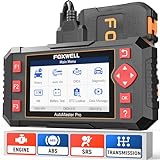
- [Easy to Use—Work Out of the Box] + [FOXWELL 2026 New Version] FOXWELL NT604 Elite scan tool is the 2026 new version from FOXWELL, designed for car owners who want to figure out the cause of issues before fixing car problems by scanning common systems like ABS, SRS, engine, and transmission. The NT604 Elite obd2 scanner diagnostic tool comes with the latest software—no need to waste time downloading software first. Plug the scanner into the OBDII port with OBDII cable to start the diagnosis.
- [Affordable] + [Reliable Car Health Monitor] Will you be confused what happens when the warning light of ABS/SRS/transmission/check engine flashes? Instead of taking your cars to dealership, this FOXWELL scanner will help you do a thorough scanning and detection for your cars and pinpoint the root cause. Note:The device is a diagnostic tool, not a repair tool. To turn off a warning light, you must first physically repair the issue causing it. Only then can the scanner be used to clear the corresponding fault code.
- [5 in 1 Car Diagnostic Scanner] Compared with obd scanners (50-100), NT604 Elite code scanner not only includes their OBDII diagnosis but also serves as ABS/SRS scanner, transmission and check engine code reader. When it’s an odb2 scanner, you can use it to check if your car is ready for annual test through I/M readiness menu. In addition, live data stream, built-in DTC library, data play back and print, all these features are a big plus for it. Note: doesn't support maintenance functions like reset or relearn. For the SRS system, NT604 Elite can read and clear common fault codes not caused by a crash, but crash/collision data cannot be cleared.
- [Fantastic AUTOVIN] + [No extra software fee] Through the AUTOVIN menu, this NT604 Elite car scanner allows you to get your V-IN and vehicle info rapidly, no need to take time to find your V-IN and input one by one. What's more, the NT604 Elite ABS SRS scanner supports 60+ car brands from worldwide (America/Asia/Europe). You don’t need to pay extra software fee. AUTOVIN may not work on some older vehicles or certain vehicle brands. If AUTOVIN fails, please input the vin code manually or go to the Diagnostic Menu to select your vehicle model.
- [Solid protective case KO plastic carrying bag] + [Lifetime update] Almost all same price-level car scanner diagnostic tool only offers plastic bag to hold the scanner.However, NT604 Elite automotive scanner is equipped with solid protective case, preventing your obd2 scanner from damage. Then you don’t need to pay extra money to buy a solid toolbox.
- CEL Doctor: The ANCEL AD310 is one of the best-selling OBD II scanners on the market and is recommended by Scotty Kilmer, a YouTuber and auto mechanic. It can easily determine the cause of the check engine light coming on. After repairing the vehicle's problems, it can quickly read and clear diagnostic trouble codes of emission system, read live data & hard memory data, view freeze frame, I/M monitor readiness and collect vehicle information
- Sturdy and Compact: Equipped with a 2.5 foot cable made of very thick, flexible insulation. It is important to have a sturdy scanner as it can easily fall to the ground when working in a car. The AD310 OBD2 scanner is a well-constructed mechanic tool with a sleek design. It weighs 12 ounces and measures 8.9 x 6.9 x 1.4 inches. Thanks to its compact design and light weight, transporting the device is not a problem. The buttons are clearly labelled and the screen is large and displays results clearly
- Accurate Fast and Easy to Use: The AD310 scanner can help you or your mechanic understand if your car is in good condition, provides exceptionally accurate and fast results, reads and clears engine trouble emission codes in seconds after you fixed the problem. This device will let you know immediately and fix the problem right away without any car knowledge. No need for batteries or a charger, get power directly from the OBDII Data Link Connector in your vehicle
- OBDII Protocols and Car Compatibility: Many cheap scan tools do not really support all OBD2 protocols. AD310 scanner as it can support all OBDII protocols such as KWP2000, J1850 VPW, ISO9141, J1850 PWM and CAN. This device also has extensive vehicle compatibility with 1996 US-based, 2000 EU-based and Asian cars, light trucks, SUVs, as well as newer OBD2 and CAN vehicles both domestic and foreign. Pls confirm with our customer service whether it is compatible with your vehicle before purchasing
- Home Necessity and Worthy to Own: This is an excellent code reader to travel or home with as it weighs less and it is compact in design. You can easily slide it in your backpack as you head to the garage, or put it on the dashboard, this will be a great fit for you. The AD310 is not only portable, but also accurate and fast in performance. Moreover, it covers various car brands and is suitable for people who just need a code reader to check their car

- 2026 Advanced ECU Coding Scan Tool: Maximize the capabilities of your vehicles with the ArtiDiag Pro. This scan tool, seamlessly compatible with renowned models such as VW, A-U-D-I, SKODA, SEAT, BENZ, and more, empowers you to uncover hidden features, deactivate annoying functions, and code retrofitted components for peak performance. Ensure a backup before coding and steer clear of problems on low battery levels.
- Efficient Diagnostics with Bidirectional Control: Say goodbye to uncertainty, streamline diagnostics, and reclaim valuable time with ArtiDiag Pro scan tool. This bidirectional scan tool exceeds expectations, enabling targeted tests on individual actuators to swiftly identify and resolve issues. Covering lights, door locks, fuel and coolant systems, windows, wipers, EVAP, and more in vehicle components.
- 35+ Services Resolve 90% of Repair Challenges: Unleash maximum productivity with the ArtiDiag Pro, a scan tool that tackles 90% of maintenance issues through its 35 special functions. Effortlessly clear oil maintenance indicators with oil reset. Engage the EPB Reset for brake system management and establish precise alignment with the Steering Angle Reset to define the straight-line reference position for your vehicle.
- FCA Autoauth : This diagnostic tool supports Autoauth for FCA SGW/Renault, Chrysler, Jeep, Dodge, Fiat etc. 2017 and later. NOTE: Due to Product Upgrade, there is no Chrysler 12+8 adapter, the BMW-20 Adapter in the package any more. We are sincerely sorry for the inconvenience. NOTE: Please confirm compatibility before purchase.(Topdon Website>Support>Vehicle Coverage)
- Professional Customer Support: At TOPDON, your satisfaction is our unwavering commitment. Experience hassle-free support and a lifetime of expert assistance. Should you encounter any challenges, reach out to us at 833-629-4832. For returns, please damage the packaging to prevent Amazon from reselling it. Please be advised that after two years, a subscription fee of 249 Bucks will apply.
- [All System Diagnostics, Professional-Level Scanner] - BLCKTEC 460T is the ultimate OBD2 diagnostic tool for home mechanics and professionals. It supports all 10 OBD2 modes, reads and clears Engine/Transmission/ABS/SRS codes, performs All-System Diagnostics, offers workshop reset tools, and provides real-time live data. It helps you pinpoint issues, assess your car's condition, and prepare for SMOG checks with ease. NOTE: Function availability depends on your vehicle. Before you buy, be sure to use the Compatibility Checker on BLCKTEC website or contact our customer support to verify that the features you need are supported for your vehicle’s specific year, make, and model.
- [12+ Most Popular Reset Functions] - BLCKTEC 460T OBD2 scanner offers 12+ dealer-level service functions, including Oil Maintenance Reset, ABS Bleeding, EPB Reset, SAS(Steering Angle Sensor) Recalibration, DPF(Diesel Particulate Filter) Reset, Throttle Body Relearn, Battery Reset/Initialization, TPMS Relearn, Transmission Reset, Fluid Change Reset, Maintenance Reset and more, enabling you to perform workshop services like a pro. NOTE: Function availability depends on your vehicle. Be sure to use the Compatibility Checker on BLCKTEC website to verify that the features you need are supported for your vehicle.
- [Real-Time OBD2 and OEM Live Data, Freeze Frame Data] - BLCKTEC 460T helps diagnose vehicle issues when warning lights like Check Engine Light or ABS/SRS Light appear. It offers detailed DTC info, ECU Freeze Frame Data, and real-time OBD2 and advanced OEM live data, including Engine, Transmission, ABS, SRS, and more, making it easy to diagnose and resolve vehicle problems. You can view, graph, record, replay, and overlay up to four live data streams in a single graph for better analysis.
- [AutoVIN, AutoReLink, AutoScan, 3X Faster] - Equipped with AutoVIN technology, 460T automatically retrieves the VIN to save you time. Its AutoScan and AutoReLink features scan all of the vehicle's ECUs and detect any fault codes immediately after you plug the scanner into the vehicle's OBD2 port - no button presses required. Additionally, it regathers DTC and I/M readiness information every 30 seconds, simplifying monitor tests. 460T's advanced technology makes it 3X faster than other products.
- [Get RepairSolutions2, the #1 Auto Repair App for Free] - When paired with RepairSolutions2(RS2) App, 460T becomes even more powerful. RS2's Verified Fix Database built by master technicians, provides the parts needed for the repair. Additionally, RS2 gives you access to OEM warranty info, maintenance schedules, TSB, and dealership recall info, making car care easier than ever. RS2 is free with no subscription fees and it stores your car scan reports in the cloud, allowing you to access, share, or print them anytime and anywhere.

- J2534 Pass-Thru Programmer: TOPDON RLink J2534 is an advanced diagnostic and reprogramming tool that support all J2534 protocols, as well as D-PDU, CAN-FD and DoIP, ensuring compatibility with a wide range of modern vehicles. It offers extensive versatility with support for over 18 major automotive brands, including Chrysler, Ford, GM, Nissan, Toyota, Honda, Subaru, Land Rover/Jaguar, Volvo, Wuling, Volkswagen/Audi, Mercedes-Benz, and BMW. NOTE: Not compatible with Ford IDS diagnostic software
- All-in-One OEM Diagnostics: This J2534 ECU programming tool elevates your automotive repair capabilities to new heights by delivering complete OEM diagnosis. Boasting comprehensive full-system diagnostics, intuitive repair guides, advanced ECU programming and coding, common reset services, a vast library of repair information and more, this all-in-one solution empowers technicians to effortlessly tackle complex vehicle issues with ease. *Not compatible with 24V vehicles
- Proven Performance You Can Trust: Backed by over 10000 real vehicle tests and benefit from a wealth of practical experience, this OEM reprogramming tool guarantees stable and exceptional performance. Supported by TOPDON's dedicated technical experts with in-depth knowledge of both auto repair and J2534 Pass-Thru programming, the RLink J2534 provides prompt and professional assistance, ensuring a smooth setup and reliable compatibility
- Integrated Excellence, Always Up-to-Date: Featuring the exclusive RLink Platform to provide a streamlined experience with one-click driver installation and management, ensuring flawless integration with your OE software, maintaining the original performance quality. The built-in operation guide makes mastering OE software quick and easy, so you can get started right away. Plus, with lifetime free updates, your diagnostics will stay current with the latest drivers and innovations
- Efficiency Meets Versatility: Engineered to support three CAN channels simultaneously - CAN FD and CAN-CC included, giving you the edge in fast troubleshooting. To perfectly synchronized with the OE software, please diagnose with active subscriptions and make sure your computer system is running a compatible 64-bit Windows version (7, 8, 10 or later) to fully leverage the power of RLink J2534. *We don't provide extra OE software
SEOCONTENT-START
Completion Reporting and Reimbursement
Claims for vehicles that have been serviced must be submitted on the DealerCONNECT Claim Entry Screen located on the Service tab. Claims paid will be used by FCA to record recall service completions and provide dealer payments.
Use the following labor operation numbers and time allowances:
| Labor Operation Time | ||
| Number | Allowance | |
| Replace Impact Sensors
Optional Equipment
Equipped with Fixed Rear Bench Seat (Without Sales Code CAYS – Fore/Aft |
08-V6-31-82 | 1.3 hours |
| Adjusting 2nd Row Seat))
|
08-V6-31-60 | 0.3 hours |
| Floor Plan Reimbursement | 95-95-95-97 | Calculate |
| See Below | ||
Floor Plan Reimbursement represents the vehicle’s average daily allowance (see table below) multiplied by the number of days the vehicle was in dealer inventory and not available for sale. This reimbursement is limited to the number of days from the date of the stop sale to the date that the remedy was made available. Note: If the vehicle was received by your dealership (KZX date) AFTER the stop sale date, you will use the KZX date instead of the stop sale date. For this Recall, the stop sale was initiated on 06/20/2019 and the remedy was made available on 08/06/2019, therefore, the number of days cannot exceed 47 days.
| Vehicle | Average Daily Allowance | ||
| 2019 Jeep Cherokee | |||
NOTE: See the Warranty Administration Manual, Recall Claim Processing Section, for complete recall claim processing instructions.
Dealer Notification
To view this notification on DealerCONNECT, select “Global Recall System” on the Service tab, then click on the description of this notification.
Owner Notification and Service Scheduling
All involved vehicle owners known to FCA are being notified of the service requirement by first class mail. They are requested to schedule appointments for this service with their dealers. A generic copy of the owner letter is attached.
Vehicle Lists, Global Recall System, VIP and Dealer Follow Up
All involved vehicles have been entered into the DealerCONNECT Global Recall System (GRS) and Vehicle Information Plus (VIP) for dealer inquiry as needed.
GRS provides involved dealers with an updated VIN list of their incomplete vehicles. The owner’s name, address and phone number are listed if known. Completed vehicles are removed from GRS within several days of repair claim submission.
To use this system, click on the “Service” tab and then click on “Global Recall System.” Your dealer’s VIN list for each recall displayed can be sorted by: those vehicles that were unsold at recall launch, those with a phone number, city, zip code, or VIN sequence.
Dealers must perform this repair on all unsold vehicles before retail delivery. Dealers should also use the VIN list to follow up with all owners to schedule appointments for this repair.
Recall VIN lists may contain confidential, restricted owner name and address information that was obtained from the Department of Motor Vehicles of various states. Use of this information is permitted for this recall only and is strictly prohibited from all other use.
Additional Information
If you have any questions or need assistance in completing this action, please contact your Service and Parts District Manager.
Customer Services / Field Operations
FCA US LLC
This notice applies to your vehicle,
[Model Year and Model] VIN XXXXXXXXXXXXXXXXX V63/NHTSA 19V-449
LOGO
VEHICLE PICTURE
YOUR SCHEDULING OPTIONS
- RECOMMENDED OPTION Call your authorized Chrysler / Dodge / Jeep® / RAM / Dealership
- Call the FCA Recall Assistance Center at 1-800-853-1403. An agent can confirm part availability and help schedule an appointment
- Visit recalls.mopar.com, scan the QR code below, or download the Mopar Owner’s Companion App.
QR Code
Get access to recall notifications, locate your nearest dealer, and more through this website or Mopar Owner’s Companion App. You will be asked to provide your Vehicle Identification Number (VIN) to protect and verify your identity. The last eight characters of your VIN are provided above.
DEALERSHIP INSTRUCTIONS
Please reference Safety Recall V63.
IMPORTANT SAFETY RECALL
Acceleration Sensors
Dear [Name],
This notice is sent to you in accordance with the National Traffic and Motor Vehicle Safety Act.
FCA US has decided that a defect, which relates to motor vehicle safety, exists in certain [2019 Model Year Jeep® Cherokee (KL)] vehicles.
It is extremely important to take steps now to repair your vehicle to ensure the safety of you and your passengers.
WHY DOES MY VEHICLE NEED REPAIRS?
The Occupant Restraint Controller (ORC) on your vehicle [1] may lose communication between one or more of the acceleration sensors which may result in a diminished capability of the air bag system to properly detect certain crash events which may result in degraded inflator outputs, late air bag deployment, or a failure to deploy. If an acceleration sensor loses communication with the ORC, the air bag warning lamp will illuminate in the instrument panel indicating a malfunction in the occupant restraint system. If this warning is not heeded, this condition may increase the risk of injury to vehicle occupants in the event of a crash.
HOW DO I RESOLVE THIS IMPORTANT SAFETY ISSUE?
FCA US will repair your vehicle [2] free of charge (parts and labor). To do this, your dealer will replace the affected sensors. The estimated repair time is two hours. In addition, your dealer will require your vehicle for proper check-in, preparation, and check-out during your visit, which may require more time. Your time is important to us, so we recommend that you schedule a service appointment to minimize your inconvenience. Please bring this letter with you to your dealership.
TO SCHEDULE YOUR FREE REPAIR,
CALL YOUR CHRYSLER, DODGE, JEEP OR RAM DEALER TODAY
WHAT IF I ALREADY PAID TO HAVE THIS REPAIR COMPLETED?
If you have already experienced this specific condition and have paid to have it repaired, you may visit www.fcarecallreimbursement.com to submit your reimbursement request online. [3] Once we receive and verify the required documents, reimbursement will be sent to you within 60 days. If you have had previous repairs performed and/or already received reimbursement, you may still need to have the recall repair performed.
We apologize for any inconvenience, but are sincerely concerned about your safety. Thank you for your attention to this important matter.
Customer Assistance/Field Operations
FCA US LLC
Mr. Mrs. Customer
1234 Main Street
Hometown, MI 48371
[1] If you no longer own this vehicle, please help us update our records. Call the FCA Recall Assistance Center at 1-800-853-1403 to update your information.
[2] If your dealer fails or is unable to remedy this defect without charge and within a reasonable time, you may submit a written complaint to the Administrator, National Highway Traffic Safety Administration, 1200 New Jersey Ave., S.E., Washington, DC 20590, or you can call the toll-free Vehicle Safety Hotline at 1-888-327-4236 (TTY 1-800-4249153), or go to safercar.gov.
[3] You can also mail in your original receipts and proof of payment to the following address for reimbursement consideration: FCA Customer Assistance, P.O. Box 21-8004, Auburn Hills, MI 48321-8007, Attention: Recall Reimbursement.
Note to lessors receiving this recall notice: Federal regulation requires that you forward this recall notice to the lessee within 10 days.
06/20/2019
_____________________________________________________________________
New Safety Recall Advanced Communication – V63
FCA US LLC (FCA US) has announced a safety recall on certain 2019 Model Year Jeep® Cherokee (KL) vehicles.
VINs identified as being involved in this campaign are currently live and searchable. Stop sale is in effect for the above-identified vehicles.
Vehicles impacted by a stop sale are eligible for reimbursement allowance through the Recall Floorplan Reimbursement Policy (RFPRP), which can be requested upon recall claim submission.
REASON FOR THIS SAFETY RECALL
A loss of communication between the Occupant Restraint Controller (ORC) and one or more of the acceleration sensors may result in a diminished capability of the air bag system to properly detect certain crash events which may result in degraded inflator outputs, late air bag deployment, or a failure to deploy. If an acceleration sensor loses communication with the ORC, the air bag warning lamp will illuminate in the instrument panel indicating a malfunction in the occupant restraint system. If this warning is not heeded, this condition may increase the risk of injury to vehicle occupants in the event of a crash.
SERVICE ACTION
FCA US will conduct a voluntary safety recall to replace the affected sensors. The remedy for this condition is not currently available. Dealers will be notified of the launch of this safety recall by way of established communication methods. This recall is estimated to launch in 3rd Quarter of 2019.
We ask that you please take the time to ensure that your personnel are aware of this communication and are prepared to execute a customer friendly process for inquiries regarding involved vehicles.
Customer Services Field Operations
FCA US LLC
IMPORTANT: Some of the involved vehicles may be in dealer new vehicle inventory. Federal law requires you to complete this recall service on these vehicles before retail delivery. Violation of this requirement by a dealer could result in a civil penalty of up to $21,000 per vehicle. Involved vehicles can be determined by using the VIP inquiry process.
06/14/2019
_____________________________________________________________________
New Safety Recall Advanced Communication – V63
FCA US LLC (FCA US) has announced a safety recall on certain 2019 Model Year Jeep® Cherokee (KL) vehicles.
REASON FOR THIS SAFETY RECALL
Acceleration sensors may fail due to an incomplete solder connection on the printed circuit board resulting in a loss of communication between the Occupant Restraint Controller (ORC) and one or more of the acceleration sensors. A loss of communication between the ORC and one or more of the acceleration sensors may result in a diminished capability of the air bag system to properly detect certain crash events. A diminished capability of the air bag system to properly detect certain crash events may result in degraded inflator outputs, late air bag deployment, or a failure to deploy. If an acceleration sensor loses communication with the ORC, the air bag warning lamp will illuminate in the instrument panel indicating a malfunction in the occupant restraint system. If this warning is not heeded, this condition may increase the risk of injury to vehicle occupants in the event of a crash.
SERVICE ACTION
FCA US will conduct a voluntary safety recall to replace the affected sensors. The remedy for this condition is not currently available. Dealers will be notified of the launch of this safety recall by way of established communication methods. This recall is estimated to launch in 3rd Quarter of 2019.
We ask that you please take the time to ensure that your personnel are aware of this communication and are prepared to execute a customer friendly process for inquiries regarding involved vehicles.
Customer Services Field Operations
FCA US LLC
SEOCONTENT-END
This product presentation was made with AAWP plugin.