
November 14, 2019 NHTSA CAMPAIGN NUMBER: 19V813000
Fuel Pump Relay May Fail Resulting In a Stall
A vehicle stall increases the risk of a crash.
NHTSA Campaign Number: 19V813
Manufacturer Chrysler (FCA US LLC)
Components ELECTRICAL SYSTEM
Potential Number of Units Affected 528,594
Summary
Chrysler (FCA US LLC) is recalling certain 2011-2013 Dodge Durango and Jeep Grand Cherokee vehicles equipped with a 3.6, 5.7, or 6.4 liter engine and previously recalled under NHTSA Recall 14V530 or 15V115. The fuel pump relay inside the Totally Integrated Power Module (TIPM-7) may fail, causing the vehicle to stall without warning.
Remedy
Chrysler (FCA US LLC) will replace the affected fuel pump relay and related wire harness. Interim notices informing owners of the safety risk were mailed beginning December 19, 2019. Vehicles that experience a fuel pump failure will receive an interim repair. Owners will receive a second notice when the final remedy becomes available. Owner notification letters were mailed on December 10, 2020. Owners may contact Chrysler customer service at 1-800-853-1403. Chrysler’s number for this recall is V62.
Notes
Owners may also contact the National Highway Traffic Safety Administration Vehicle Safety Hotline at 1-888-327-4236 (TTY 1-800-424-9153), or go to www.safercar.gov.
Check if your Vehicle has a Recall
New Safety Recall Advanced Communication – V62
FCA US LLC (FCA US) has announced a safety recall on certain 2011 through 2013 Model Year (WD) Dodge Durango and 2011 through 2013 Model Year (WK) Jeep® Grand Cherokee vehicles.
VINs identified as being involved in this campaign are currently live and searchable. Stop sale is in effect for the above-identified vehicles.
Vehicles impacted by a stop sale are eligible for reimbursement allowance through the Recall Floorplan Reimbursement Policy (RFPRP), which can be requested upon recall claim submission.
REASON FOR THIS SAFETY RECALL
Some of the above vehicles may have had a fuel pump relay installed as a recall remedy during the completion of Safety Recall P54 (NHTSA 14V-530) or Safety Recall R09 (NHTSA 15V-115). The installed relay has been determined to be susceptible to silicon contamination on the relay contacts, which can cause the relay to fail.A fuel pump relay failure can result in a no-start condition or an engine stall condition if the vehicle is running. A vehicle engine stall while driving can cause a vehicle crash without prior warning.
SERVICE ACTION
The remedy for this condition is not currently available. Dealers will be notified of the launch of this safety recall by way of established communication methods.
Safety Recall V62 / NHTSA 19V-813 Fuel Pump Relay
Remedy Available
NOTE: Some vehicles above may have been identified as not involved in this recall and therefore have been excluded from this recall.
IMPORTANT: Some of the involved vehicles may be in dealer used vehicle inventory. Dealers should complete this recall service on these vehicles before retail delivery. Dealers should also perform this recall on vehicles in for service. Involved vehicles can be determined by using the VIP inquiry process.
Subject
The fuel pump relay on about 582,000 of the above vehicles may have had a fuel pump relay installed as a recall remedy that is susceptible to silicon contamination of the relay contacts, that can cause the relay to fail. A fuel pump relay failure can result in a no-start condition or an engine stall condition if the vehicle is running. A vehicle engine stall while driving can cause a vehicle crash without prior warning
Repair
Inspect for an external fuel pump relay and replace the fuel pump relay and harness connector and mount relay on bracket near the PCM, if there is no external fuel pump relay modify the TIPM to accept an external relay.
Parts Information
| Part Number | Description |
| CSZDV621AA | Part Package |
| Each package contains the following components: | |
| Quantity | Description |
| 1 | Harness, Fuel Pump Relay |
| 1 | Relay, Fuel Pump |
| 3 | Crimp, Brass |
| 3 | Strap, Plastic Tie |
| 3 | Tube, Shrink |
| Part Number | Description |
| CSZDV622AA | Part Package |
| Each package contains the following components: | |
| Quantity | Description |
| 1 | Nut |
| 1 | Bracket |
| 1 | Bolt |
Special Tools
The following special tools are required to perform this repair:
| ➢ 10042 | Wire splice crimp tool |
| ➢ 6680-2PA | Pick, Terminal |
Service Procedure
A. Inspect for External Fuel Pump Relay
- Open hood.
- Inspect for an external fuel pump relay (Figure 1):
- If there is an external fuel pump relay installed, continue to step 3.
- If there is NO external fuel pump relay, continue with Section B. Install External Fuel Pump Relay.
- Position the passenger seat fully forward.
- Open the battery access cover located under the passenger front seat and disconnect the negative battery cable (Figure 2).
- Remove the fuel pump relay from the core support (Figure 1).
- Remove the TIPM cover and remove the B+ terminal retaining nut, cable and the orange 12V relay wire (Figure 3).
- Carefully rotate the TIPM on its side to expose the fuel pump relay wire harness connections (Figure 4).
- Cut the pink, brown and blue wires from the Fuel Pump Relay wire harness assuring to leave sufficient lengths to reconnect all 3 wires and DISCARD the relay and wire harness (Figure 5).
- Remove the relay housing from the repair package (Figure 6).
- Lift up on both sides of the fuel relay housing cover tabs and remove the cover from the housing (Figure 7).
- Align the fuel pump relay male terminals to the female terminals in the electrical housing connector and firmly insert until fully seated into the housing (Figure 8).
- Align the cover keys to the fuel pump relay housing cover assuring the tabs are fully locked (Figure 9 and Figure 10).
- Slide the relay bracket into the relay housing opening assuring it is fully seated (Figure 11).
- Strip approximately ½ inch (13 mm) of insulation from the ends of the brown wire, pink wire and blue wire on the NEW fuel pump relay wire and the original brown wire, pink wire and blue wire.
- Place a piece of black shrink tube, provided in the repair kit, over the cut brown, blue wire and pink wire (Figure 12).
- Using the supplied brass splice band clamp and crimp tool 10042, crimp the wires on the wire harness side (brown wire, pink wire and blue wire) to the NEW fuel pump relay harness (brown wire, pink wire and blue wire) (Figure 12).
- Solder the brass splice band clamp with rosin core solder.
- Slide the shrink tube evenly over the soldered brass splice and apply heat to the shrink tube until glue comes out of both ends of the shrink tube.
- Route the NEW Fuel Pump Relay wiring harness along the main TIPM harness and secure the NEW harness using tie straps as shown in (Figure 13).
- Cut off the excess tie strap material.
- Align and install the TIPM in housing assuring all four of the release tabs are fully locked (Figure 14).
- Attached the NEW external fuel pump relay bracket on to the back of the existing hole on the PCM mounting bracket and tighten the nut and bolt to 6N·m (53in. lbs.) (Figure 15).
- Connect the wire eyelet on the orange wire of the NEW fuel pump relay wire harness to the TIPM B+ stud (Figure 15).
- Install the B+ cable terminal retaining nut and tighten the nut to 19 N·m (14 ft. lbs.) (Figure 15).
- Connect the negative battery cable to the negative battery terminal on the battery and close the battery access cover.
- Return the passenger seat to its original location.
- Return the vehicle to the customer.
A. Install External Fuel Pump Relay
- Remove the relay housing from the repair package (Figure 16).
- Lift up on both sides of the fuel relay housing cover tabs and remove the cover from the housing (Figure 17).
- Align the fuel pump relay male terminals to the female terminals in the electrical housing connector and firmly insert until fully seated into the housing (Figure 18).
- Align the cover keys to the fuel pump relay housing cover assuring the tabs are fully locked (Figure 19 and Figure 20).
- Slide the relay bracket into the relay housing opening assuring it is fully seated (Figure 21).
- Position the passenger seat fully forward.
- Open the battery access cover located under the passenger front seat and disconnect the negative battery cable (Figure 22).
- Remove and save the Totally Integrated Power Module (TIPM) access cover.
- Remove and save the B+ cable terminal retaining nut.
- Unplug the 50-way electrical connector from the bottom of the TIPM (Cavity “A”) (Figure 25).
- Locate the brown wire in cavity number 40 of the 50-way electrical connector (Figure 27).
- Cut the brown wire one inch (25 mm) from the 50-way electrical connector (Figure 27).
- Install shrink tube to the connector side brown wire to insulate the wire end. This wire will no longer be used (Figure 28).
- Using the following procedure, splice the brown wire on the wire harness to the brown wire on the new fuel pump relay harness:
a. Strip approximately ½ inch (13 mm) of insulation from the end of the brown wire on the new fuel pump relay wire and the original brown wire.
b. Place a piece of black shrink tube, provided in the repair kit, over the cut brown wire.
c. Using the supplied brass splice band clamp and crimp tool 10042, crimp the brown wire on the wire harness side to the brown wire on the new fuel pump relay harness (Figure 29).
d. Solder the brass splice band clamp with rosin core solder.
e. Slide the shrink tube evenly over the soldered brass splice and apply heat to the shrink tube until glue comes out of both ends of the shrink tube.
- Carefully plug the 50-way electrical connector into the bottom of the TIPM.
CAUTION: Be sure that the 50-way connector lock bar is fully engaged.
- Unplug the 40-way electrical connector located on the bottom side of the TIPM (Figure 30).
- Carefully remove and save the 40-way electrical connector wire cover located on the wire side of the connector (Figure 31).
NOTE: The plastic tie strap that holds the wire harness to the wire cover must be cut off and discarded (Figure 31).
- Locate the blue (with an orange trace) wire in the 40-way electrical connector (Figure 32).
- Cut the blue (with an orange trace) wire one inch (25 mm) from the 40-way electrical connector (Figure 33).
- Install shrink tube to the connector side blue (with an orange trace) wire to insulate the wire end. This wire will no longer be used (Figure 33).
- Using the following procedure, splice the blue (with an orange trace) wire on the wire harness to the blue wire on the new fuel pump relay harness:
a. Strip approximately ½ inch (13 mm) of insulation from the end of the blue wire on the new fuel pump relay wire and the original blue (with an orange trace) wire (Figure 34).
b. Place the black shrink tube provided in the repair kit over the cut wire (Figure 34).
c. Using the supplied brass splice band clamps and crimp tool 10042, crimp the blue wire (with orange trace) on the wire harness side to the blue wire on the fuel pump relay wire harness (Figure 35).
d. Solder the brass splice band clamp with rosin core solder (Figure 35).
e. Slide the shrink tube evenly over the soldered brass splice band clamp and apply heat to the shrink tube until glue comes out of both ends of the shrink tube.
- Remove and save the 40-way electrical connector green plastic terminal lock (Figure 36).
- Locate the pink (with green trace) wire in cavity 38 of the 40-way electrical connector (Figure 37).
- Carefully remove the pink (with a green trace) from the 40-way connector (Figure 38).
NOTE: Use Miller Tool 6680-2PA terminal pick, or equivalent, to remove the wire terminal from the 40-way electrical connector.
- Strip approximately ½ inch (13 mm) of insulation off the pink (with green trace) wire without cutting the wire (Figure 39).
- Using the following procedure, splice the pink (with a green trace) wire to the pink wire on the new fuel pump relay harness:
a. Strip approximately ¾ inch (20 mm) of insulation from the end of the pink wire on the new fuel pump relay wire.
b. Wrap the pink wire from the new fuel pump relay wire harness around the pink (with green trace) wire at the location the insulation was removed (Figure 40).
c. Using the supplied brass splice band clamp and crimp tool 10042, crimp the fuel pump wire harness pink wire to the pink (with a green trace) wire on the vehicle wire harness (Figure 40).
d. Solder the brass splice band clamp with rosin core solder.
e. Slide the shrink tube evenly over the soldered brass splice band clamp and apply heat to the shrink tube until glue comes out of both ends of the shrink tube (Figure 41).
- Carefully install the wire terminal for the pink (with green trace) wire back into the same cavity (cavity 38) in the 40-way electrical connector that it was removed from (Figure 42).
- Install the 40-way electrical connector green plastic terminal lock (Figure 42).
- Install the 40-way electrical connector wire cover.
- Install a plastic tie strap to hold the wire harness in place on the back side of the 40-way electrical connector (Figure 43).
- Plug the 40-way electrical connector into the bottom of the TIPM assembly.
CAUTION: Be sure the 40-way electrical connector lock bar is fully engaged.
Figure 42 – Install Pink (with Green Trace) Wire Terminal into the same cavity on the 40-Way Connector from which it was removed
- Route the NEW Fuel Pump Relay wiring harness along the main TIPM harness and secure the NEW harness using tie straps as shown in (Figure 44).
- Cut off the excess tie strap material.
- Align and install the TIPM in housing assuring all four of the release tabs are fully locked (Figure 45).
- Attached the NEW external fuel pump relay bracket to the existing hole on the PCM mounting bracket and tighten the nut and bolt to 6N·m (53in. lbs.) (Figure 46).
- Connect the wire eyelet on the orange wire of the new fuel pump relay wire harness to the TIPM B+ stud (Figure 47).
- Install the B+ cable terminal retaining Tighten the nut to 14 ft. lbs. (19 N·m) (Figure 47).
CAUTION: Be sure that the new fuel pump relay wire harness does not contact any sharp edges that may damage the new fuel pump relay wire harness.
- Carefully install the TIPM access cover (Figure 48).
- Connect the negative battery cable to the negative battery terminal on the battery and close the battery access cover.
- Return the passenger seat to its original location.
- Return the vehicle to the customer.
FCA US LLC Chronology
2011-2013 Dodge Durango and Jeep Grand Cherokee Fuel Pump Relay
Submitted on November 14, 2019
- In November 2018, FCA US LLC (“FCA US”) Vehicle Safety Regulatory Compliance (“VSRC”) Product Investigation team was notified by the FCA US Recall Administration team of dealers requesting NHTSA Recall 14V-150 or 15V-115 parts due to the original campaign parts failing. FCA US VSRC Product Investigation team requested six dealers to return a failed relay and relay harness to FCA US for analysis.
- In December 2018, FCA US VSRC sent six relays to FCA US Electrical Engineering for testing and analysis. Initial test results indicated that the relay coil was capable of closing and opening the relay contacts and appeared to be operational.
- Between December 2018 and January 2019, FCA US sent the same six relays and harness kits to the relay supplier for additional intrusive testing.
- Between January 2019 and February 2019, FCA US VSRC, FCA US engineering, and the relay supplier held meetings to discuss test results. The relay supplier test results indicated relay contacts had silicon present on the contact surfaces, preventing current flow through contacts. Additional testing was performed on the relay weather protection seals. Both seals were found to be made of silicone.
- Between March 2019 and June 2019, meetings were conducted between FCA US VSRC and FCA US engineering to review the issue and understand customer consequence and scope of the issue.
- Between June 2019 and November 2019, additional failed fuel pump relays were returned to FCA US for testing. FCA US materials engineering performed intrusive testing on faulty relays returned from the field, and two new relays that had never been installed on a vehicle. Meetings were conducted between FCA US VSRC and FCA US engineering to review the test results.
- As of October 31, 2019, FCA US has identified 170 CAIRs reported related to this issue.
- As of October 31, 2019, FCA US has identified 49 c/1000 warranty related to this issue.
- As of October 31, 2019, FCA US is not aware of any accidents or injuries potentially related to the issue.
- On November 7, 2019, FCA US determined, through the Vehicle Regulations Committee, to conduct a voluntary safety recall of the affected vehicles.
6 Affected Products
Vehicles
20 Associated Documents
Recall 573 Report – Amendment 1
RCLRPT-19V813-7419.PDF 214.97KB
Recall 573 Report – Amendment 2
RCLRPT-19V813-8433.PDF 215.144KB
Chronology
Manufacturer Notices(to Dealers,etc) – 11/15/2019 New Safety Recall Advanced Communication V62
Recall Acknowledgement
RCAK-19V813-6065.pdf 301.592KB
Defect Notice 573 Report
RCLRPT-19V813-3634.PDF 214.039KB
Manufacturer Notices(to Dealers,etc) – December 2019 62 Interim Parts Communication FINAL
RCMN-19V813-0088.pdf 103.938KB
ISSUED Interim Owner Notification Letter(Part 577)
RIONL-19V813-5404.pdf 56.142KB
Manufacturer Notices(to Dealers,etc) – 11/21/2019 New Safety Recall Advanced Communication V62
RCMN-19V813-0756.pdf 100.456KB
Recall Quarterly Report #1, 2020-4
RCLQRT-19V813-0761.PDF 211.157KB
Recall Quarterly Report #3, 2021-2
RCLQRT-19V813-8533.PDF 211.365KB
Owner Notification Letter(Part 577)
RCONL-19V813-7823.pdf 516.905KB
Recall Quarterly Report #2, 2021-1
RCLQRT-19V813-4802.PDF 211.265KB
ISSUED Renotification Notice
RCRN-19V813-6930.pdf 138.312KB
Remedy Instructions and TSB
RCRIT-19V813-0002.pdf 5109.685KB
Remedy Instructions and TSB
RCRIT-19V813-2805.pdf 5303.911KB
Recall 573 Report
RCLRPT-19V813-2449.PDF 215.174KB
Recall Quarterly Report #4, 2021-3
RCLQRT-19V813-8478.PDF 211.48KB
Recall Quarterly Report #5, 2021-4
RCLQRT-19V813-8330.PDF 211.604KB
Renotification Notice
RCRN-19V813-1000.pdf 1537.491KB
Latest Recalls Documents
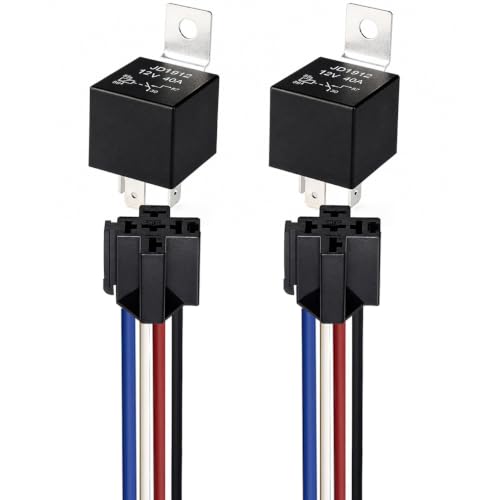
- Integrated Diode: Each relay includes a built-in diode that suppresses induced voltage during switching, safeguarding your electrical components from potential damage.
- Small size/Low power consumption/High contact voltage/ High sensitivity.
- Contact Material: Ag Alloy / Contact Resistance: ≤ 100MΩ.
- Minimum operating voltage 8V, corresponding minimum operating current is 100mA; Standard operating voltage 12V, corresponding standard operating current is 150mA.
- Life Expectancy Electrical: 100,000 Operation, Life Expectancy Mechanical: 10,000,000 Operation.
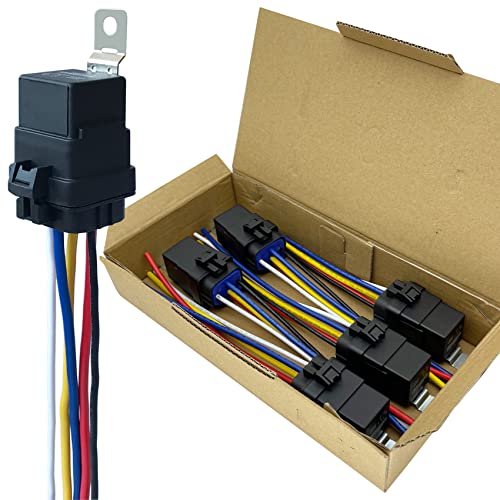
- Never go beyond its capabilities. Try to stay 10 to 15% below what the rate is for
- 12-volt 5-prong (SPDT) relay. Excellent water-repellent and dustproof ability, but do not use it in water
- Be careful when inserting the relay into the socket. If you force it, you will bend the female connectors
- Primary leads use 12 a.w.g tinned copper wire. Coil leads use 16 a.w.g
- Nominal Coil Voltage: 12 V DC; Coil Power: 1.8 W; Coil Resistance: 80 Ω; Must Operate Voltage: 6~8 V DC; Must Release Voltage: 0.6~3.6 V DC; Maximum Applied Voltage: 15.6 V DC

- Upgraded Version - Automotive relays built in fuse socket included 30A blade fuse with heavy duty 14AWG wires for main contact. no need of a separate fuse holder, saving space and money. 4-Pin SPST (Single Pole Single Throw) Relay.
- Mounting Design Feature - The interlocking mounting design of unique male and female slot on each socket edge, connect relays together and manage cables easily, offering clean and neat installation.
- Easy Wiring - The relay sockets come with color-labeled wires for load/accessories convenient wiring. Black - Ground (85), Red - VDC (30), White - Trigger (86), Blue - Output N/O (87)
- Wide Application - Widely used in car keys power control, over-load protection, trunk release, polarity change, power door lock/actuator control, change a low current output to high current, add ignition/accessory outputs, control motors/other electronics etc.
- Set includes 5 relays, 5 relay harnesses, and 5 30A blade fuses.


- Excellent water-repellent and dustproof ability, but do not use it in water
- Never exceed its capabilities. Try to stay 10 to 15% below the rated value
- Pay attention to the dimensions (1.4 x 1.4 x 10 inches)! For some applications, it might be too big
- 12-volt 4-prong relay. Primary leads use 12 AWG tinned copper wire. Coil leads use 16 AWG. The length of the wire is 7 inches
- For people whose relays are burning, please make sure you are making tight connections (especially on the load wires), read the specs in the item description, and ensure the operating environment meets the relay's safety requirements

- 40A/30A high switching capability
- 5-prong universal standard relay, SPDT (Single Pole Double Throw)
- Pin Specifications: 30-VDC, 85-Ground, 86-Trigger, 87-Output N/O, 87a-Output N/C
- Nominal Coil Voltage: 12vdc; Must Operate Voltage: 6~8vdc; Must Release Voltage: 0.6~3.6vdc; Maximum Applied Voltage: 15.6vdc; Coil Power: 1.8w; Coil Resistance: 80Ω
- Used on: All automotive and devices equipped with a 12-volt power source, car sound systems, security systems, LED lights, headlights, and various other applications
SEOCONTENT-START
This notice applies to your vehicle, V62/NHTSA 19V-813 YOUR SCHEDULING OPTIONS 1. Visit recalls.mopar.com to sign up for email or SMS notifications for when remedy parts become available. You will be asked to provide your Vehicle Identification Number (VIN), provided above 2. Scan below using your smartphone or tablet to sign up to be notified when remedy parts become available 3. Wait for FCA US to contact you again, by mail, with a follow-up recall notice when remedy parts are available 4. Call the FCA Recall Assistance Center at 1-800-853-1403. An agent can sign you up to be notified when remedy parts become available, or answer any other questions you may have DEALERSHIP INSTRUCTIONS Please reference Safety Recall V62. IMPORTANT SAFETY RECALL Fuel Pump Relay Dear [Name], This notice is sent to you in accordance with the National Traffic and Motor Vehicle Safety Act. FCA US has decided that a defect, which relates to motor vehicle safety, exists in certain [2011 – 2013 (WD) Dodge Durango, and 2011 – 2013 (WK) Jeep Grand Cherokee] vehicles. WHY DOES MY VEHICLE NEED REPAIRS? Our records indicate that your vehicle [1] was included in previous Safety Recall P54 (NHTSA 14V-530) or Safety Recall R09 (NHTSA 15V-115). The remedy for the previous recalls was to replace the fuel pump relay. If you had either of these recalls completed, the installed remedy relay is susceptible to silicon contamination on the relay contacts, which can cause the relay to fail. A fuel pump relay failure can result in a no-start condition or an engine stall condition if the vehicle is running. A vehicle engine stall while driving can cause a vehicle crash without prior warning. HOW DO I RESOLVE THIS IMPORTANT SAFETY ISSUE? The remedy for this condition is not currently available. We are making every effort to finalize the remedy as quickly as possible, and will service your vehicle free of charge (parts and labor). FCA US will contact you again, by mail, with a follow-up recall notice when the remedy is available. Once you receive your follow-up notice, simply contact your Chrysler, Jeep®, Dodge or RAM dealer right away to schedule a service appointment [2]. Additional options for your next steps are included on the left side of this notification. We appreciate your patience. WHAT IF I ALREADY PAID TO HAVE THIS REPAIR COMPLETED? If you have already experienced this specific condition and have paid to have it repaired, you may visit www.fcarecallreimbursement.com to submit your reimbursement request online [3]. Once we receive and verify the required documents, reimbursement will be sent to you within 60 days. If you have had previous repairs performed and/or already received reimbursement, you may still need to have the recall repair performed. We apologize for any inconvenience, but are sincerely concerned about your safety. Thank you for your attention to this important matter. Customer Assistance/Field Operations FCA US LLC [Model Year and Model] VIN XXXXXXXXXXXXXXXXX VEHICLE PICTURE LOGO QR Code [1] If you no longer own this vehicle, please help us update our records. Call the FCA Recall Assistance Center at 1-800-853-1403 to update your information. [2] If your dealer fails or is unable to remedy this defect without charge and within a reasonable time, you may submit a written complaint to the Administrator, National Highway Traffic Safety Administration, 1200 New Jersey Ave., S.E., Washington, DC 20590, or you can call the toll-free Vehicle Safety Hotline at 1-888-327-4236 (TTY 1-800-424-9153), or go to safercar.gov. [3] You can also mail in your original receipts and proof of payment to the following address for reimbursement consideration: FCA Customer Assistance, P.O. Box 21- 8004, Auburn Hills, MI 48321-8007, Attention: Recall Reimbursement. Note to lessors receiving this recall notice: Federal regulation requires that you forward this recall notice to the lessee within 10 days. Mr. Mrs. Customer 1234 Main Street Hometown, MI 48371
**************************************************************************************************************
Schedule your FREE repair today! URGENT SAFETY RECALL FUEL PUMP RELAY — V62/NHTSA 19V-813 [MY Make Model] AA111111 Dear CUSTOMER NAME: Please bring your vehicle and this card to your scheduled appointment. We apologize for any inconvenience and do appreciate your attention to this urgent matter. Safety recall campaign V62/NHTSA 19V-813 is open on your [MY Make® Model]. ATENCIÓN! La unidad descrita en esta carta tiene un llamado a revisión pendiente por realizer. Para protegerlo a usted y a su familia, es urgente que se comunique con el grupo FCA US al teléfono 1-800-853-1403 con el fin de programar una cita y se reparada su unidad sin costo para usted. 0000001/#100039/V62-FST Call 1-800-853-1403 Visit recalls.mopar.com to locate your closest dealer Download the Mopar Owner’s Companion App at either the App or Google Play Stores LOGO VEHICLE PICTURE
**************************************************************************************************************
Schedule your FREE repair today! URGENT SAFETY RECALL INNER FENDER LINERS — K13/10V-236 Dear : Please bring your vehicle and this card to your scheduled appointment. We apologize for any inconvenience and do appreciate your attention to this urgent matter. Safety recall campaign K13/10V-236 is open on your ® . ATENCIÓN! La unidad descrita en esta carta tiene un llamado a revisión pendiente por realizer. Para protegerlo a usted y a su familia, es urgente que se comunique con el grupo FCA US al teléfono 1-800-853-1403 con el fin de programar una cita y se reparada su unidad sin costo para usted. 0000046/#102666/K13-SPC Call 1-800-853-1403 Visit recalls.mopar.com to locate your closest dealer Download the Mopar Owner’s Companion App at either the App or Google Play Stores
**************************************************************************************************************
Copyright 2020, FCA US LLC, All Rights Reserved(kka) Revised January 2021 Dealer Service Instructions for: Safety Recall V62 / NHTSA 19V-813 Fuel Pump Relay NOTE: Additional information to section A steps 10 -14 and section B steps 1-5 2011 – 2013 (WD) Dodge Durango (WK) Jeep Grand Cherokee NOTE: Some vehicles above may have been identified as not involved in this recall and therefore have been excluded from this recall. The fuel pump relay on about 582,000 of the above vehicles may have had a fuel pump relay installed as a recall remedy that is susceptible to silicon contamination of the relay contacts, that can cause the relay to fail. A fuel pump relay failure can result in a no-start condition or an engine stall condition if the vehicle is running. A vehicle engine stall while driving can cause a vehicle crash without prior warning Remedy Available IMPORTANT: Some of the involved vehicles may be in dealer used vehicle inventory. Dealers should complete this recall service on these vehicles before retail delivery. Dealers should also perform this recall on vehicles in for service. Involved vehicles can be determined by using the VIP inquiry process. Subject Safety Recall V62 – Fuel Pump Relay Page 2 Inspect for an external fuel pump relay and replace the fuel pump relay and harness connector and mount relay on bracket near the PCM, if there is no external fuel pump relay modify the TIPM to accept an external relay. Part Number Description CSZDV621AA Part Package Each package contains the following components: Quantity Description 1 Harness, Fuel Pump Relay 1 Relay, Fuel Pump 3 Crimp, Brass 3 Strap, Plastic Tie 3 Tube, Shrink Part Number Description CSZDV622AA Part Package Each package contains the following components: Quantity Description 1 Nut 1 Bracket 1 Bolt Dealers should order the part package for each vehicle at the time appointments are scheduled to assure that the part is available when the customer arrives. No parts return required for this campaign. The following special tools are required to perform this repair: 10042 Wire splice crimp tool 6680-2PA Pick, Terminal Repair Parts Information Parts Return Special Tools Safety Recall V62 – Fuel Pump Relay Page 3 A. Inspect for External Fuel Pump Relay 1. Open hood. 2. Inspect for an external fuel pump relay (Figure 1): If there is an external fuel pump relay installed, continue to step 3. If there is NO external fuel pump relay, continue with Section B. Install External Fuel Pump Relay. Service Procedure RIGHT FRONT SHOCK TOWER TIPM COVER RADIATOR CAP POWERTRAIN CONTROL MODULE EXTERNAL FUEL PUMP RELAY HIGH FAN RELAY Figure 1 – Inspect for External Fuel Pump Relay FORWARD Safety Recall V62 – Fuel Pump Relay Page 4 3. Position the passenger seat fully forward. 4. Open the battery access cover located under the passenger front seat and disconnect the negative battery cable (Figure 2). 5. Remove the fuel pump relay from the core support (Figure 1). 6. Remove the TIPM cover and remove the B+ terminal retaining nut, cable and the orange 12V relay wire (Figure 3). 7. Push the four TIPM retaining tabs and separate the TIPM from the TIPM support bracket (Figure 3). Service Procedure (Continued) Figure 2 – Battery Access PASSENGER SEATBACK BATTERY BATTERY ACCESS COVER Figure 3 – TIPM Release Tabs B+ CABLE AND 12V RELAY WIRE B+ RETAINING NUT TIPM RELEASE TABS Safety Recall V62 – Fuel Pump Relay Page 5 8. Carefully rotate the TIPM on its side to expose the fuel pump relay wire harness connections (Figure 4). 9. Cut the pink, brown and blue wires from the Fuel Pump Relay wire harness assuring to leave sufficient lengths to reconnect all 3 wires and DISCARD the relay and wire harness (Figure 5). Service Procedure (Continued) Figure 4 – Fuel Pump Relay Harness Figure 5 – Fuel Pump Relay Wires FUEL PUMP RELAY WIRE HARNESS CONNECTIONS CUT WIRES REMOVED FUEL PUMP RELAY TIPM Safety Recall V62 – Fuel Pump Relay Page 6 10. Remove the relay housing from the repair package (Figure 6). 11. Lift up on both sides of the fuel relay housing cover tabs and remove the cover from the housing (Figure 7). Service Procedure (Continued) Figure 6 – Fuel Pump Relay Repair Kit Figure 7 – Fuel Relay Housing FUEL PUMP RELAY HOUSING ASSEMBLY COVER TABS Bracket Safety Recall V62 – Fuel Pump Relay Page 7 12. Align the fuel pump relay male terminals to the female terminals in the electrical housing connector and firmly insert until fully seated into the housing (Figure 8). 13. Align the cover keys to the fuel pump relay housing cover assuring the tabs are fully locked (Figure 9 and Figure 10). Service Procedure (Continued) Figure 8 – Fuel Relay Installation Figure 10 – Housing Cover Installed Figure 9 – Cover Guides KEYS COVER TABS FULLY LOCKED POSITION FUEL PUMP RELAY INSTALLED Safety Recall V62 – Fuel Pump Relay Page 8 14. Slide the relay bracket into the relay housing opening assuring it is fully seated (Figure 11). Service Procedure (Continued) Figure 11 – Bracket Installation BRACKET FULLY SEATED POSITION Safety Recall V62 – Fuel Pump Relay Page 9 15. Strip approximately ½ inch (13 mm) of insulation from the ends of the brown wire, pink wire and blue wire on the NEW fuel pump relay wire and the original brown wire, pink wire and blue wire. 16. Place a piece of black shrink tube, provided in the repair kit, over the cut brown, blue wire and pink wire (Figure 12). 17. Using the supplied brass splice band clamp and crimp tool 10042, crimp the wires on the wire harness side (brown wire, pink wire and blue wire) to the NEW fuel pump relay harness (brown wire, pink wire and blue wire) (Figure 12). 18. Solder the brass splice band clamp with rosin core solder. 19. Slide the shrink tube evenly over the soldered brass splice and apply heat to the shrink tube until glue comes out of both ends of the shrink tube. Service Procedure (Continued) Figure 12 – Splice Clips BLACK SHRINK TUBE BRASS SPLICE BAND CLAMP Safety Recall V62 – Fuel Pump Relay Page 10 20. Route the NEW Fuel Pump Relay wiring harness along the main TIPM harness and secure the NEW harness using tie straps as shown in (Figure 13). 21. Cut off the excess tie strap material. 22. Align and install the TIPM in housing assuring all four of the release tabs are fully locked (Figure 14). Service Procedure (Continued) Figure 13 – New Fuel Pump Relay Harness TIE STRAPS NEW FUEL PUMP RELAY WIRING HARNESS Figure 14 – TIPM Locking Tabs RELEASE TABS Safety Recall V62 – Fuel Pump Relay Page 11 23. Attached the NEW external fuel pump relay bracket on to the back of the existing hole on the PCM mounting bracket and tighten the nut and bolt to 6N·m (53in. lbs.) (Figure 15). 24. Connect the original B+ cable terminal to the TIPM B+ stud (Figure 15). 25. Connect the wire eyelet on the orange wire of the NEW fuel pump relay wire harness to the TIPM B+ stud (Figure 15). 26. Install the B+ cable terminal retaining nut and tighten the nut to 19 N·m (14 ft. lbs.) (Figure 15). Service Procedure (Continued) Figure 15 – Fuel Pump Relay Installed ORANGE WIRE FROM NEW FUEL PUMP RELAY WIRE HARNESS TIPM ASSEMBLY NEW FUEL PUMP RELAY LOCATION FUEL PUMP RELAY MOUNTING BRACKET B+ STUD AND NUT PCM MOUNTING BRACKET Safety Recall V62 – Fuel Pump Relay Page 12 27. Connect the negative battery cable to the negative battery terminal on the battery and close the battery access cover. 28. Return the passenger seat to its original location. 29. Return the vehicle to the customer. Service Procedure (Continued) Safety Recall V62 – Fuel Pump Relay Page 13 B. Install External Fuel Pump Relay 1. Remove the relay housing from the repair package (Figure 16). 2. Lift up on both sides of the fuel relay housing cover tabs and remove the cover from the housing (Figure 17). Service Procedure (Continued) Figure 16 – Fuel Pump Relay Repair Kit Figure 17 – Fuel Relay Housing Fuel Pump Relay Housing Assembly Cover Tabs Bracket Safety Recall V62 – Fuel Pump Relay Page 14 3. Align the fuel pump relay male terminals to the female terminals in the electrical housing connector and firmly insert until fully seated into the housing (Figure 18). 4. Align the cover keys to the fuel pump relay housing cover assuring the tabs are fully locked (Figure 19 and Figure 20). Service Procedure (Continued) Figure 18 – Fuel Relay Installation Figure 20 – Housing Cover Installed Figure 19 – Cover Guides KEYS COVER TABS FULLY LOCKED POSITION FUEL PUMP RELAY INSTALLED Safety Recall V62 – Fuel Pump Relay Page 15 5. Slide the relay bracket into the relay housing opening assuring it is fully seated (Figure 21). Service Procedure (Continued) Figure 21 – Bracket Installation BRACKET FULLY SEATED POSITION Safety Recall V62 – Fuel Pump Relay Page 16 6. Position the passenger seat fully forward. 7. Open the battery access cover located under the passenger front seat and disconnect the negative battery cable (Figure 22). 8. Remove and save the Totally Integrated Power Module (TIPM) access cover. 9. Remove and save the B+ cable terminal retaining nut. 10. Carefully separate the B+ cable terminal from the B+ TIPM stud (Figure 23). Service Procedure (Continued) Figure 22 – Battery Access Figure 23 – B+ Cable Terminal PASSENGER SEATBACK BATTERY ACCESS COVER BATTERY B+ TIPM STUD B+ CABLE TERMINAL TIPM ASSEMBLY Safety Recall V62 – Fuel Pump Relay Page 17 11. Push the four TIPM retaining tabs and separate the TIPM from the TIPM support bracket (Figure 24). 12. Unplug the 50-way electrical connector from the bottom of the TIPM (Cavity “A”) (Figure 25). Service Procedure (Continued) Figure 24 – TIPM Release Tabs Figure 25 – TIPM 50-Way Electrical Connector TIPM RELEASE TABS TIPM ASSEMBLY TIPM ASSEMBLY 50-WAY CONNECTOR CAVITY “A” 40-WAY CONNECTOR 50-WAY CONNECTOR BROWN WIRE THAT WILL BE CUT AND SPLICED TO NEW RELAY HARNESS Safety Recall V62 – Fuel Pump Relay Page 18 13. Locate the brown wire in cavity number 40 of the 50-way electrical connector (Figure 27). 14. Cut the brown wire one inch (25 mm) from the 50-way electrical connector (Figure 27). Service Procedure (Continued) Figure 26 – Locate Brown Wire in 50-Way Connector Figure 27 – Cut the Brown Wire One Inch from Connector BROWN WIRE THAT WILL BE CUT AND SPLICED TO NEW RELAY HARNESS 50-WAY CONNECTOR CUT BROWN WIRE AT 50-WAY CONNECTOR 50-WAY CONNECTOR CAVITY NUMBER 40 50-WAY CONNECTOR LOCK BAR 50-WAY CONNECTOR LOCK BAR Safety Recall V62 – Fuel Pump Relay Page 19 15. Install shrink tube to the connector side brown wire to insulate the wire end. This wire will no longer be used (Figure 28). 16. Using the following procedure, splice the brown wire on the wire harness to the brown wire on the new fuel pump relay harness: a. Strip approximately ½ inch (13 mm) of insulation from the end of the brown wire on the new fuel pump relay wire and the original brown wire. b. Place a piece of black shrink tube, provided in the repair kit, over the cut brown wire. c. Using the supplied brass splice band clamp and crimp tool 10042, crimp the brown wire on the wire harness side to the brown wire on the new fuel pump relay harness (Figure 29). d. Solder the brass splice band clamp with rosin core solder. e. Slide the shrink tube evenly over the soldered brass splice and apply heat to the shrink tube until glue comes out of both ends of the shrink tube. 17. Carefully plug the 50-way electrical connector into the bottom of the TIPM. CAUTION: Be sure that the 50-way connector lock bar is fully engaged. Service Procedure (Continued) Figure 28 – Insulate Brown Abandoned Wire Figure 29 – Crimp and Solder Brown Wires PLACE SHRINK TUBE OVER ABANDONED BROWN WIRE BROWN WIRE THAT WILL BE SPLICED TO NEW FUEL PUMP RELAY WIRE HARNESS 50-WAY CONNECTOR BROWN WIRE FROM NEW FUEL PUMP RELAY WIRE HARNESS CRIMP TOOL 10042 BRASS SPLICE BAND CLAMP BROWN WIRE 50-WAY CONNECTOR Safety Recall V62 – Fuel Pump Relay Page 20 18. Unplug the 40-way electrical connector located on the bottom side of the TIPM (Figure 30). 19. Carefully remove and save the 40-way electrical connector wire cover located on the wire side of the connector (Figure 31). NOTE: The plastic tie strap that holds the wire harness to the wire cover must be cut off and discarded (Figure 31). Service Procedure (Continued) Figure 30 – TIPM 40-Way Electrical Connector Figure 31 – 40-Way Electrical Connector Wire Cover NEW FUEL PUMP RELAY WIRE HARNESS 40-WAY ELECTRICAL CONNECTOR CAVITY 40-WAY ELECTRICAL CONNECTOR NEW FUEL PUMP RELAY TIPM ASSEMBLY 40-WAY ELECTRICAL CONNECTOR WIRE COVER 40-WAY ELECTRICAL CONNECTOR LOCK BAR Safety Recall V62 – Fuel Pump Relay Page 21 20. Locate the blue (with an orange trace) wire in the 40-way electrical connector (Figure 32). 21. Cut the blue (with an orange trace) wire one inch (25 mm) from the 40-way electrical connector (Figure 33). 22. Install shrink tube to the connector side blue (with an orange trace) wire to insulate the wire end. This wire will no longer be used (Figure 33). Service Procedure (Continued) Figure 32 – Locate Blue with Orange Trace Wire in 40-Way Connector Figure 33 – Cut the Blue (with Orange Trace) Wire BLUE (WITH ORANGE TRACE) WIRE THAT WILL BE SPLICED TO THE BLUE WIRE OF THE NEW FUEL PUMP RELAY WIRE HARNESS 40-WAY ELECTRICAL CONNECTOR 40-WAY ELECTRICAL CONNECTOR LOCK BAR PLACE SHRINK TUBE OVER ABANDONED BLUE (WITH ORANGE TRACE) WIRE BLUE (WITH ORANGE TRACE) WIRE THAT WILL BE SPLICED TO THE BLUE WIRE ON THE NEW FUEL PUMP RELAY WIRE HARNESS 40-WAY ELECTRICAL CONNECTOR SHRINK TUBE GLUE Safety Recall V62 – Fuel Pump Relay Page 22 23. Using the following procedure, splice the blue (with an orange trace) wire on the wire harness to the blue wire on the new fuel pump relay harness: a. Strip approximately ½ inch (13 mm) of insulation from the end of the blue wire on the new fuel pump relay wire and the original blue (with an orange trace) wire (Figure 34). b. Place the black shrink tube provided in the repair kit over the cut wire (Figure 34). c. Using the supplied brass splice band clamps and crimp tool 10042, crimp the blue wire (with orange trace) on the wire harness side to the blue wire on the fuel pump relay wire harness (Figure 35). d. Solder the brass splice band clamp with rosin core solder (Figure 35). e. Slide the shrink tube evenly over the soldered brass splice band clamp and apply heat to the shrink tube until glue comes out of both ends of the shrink tube. Service Procedure (Continued) Figure 34 – Strip Wire and Install Shrink Tube Figure 35 – Crimp and Solder Blue Wire to Blue Wire (with Orange Trace) NEW FUEL PUMP RELAY WIRE HARNESS SHRINK TUBE STRIP ½ IN. (13 MM) OF WIRE INSULATION FROM THE END OF THE BLUE WIRE BLUE WIRE FROM NEW FUEL PUMP RELAY WIRE HARNESS BRASS SPLICE BAND CLAMP CRIMP TOOL 10042 BLUE (WITH ORANGE TRACE) WIRE 40-WAY ELECTRICAL CONNECTOR Safety Recall V62 – Fuel Pump Relay Page 23 24. Remove and save the 40-way electrical connector green plastic terminal lock (Figure 36). 25. Locate the pink (with green trace) wire in cavity 38 of the 40-way electrical connector (Figure 37). Service Procedure (Continued) Figure 36 – Green Connector Lock Figure 37 – Pink (with Green Tracer) Wire Location GREEN PLASTIC TERMINAL LOCK 40-WAY ELECTRICAL CONNECTOR 40-WAY ELECTRICAL CONNECTOR LOCK BAR 40-WAY ELECTRICAL CONNECTOR PINK (WITH GREEN TRACE) WIRE 40-WAY ELECTRICAL CONNECTOR LOCK BAR Safety Recall V62 – Fuel Pump Relay Page 24 26. Carefully remove the pink (with a green trace) from the 40-way connector (Figure 38). NOTE: Use Miller Tool 6680-2PA terminal pick, or equivalent, to remove the wire terminal from the 40-way electrical connector. 27. Strip approximately ½ inch (13 mm) of insulation off the pink (with green trace) wire without cutting the wire (Figure 39). Service Procedure (Continued) Figure 38 – Remove Pink (with Green Trace) wire from 40-Way Connector Figure 39 – Remove Insulation without Cutting the Wire 40-WAY ELECTRICAL CONNECTOR 40-WAY ELECTRICAL CONNECTOR LOCK BAR STRIP ½ INCH (13MM) OF INSULATION OFF THE WIRE WITHOUT CUTTING THE WIRE PINK (WITH GREEN TRACE) WIRE PINK WIRE FROM NEW FUEL PUMP RELAY WIRE HARNESS BLUE WIRE FROM NEW FUEL PUMP RELAY WIRE HARNESS 40-WAY ELECTRICAL CONNECTOR LOCK BAR 40-WAY ELECTRICAL CONNECTOR MILLER 6680-2PA Safety Recall V62 – Fuel Pump Relay Page 25 28. Using the following procedure, splice the pink (with a green trace) wire to the pink wire on the new fuel pump relay harness: a. Strip approximately ¾ inch (20 mm) of insulation from the end of the pink wire on the new fuel pump relay wire. b. Wrap the pink wire from the new fuel pump relay wire harness around the pink (with green trace) wire at the location the insulation was removed (Figure 40). c. Using the supplied brass splice band clamp and crimp tool 10042, crimp the fuel pump wire harness pink wire to the pink (with a green trace) wire on the vehicle wire harness (Figure 40). d. Solder the brass splice band clamp with rosin core solder. e. Slide the shrink tube evenly over the soldered brass splice band clamp and apply heat to the shrink tube until glue comes out of both ends of the shrink tube (Figure 41). Service Procedure (Continued) Figure 40 – Crimp and Solder Pink Wire to Pink (with Green Trace) Wire Figure 41 – Install Shrink Tube PINK (WITH GREEN TRACE) WIRE PINK WIRE FROM NEW FUEL PUMP RELAY WIRE HARNESS 40-WAY ELECTRICAL CONNECTOR BRASS SPLICE BAND CLAMP PINK (WITH GREEN TRACE) WIRE PINK WIRE FROM NEW FUEL PUMP RELAY WIRE HARNESS SHRINK TUBE 40-WAY ELECTRICAL CONNECTOR SHRINK TUBE GLUE Safety Recall V62 – Fuel Pump Relay Page 26 29. Carefully install the wire terminal for the pink (with green trace) wire back into the same cavity (cavity 38) in the 40-way electrical connector that it was removed from (Figure 42). 30. Install the 40-way electrical connector green plastic terminal lock (Figure 42). 31. Install the 40-way electrical connector wire cover. 32. Install a plastic tie strap to hold the wire harness in place on the back side of the 40-way electrical connector (Figure 43). 33. Plug the 40-way electrical connector into the bottom of the TIPM assembly. CAUTION: Be sure the 40-way electrical connector lock bar is fully engaged. 34. Snap the TIPM assembly back into the TIPM support bracket. Service Procedure (Continued) Figure 42 – Install Pink (with Green Trace) Wire Terminal into the same cavity on the 40-Way Connector from which it was removed Figure 43 – Install Back Cover and Tie Strap PINK (WITH GREEN TRACE) WIRE PINK WIRE FROM NEW FUEL PUMP RELAY WIRE HARNESS 40-WAY ELECTRICAL CONNECTOR 40-WAY ELECTRICAL CONNECTOR LOCK BAR 40-WAY ELECTRICAL CONNECTOR WIRE COVER PLASTIC TIE STRAP 40-WAY ELECTRICAL CONNECTOR 40-WAY ELECTRICAL CONNECTOR LOCK BAR Safety Recall V62 – Fuel Pump Relay Page 27 35. Route the NEW Fuel Pump Relay wiring harness along the main TIPM harness and secure the NEW harness using tie straps as shown in (Figure 44). 36. Cut off the excess tie strap material. 37. Align and install the TIPM in housing assuring all four of the release tabs are fully locked (Figure 45). Service Procedure (Continued) Figure 44 – New Fuel Pump Relay Harness TIE STRAPS NEW FUEL PUMP RELAY WIRING HARNESS Figure 45 – TIPM Tabs RELEASE TABS Safety Recall V62 – Fuel Pump Relay Page 28 38. Attached the NEW external fuel pump relay bracket to the existing hole on the PCM mounting bracket and tighten the nut and bolt to 6N·m (53in. lbs.) (Figure 46). 40. Connect the original B+ cable terminal to the TIPM B+ stud (Figure 47). 41. Connect the wire eyelet on the orange wire of the new fuel pump relay wire harness to the TIPM B+ stud (Figure 47). 42. Install the B+ cable terminal retaining nut. Tighten the nut to 14 ft. lbs. (19 N·m) (Figure 47). Service Procedure (Continued) Figure 46 – Mount New External Relay to TIPM bracket Figure 47 – B+ Electrical Connection B+ STUD AND NUT ORANGE WIRE FROM NEW FUEL PUMP RELAY WIRE HARNESS TIPM ASSEMBLY ORIGINAL B+ CABLE TERMINAL FUEL PUMP RELAY FUEL PUMP RELAY MOUNTING BRACKET PCM MOUNTING BRACKET Safety Recall V62 – Fuel Pump Relay Page 29 43. Push down on all the relays and fuses in the TIPM to ensure that they are all fully engaged. CAUTION: Be sure that the new fuel pump relay wire harness does not contact any sharp edges that may damage the new fuel pump relay wire harness. 44. Carefully install the TIPM access cover (Figure 48). 45. Connect the negative battery cable to the negative battery terminal on the battery and close the battery access cover. 46. Return the passenger seat to its original location. 47. Return the vehicle to the customer. Service Procedure (Continued) Figure 48 – Install TIPM Cover TIPM COVER Safety Recall V62 – Fuel Pump Relay Page 30 Claims for vehicles that have been serviced must be submitted on the DealerCONNECT Claim Entry Screen located on the Service tab. Claims paid will be used by FCA to record recall service completions and provide dealer payments. Use one of the following labor operation numbers and time allowances: Labor Operation Time Number Allowance Install external fuel pump relay and wire harness 08-V6-21-82 0.7 hours Replace fuel pump relay and wire harness 08-V6-21-83 0.5 hours (If R09 or P54 Previously Performed) NOTE: See the Warranty Administration Manual, Recall Claim Processing Section, for complete recall claim processing instructions. To view this notification on DealerCONNECT, select “Global Recall System” on the Service tab, then click on the description of this notification. All involved vehicle owners known to FCA are being notified of the service requirement by first class mail. They are requested to schedule appointments for this service with their dealers. A generic copy of the owner letter is attached. Completion Reporting and Reimbursement Dealer Notification Owner Notification and Service Scheduling Safety Recall V62 – Fuel Pump Relay Page 31 All involved vehicles have been entered into the DealerCONNECT Global Recall System (GRS) and Vehicle Information Plus (VIP) for dealer inquiry as needed. GRS provides involved dealers with an updated VIN list of their incomplete vehicles. The owner’s name, address and phone number are listed if known. Completed vehicles are removed from GRS within several days of repair claim submission. To use this system, click on the “Service” tab and then click on “Global Recall System.” Your dealer’s VIN list for each recall displayed can be sorted by: those vehicles that were unsold at recall launch, those with a phone number, city, zip code, or VIN sequence. Dealers must perform this repair on all unsold vehicles before retail delivery. Dealers should also use the VIN list to follow up with all owners to schedule appointments for this repair. Recall VIN lists may contain confidential, restricted owner name and address information that was obtained from the Department of Motor Vehicles of various states. Use of this information is permitted for this recall only and is strictly prohibited from all other use. If you have any questions or need assistance in completing this action, please contact your Service and Parts District Manager. Customer Services / Field Operations FCA US LLC Vehicle Lists, Global Recall System, VIP and Dealer Follow Up Additional Information This notice applies to your vehicle, V62/NHTSA 19V-813 YOUR SCHEDULING OPTIONS 1. RECOMMENDED OPTION Call your authorized Chrysler / Dodge / Jeep® / RAM Dealership 2. Call the FCA Recall Assistance Center at 1-800-853-1403. An agent can confirm part availability and help schedule an appointment 3. Visit recalls.mopar.com, scan the QR code below, or download the Mopar Owner’s Companion App. Get access to recall notifications, locate your nearest dealer, and more through this website or Mopar Owner’s Companion App. You will be asked to provide your Vehicle Identification Number (VIN) to protect and verify your identity. The last eight characters of your VIN are provided above. DEALERSHIP INSTRUCTIONS Please reference Safety Recall V62. IMPORTANT SAFETY RECALL Fuel Pump Relay Dear [Name], This notice is sent to you in accordance with the National Traffic and Motor Vehicle Safety Act. FCA US has decided that a defect, which relates to motor vehicle safety, exists in certain [2011 – 2013 (WD) Dodge Durango, and 2011 – 2013 (WK) Jeep Grand Cherokee] vehicles. It is extremely important to take steps now to repair your vehicle to ensure the safety of you and your passengers. WHY DOES MY VEHICLE NEED REPAIRS? Our records indicate that your vehicle [1] was included in previous Safety Recall P54 (NHTSA 14V-530) or Safety Recall R09 (NHTSA 15V-115). The remedy for the previous recalls was to replace the fuel pump relay. If you had either of these recalls completed, the installed remedy relay is susceptible to silicon contamination on the relay contacts, which can cause the relay to fail. A fuel pump relay failure can result in a no-start condition or an engine stall condition if the vehicle is running. A vehicle engine stall while driving can cause a vehicle crash without prior warning. HOW DO I RESOLVE THIS IMPORTANT SAFETY ISSUE? FCA will repair your vehicle [2] free of charge (parts and labor). To do this, your dealer will replace the affected fuel pump relay and related wire harness. For vehicles that have not been serviced for recall P54 or R09, a new externally mounted relay and wire harness will be installed to bypass the fuel pump relay that is internal to the totally integrated power module. For vehicles that have already been serviced for recall P54 or R09, the existing externally mounted fuel pump relay and wire harness will be replaced with a new relay and wire harness. The estimated repair time is about one hour. In addition, your dealer will require your vehicle for proper check-in, preparation, and check-out during your visit, which require more time. Your time is important to us, so we recommend that you schedule a service appointment to minimize your inconvenience. Please bring this letter with you to your dealership. TO SCHEDULE YOUR FREE REPAIR, CALL YOUR CHRYSLER, DODGE, JEEP OR RAM DEALER TODAY WHAT IF I ALREADY PAID TO HAVE THIS REPAIR COMPLETED? If you have already experienced this specific condition and have paid to have it repaired, you may visit www.fcarecallreimbursement.com to submit your reimbursement request online. [3] Once we receive and verify the required documents, reimbursement will be sent to you within 60 days. If you have had previous repairs performed and/or already received reimbursement, you may still need to have the recall repair performed. We apologize for any inconvenience, but are sincerely concerned about your safety. Thank you for your attention to this important matter. Customer Assistance/Field Operations FCA US LLC [Model Year and Model] VIN XXXXXXXXXXXXXXXXX LOGO VEHICLE PICTURE QR Code [1] If you no longer own this vehicle, please help us update our records. Call the FCA Recall Assistance Center at 1-800-853-1403 to update your information. [2] If your dealer fails or is unable to remedy this defect without charge and within a reasonable time, you may submit a written complaint to the Administrator, National Highway Traffic Safety Administration, 1200 New Jersey Ave., S.E., Washington, DC 20590, or you can call the toll-free Vehicle Safety Hotline at 1-888-327-4236 (TTY 1-800-424- 9153), or go to safercar.gov. [3] You can also mail in your original receipts and proof of payment to the following address for reimbursement consideration: FCA Customer Assistance, P.O. Box 21-8004, Auburn Hills, MI 48321-8007, Attention: Recall Reimbursement. Note to lessors receiving this recall notice: Federal regulation requires that you forward this recall notice to the lessee within 10 days. Mr. Mrs. Customer 1234 Main Street Hometown, MI 48371
**************************************************************************************************************
This notice applies to your vehicle, V62/NHTSA 19V-813 YOUR SCHEDULING OPTIONS 1. RECOMMENDED OPTION Call your authorized Chrysler / Dodge / Jeep® / RAM Dealership 2. Call the FCA Recall Assistance Center at 1-800-853-1403. An agent can confirm part availability and help schedule an appointment 3. Visit recalls.mopar.com, scan the QR code below, or download the Mopar Owner’s Companion App. Get access to recall notifications, locate your nearest dealer, and more through this website or Mopar Owner’s Companion App. You will be asked to provide your Vehicle Identification Number (VIN) to protect and verify your identity. The last eight characters of your VIN are provided above. DEALERSHIP INSTRUCTIONS Please reference Safety Recall V62. IMPORTANT SAFETY RECALL Fuel Pump Relay Dear [Name], This notice is sent to you in accordance with the National Traffic and Motor Vehicle Safety Act. FCA US has decided that a defect, which relates to motor vehicle safety, exists in certain [2011 – 2013 (WD) Dodge Durango, and 2011 – 2013 (WK) Jeep Grand Cherokee] vehicles. It is extremely important to take steps now to repair your vehicle to ensure the safety of you and your passengers. WHY DOES MY VEHICLE NEED REPAIRS? Our records indicate that your vehicle [1] was included in previous Safety Recall P54 (NHTSA 14V-530) or Safety Recall R09 (NHTSA 15V-115). The remedy for the previous recalls was to replace the fuel pump relay. If you had either of these recalls completed, the installed remedy relay is susceptible to silicon contamination on the relay contacts, which can cause the relay to fail. A fuel pump relay failure can result in a no-start condition or an engine stall condition if the vehicle is running. A vehicle engine stall while driving can cause a vehicle crash without prior warning. HOW DO I RESOLVE THIS IMPORTANT SAFETY ISSUE? FCA will repair your vehicle [2] free of charge (parts and labor). To do this, your dealer will replace the affected fuel pump relay and related wire harness. For vehicles that have not been serviced for recall P54 or R09, a new externally mounted relay and wire harness will be installed to bypass the fuel pump relay that is internal to the totally integrated power module. For vehicles that have already been serviced for recall P54 or R09, the existing externally mounted fuel pump relay and wire harness will be replaced with a new relay and wire harness. The estimated repair time is about one hour. In addition, your dealer will require your vehicle for proper check-in, preparation, and check-out during your visit, which require more time. Your time is important to us, so we recommend that you schedule a service appointment to minimize your inconvenience. Please bring this letter with you to your dealership. TO SCHEDULE YOUR FREE REPAIR, CALL YOUR CHRYSLER, DODGE, JEEP OR RAM DEALER TODAY WHAT IF I ALREADY PAID TO HAVE THIS REPAIR COMPLETED? If you have already experienced this specific condition and have paid to have it repaired, you may visit www.fcarecallreimbursement.com to submit your reimbursement request online. [3] Once we receive and verify the required documents, reimbursement will be sent to you within 60 days. If you have had previous repairs performed and/or already received reimbursement, you may still need to have the recall repair performed. We apologize for any inconvenience, but are sincerely concerned about your safety. Thank you for your attention to this important matter. Customer Assistance/Field Operations FCA US LLC [Model Year and Model] VIN XXXXXXXXXXXXXXXXX LOGO VEHICLE PICTURE QR Code [1] If you no longer own this vehicle, please help us update our records. Call the FCA Recall Assistance Center at 1-800-853-1403 to update your information. [2] If your dealer fails or is unable to remedy this defect without charge and within a reasonable time, you may submit a written complaint to the Administrator, National Highway Traffic Safety Administration, 1200 New Jersey Ave., S.E., Washington, DC 20590, or you can call the toll-free Vehicle Safety Hotline at 1-888-327-4236 (TTY 1-800-424- 9153), or go to safercar.gov. [3] You can also mail in your original receipts and proof of payment to the following address for reimbursement consideration: FCA Customer Assistance, P.O. Box 21-8004, Auburn Hills, MI 48321-8007, Attention: Recall Reimbursement. Note to lessors receiving this recall notice: Federal regulation requires that you forward this recall notice to the lessee within 10 days. Mr. Mrs. Customer 1234 Main Street Hometown, MI 48371
**************************************************************************************************************
11/15/2019
_____________________________________________________________________
New Safety Recall Advanced Communication – V62
FCA US LLC (FCA US) has announced a safety recall on certain 2011 through 2013 Model Year (WD) Dodge Durango and 2011 through 2013 Model Year (WK) Jeep® Grand Cherokee vehicles.
REASON FOR THIS SAFETY RECALL
Some of the above vehicles may have had a fuel pump relay installed as a recall remedy during the completion of Safety Recall P54 (NHTSA 14V-530) or Safety Recall R09 (NHTSA 15V-115). The installed relay is susceptible to silicon contamination on the relay contacts, which can cause the relay to fail. A fuel pump relay failure can result in a no-start condition or an engine stall condition if the vehicle is running. A vehicle engine stall while driving can cause a vehicle crash without prior warning
SERVICE ACTION
The remedy for this condition is not currently available. Dealers will be notified of the launch of this safety recall by way of established communication methods.
We ask that you please take the time to ensure that your personnel are aware of this communication and are prepared to execute a customer friendly process for inquiries regarding involved vehicles.
Customer Services Field Operations
FCA US LLC
**************************************************************************************************************
11/21/2019
_____________________________________________________________________
New Safety Recall Advanced Communication – V62
FCA US LLC (FCA US) has announced a safety recall on certain 2011 through 2013 Model Year (WD) Dodge Durango and 2011 through 2013 Model Year (WK) Jeep® Grand Cherokee vehicles.
VINs identified as being involved in this campaign are currently live and searchable. Stop sale is in effect for the above-identified vehicles.
Vehicles impacted by a stop sale are eligible for reimbursement allowance through the Recall Floorplan Reimbursement Policy (RFPRP), which can be requested upon recall claim submission.
REASON FOR THIS SAFETY RECALL
Some of the above vehicles may have had a fuel pump relay installed as a recall remedy during the completion of Safety Recall P54 (NHTSA 14V-530) or Safety Recall R09 (NHTSA 15V-115). The installed relay has been determined to be susceptible to silicon contamination on the relay contacts, which can cause the relay to fail. A fuel pump relay failure can result in a no-start condition or an engine stall condition if the vehicle is running. A vehicle engine stall while driving can cause a vehicle crash without prior warning.
SERVICE ACTION
The remedy for this condition is not currently available. Dealers will be notified of the launch of this safety recall by way of established communication methods.
We ask that you please take the time to ensure that your personnel are aware of this communication and are prepared to execute a customer friendly process for inquiries regarding involved vehicles.
Customer Services Field Operations
FCA US LLC
IMPORTANT: Some of the involved vehicles may be in dealer new vehicle inventory. Federal law requires you to complete this recall service on these vehicles before retail delivery. Violation of this requirement by a dealer could result in a civil penalty of up to $21,000 per vehicle. Involved vehicles can be determined by using the VIP inquiry process.
**************************************************************************************************************
m
OVERVIEW
SAFETY RECALL V62-WK WD FUEL PUMP RELAY
Parts Information
DECEMBER 2019
Safety Recall V62- 2011-2013 WK WO Fuel Pump Relay is currently in Interim status and the remedy has not yet been defined.
This recall is to address relays installed during the R09 or P54 Safety Recall procedure.
In the instance that a customer comes in with a fuel pump relay failure before the V62 Dealer Instructions launch, please
follow the below instructions to repair the vehicle.
If the vehicle has not had the R09 or P54 Safety Recall performed and the VIN is still reported as open in VIP, please order the
recall parts per the Dealer Instructions using VIN Specific Parts Ordering and repair the vehicle per the Dealer Instructions.
VIN Specific ordering will perform a check and will not allow ordering of the part if the recall is not open.
If the vehicle has had the R09 or P54 Safety Recall completed/closed repair the vehicle using the service part number
56007080AB, as also noted in StarParts.
FCA appreciates your support!
SEOCONTENT-END
This product presentation was made with AAWP plugin.