August 26, 2021 NHTSA CAMPAIGN NUMBER: 21V665000
Fuel Supply Line Connector May Leak
A fuel leak in the presence of an ignition source increases the risk of fire.
NHTSA Campaign Number: 21V665
Manufacturer Chrysler (FCA US, LLC)
Components FUEL SYSTEM, GASOLINE
Potential Number of Units Affected 14,410
Summary
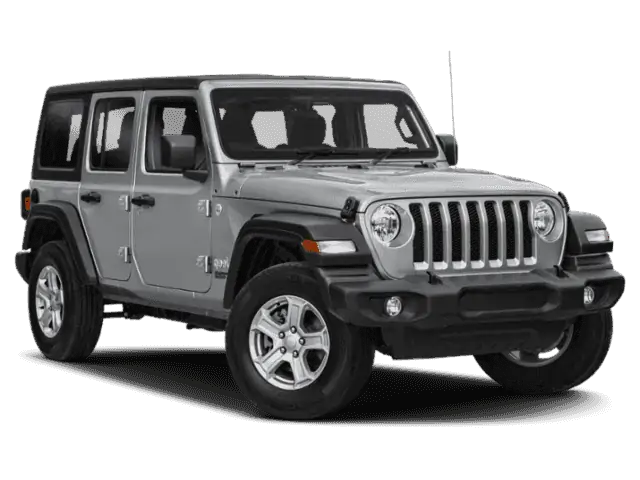
Chrysler (FCA US, LLC) is recalling certain 2020 Jeep Wrangler vehicles equipped with the 2.0 Liter engine. A cracked fuel supply line connector may leak fuel into the engine compartment.
Remedy
Dealers will inspect and replace the fuel supply line as needed, free of charge. Owner notification letters were mailed on September 10, 2021. Owners may contact FCA US LLC customer service at 1-800-853-140. FCA US LLC’s number for this recall is Y10.
Notes
Owners may also contact the National Highway Traffic Safety Administration Vehicle Safety Hotline at 1-888-327-4236 (TTY 1-800-424-9153), or go to www.nhtsa.gov.
Check if your Vehicle has a Recall
New Safety Recall Advanced Communication – Y10
FCA US LLC (FCA US) has announced a safety recall on certain 2020 Model Year (JL) Jeep® Wrangler vehicles equipped with a 2.0L engine (sales codes EC1 and EC3).
REASON FOR THIS SAFETY RECALL
Some of the above vehicles may have been built with a cracked fuel supply line connector which may leak gasoline into the engine compartment. Uncontained gasoline in the engine compartment can result in a vehicle fire which increases the risk of injury to occupants and persons outside the vehicle, as well as property damage.
SERVICE ACTION
FCA US will conduct a voluntary safety recall on all affected vehicles to inspect and replace the fuel supply line as needed. The remedy for this condition is not currently available. Dealers will be notified of the launch of this safety recall by way of established communication methods. This recall is estimated to launch in 3rd Quarter of 2021.
September 2021
Dealer Service Instructions for:
Safety Recall Y10 / NHTSA 21V-665 Fuel Supply Line
Remedy Available
2020 (JL) Jeep Wrangler
NOTE: This campaign applies only to the above vehicles equipped with a 2.0L engine (sales codes EC1 and EC3).
NOTE: Some vehicles above may have been identified as not involved in this campaign and therefore have been excluded from this campaign.
IMPORTANT: Some of the involved vehicles may be in dealer new vehicle inventory. Federal law requires you to complete this recall service on these vehicles before retail delivery. Dealers should also consider this requirement to apply to used vehicle inventory and should perform this recall on vehicles in for service. Involved vehicles can be determined by using the VIP inquiry process.
Subject
The fuel supply line connector on about 14,400 of the above vehicles may crack.
Uncontained gasoline in the engine compartment can result in a vehicle fire which increases the risk of injury to occupants and persons outside the vehicle, as well as property damage.
Repair
Locate the fuel supply line that feeds into the high pressure fuel pump on the engine. Inspect the date code on the fuel line tag. If the date falls within the specified range, replace the line.
If the tag is missing, replace the line.
Alternate Transportation
Dealers should attempt to minimize customer inconvenience by placing the owner in a loaner vehicle if inspection determines that fuel supply line replacement is required and the vehicle must be held overnight.
Parts Information
| Part Number | Qty. | Description |
| 06506497AA | 4 | Driveshaft Bolts |
Two Door Wrangler
| Part Number | Description |
| CCBLY101AA | Part Package |
| Each package contains the following component: | |
| Quantity | Description |
| 1 | Fuel Supply Line |
Four Door Wrangler
| Part Number | Description |
| CCBLY102AA | Part Package |
| Each package contains the following component: | |
| Quantity | Description |
| 1 | Fuel Supply Line |
Parts Return
No parts return required for this campaign.
Special Tools
No special tools are required to perform this service procedure.
Service Procedure
WARNING: Observe the following precautions when working on fuel systems: No sparks, open flames or smoking. Avoid inhaling and swallowing fuel. Avoid eye and skin contact with fuel. Pour fuels only into suitable and appropriately marked containers. Wear protective clothing. Failure to observe these precautions may result in fire, explosion, property damage, and serious or fatal injury.
WARNING: The fuel system is under constant pressure even with engine off. Before servicing the fuel rail, fuel system pressure must be released.
NOTE: The “Fuel Adaptive Parameter Reset” and “Fuel Feed System Component Replacement” scan tool procedures should always be run after a PCM, fuel injector, fuel rail, high pressure pump or fuel pressure sensor is replaced. The procedures should be in the “Miscellaneous Functions” tab in the PCM. Failure to run the procedures may cause DTCs to set in the PCM.
Service Procedure
A. Fuel Supply Line Inspection Procedure
- Raise the vehicle. Locate the fuel supply line that feeds into the high pressure fuel pump on the engine. Inspect the parts tag on the fuel line (Figures 1 and 2). If the tag is missing, replace the line.
NOTE: The fuel supply line to the high pressure pump is located on the back of the engine, behind the cylinder head, and above the transmission bellhousing.
- Compare the date code on the tag (Figure 3) to the table (Figure 4). If the date code falls within the ranges shown, replace the line. If it does not, return the vehicle to the customer.
B. Fuel Supply Line Removal Procedure
- Lower the vehicle.
- Remove the fuel fill cap.
- Remove the fuel pump fuse from the Power Distribution Center (PDC). For location of the fuel pump fuse, refer to label on the underside of the PDC cover.
- Start and run the engine until it stalls.
- Attempt restarting the engine until it will no longer run.
- Turn the ignition key to the OFF position.
- Disconnect and isolate the negative battery cable(s). If equipped with an Intelligent Battery Sensor (IBS), disconnect the IBS connector first before disconnecting the negative battery cable.
- Raise and support the vehicle.
- Support the powertrain with a suitable jack.
- Remove the front reinforcement crossmember bolts (2 and 3) (Figure 5).
- Remove the two bolts attaching the Power Pack Unit (PPU) skid plate to the transfer case skid plate (models with eTorque only) (Figure 6).
- Remove the crossmember bolts (2) (Figure 7).
- Remove the fuel tank strap nuts (3) (Figure 7).
- Remove the frame bolts (4) and remove the transfer case skid plate (1) (Figure 7).
- Remove the nut and bolt and remove the shield deflector at front of fuel tank (Figure 8).
- Support the transmission with a suitable lifting device.
- Remove the nuts (5) attaching the transmission mount to the crossmember (Figure 9).
- Remove the bolt (6) through the fuel tank skid plate (Figure 9).
- Remove the frame bolts (1) (Figure 9).
- Remove the bracket bolts (4) and nuts (3) (Figure 9).
- Remove the bolts and separate the exhaust hanger from the crossmember, if equipped (Figure 10).
- Remove the crossmember.
- Remove the fasteners from four locations securing the PPU wiring harness to the transfer case and transmission (models with eTorque only) (Figures 11- 14).
- Mark an installation reference line across the front driveshaft flange and the axle pinion flange.
- Remove and DISCARD the front axle flange to front driveshaft bolts (1) and remove the driveshaft (Figure 15).
- Hang front of driveshaft to transmission.
- Disconnect the Fuel Pressure Sensor wire harness connector (Figure 16).
- Remove fuel line from mounting clips (Figures 17 and 18).
- Disconnect the fuel supply line clip at the tank (Figures 19 and 20).
- Disconnect the fuel supply lines at the tank (Figure 21).
- Lower the rear of the transmission to create access to reach the high pressure fuel pump.
- Release the blue connector clip on the fuel supply line connector at the high pressure pump (Figure 22).
- Using an appropriate tool, release the locking tab on the fuel line, and remove it from the vehicle (Figure 23).
C. Install
- Connect the fuel supply line to the fuel injection pump (Figure 22).
- Install the fuel line into the mounting clips (Figure 17 – 20).
- Connect the Fuel Pressure Sensor wire harness connector (Figure 16).
NOTE: Drive shaft bolts must be replaced with NEW. If NEW bolts are not available clean the old bolts and apply Mopar® Lock and Seal Adhesive or equivalent.
- Install the front drive shaft with new bolts (Figure 15). Tighten bolts to 121 N·m (89 ft. lbs.).
- Install the fasteners from four locations securing the PPU wiring harness to the transfer case and transmission (models with eTorque only) (Figures 11-14). Tighten the bolts to 9 N·m (80 in. lbs.).
- Install the transmission crossmember (Figure 9).
- Install the crossmember bolts (4) and nuts (3) to the bracket on the frame, and tighten to 175 N·m (129 ft. lbs.) (Figure 9).
- Install the crossmember bolts (1) through the frame and tighten to 70 N·m (52 ft. lbs.) (Figure 9).
- Install the bolt (6) through the fuel tank skid plate and tighten to 65 N·m (48 ft. lbs.) (Figure 9).
- Install the nuts (5) attaching the transmission mount to the crossmember and tighten to 175 N·m (129 ft. lbs.) (Figure 9).
- Install the bolts attaching the exhaust hanger to the crossmember, if equipped and tighten to 22 N·m (16 ft. lbs.) (Figure 10).
- Remove the support from the transmission.
- Install the shield deflector at the front of the fuel tank. Tighten the bolt to 9 N·m (80 in. lbs.), and the nut to 8 N·m (71 in. lbs.).
- Install the frame bolts (4) and install the transfer case skid plate (1) (Figure 7). Tighten the bolts to 75 N·m (55 ft. lbs.).
- Install the fuel tank strap nuts (3) (Figure 7). Tighten the nuts to 17 N·m (13 ft. lbs.).
- Install the transmission crossmember to transfer case skid plate bolts (2) (Figure 7). Tighten the nuts to 75 N·m (55 ft. lbs.).
- Install the two bolts attaching the Power Pack Unit (PPU) skid plate to the transfer case skid plate (models with eTorque only) (Figure 6). Tighten the bolts to 9 N·m (80 in. lbs.).
- Install the front reinforcement crossmember and bolts (2 and 3) (Figure 5).
Tighten the bolts (2) to 75 N·m (55 ft. lbs.), and bolts (3) to 65 N·m (48 ft. lbs.).
- Lower the vehicle.
- Connect the negative battery cable.
1 Affected Product
Vehicle
| MAKE | MODEL | YEAR |
| JEEP | WRANGLER | 2020 |
10 Associated Documents
Recall Quarterly Report #1, 2021-3
RCLQRT-21V665-5647.PDF 211.143KB
Defect Notice 573 Report
RCLRPT-21V665-4028.PDF 214.359KB
Recall Acknowledgement
RCAK-21V665-6670.pdf 645.174KB
Recall Quarterly Report #2, 2021-4
RCLQRT-21V665-0293.PDF 211.25KB
Remedy Instructions and TSB
RCRIT-21V665-9176.pdf 1394.985KB
ISSUED Owner Notification Letter(Part 577)
RCONL-21V665-3886.pdf 58.141KB
Manufacturer Notices(to Dealers,etc) – Software Update Screen Shot
ISSUED Renotification Notice
RCRN-21V665-9753.pdf 138.857KB
Renotification Notice
RCRN-21V665-1000.pdf 1537.491KB
Recall Quarterly Report #3, 2022-1
RCLQRT-21V665-2555.PDF 211.339KB
Latest Recalls Documents


- Removes Carbon Buildup Fast: Breaks down stubborn, baked‑on carbon deposits on intake valves and turbo components, restoring airflow and improving engine performance.
- Boosts Power & Efficiency: Regular use increases power and torque, improves MPG, and reduces rough idle, hesitation, and hard starts.
- Proven High‑Strength Formula: Delivers concentrated cleaning agents directly to intake valves—up to 150× stronger than premium fuel additives—and removes up to 46% of deposits within the first hour.
- No Engine Teardown Required: Safe for GDI and PFI engines; simply spray through the air intake system for professional‑grade cleaning without disassembly.
- Reduces Emissions & Improves Drivability: Helps restore proper combustion, reduce harmful emissions, and smooth out idle and acceleration for a cleaner‑running engine.

- Proven to clean intake valves on GDI engines and turbo systems with advanced Cozol technology
- Increases horsepower and improves air/fuel ratio and MPG by cleaning mass air flow sensors
- Easily installed CRC cleaner through the air intake system to remove deposits
- CRC GDI cleaner dissolves baked-on carbon deposits for smoother idle
- Mass air flow sensor cleaner dries in seconds and is plastic safe

- One New Aftermarket Replacement Turbo Ii Pre-Cleaner For Model 46 (With 4.5" Inlet) That Features Ev
- OEM Numbers Are Provided for Reference Only. Please Verify Fit Prior To Ordering.
- Please Note: Some Listings Use Stock Images for Reference and May Differ from the Actual Product.
- This Aftermarket Part Is Made to Meet or Exceed Manufacturer (OEM) Specifications.
- All OEM part numbers and logos are to be used for identification purposes only.
SEOCONTENT-START
Schedule your FREE repair today! URGENT SAFETY RECALL 2.0L FUEL SUPPLY LINE — Y10/NHTSA 21V-665 [MY Make Model] AA111111 Dear CUSTOMER NAME: Please bring your vehicle and this card to your scheduled appointment. We apologize for any inconvenience and do appreciate your attention to this urgent matter. Safety recall campaign Y10/NHTSA 21V-665 is open on your [MY Make® Model]. ATENCIÓN! La unidad descrita en esta carta tiene un llamado a revisión pendiente por realizer. Para protegerlo a usted y a su familia, es urgente que se comunique con el grupo FCA US al teléfono 1-800-853-1403 con el fin de programar una cita y se reparada su unidad sin costo para usted. 0000001/#102413/Y10-FST Call 1-800-853-1403 Visit recalls.mopar.com to locate your closest dealer Download the Mopar Owner’s Companion App at either the App or Google Play Stores LOGO VEHICLE PICTURE
**************************************************************************************************************
Copyright 2021, FCA US LLC, All Rights Reserved (djt) September 2021 Dealer Service Instructions for: Safety Recall Y10 / NHTSA 21V-665 Fuel Supply Line 2020 (JL) Jeep Wrangler NOTE: This campaign applies only to the above vehicles equipped with a 2.0L engine (sales codes EC1 and EC3). NOTE: Some vehicles above may have been identified as not involved in this campaign and therefore have been excluded from this campaign. Remedy Available IMPORTANT: Some of the involved vehicles may be in dealer new vehicle inventory. Federal law requires you to complete this recall service on these vehicles before retail delivery. Dealers should also consider this requirement to apply to used vehicle inventory and should perform this recall on vehicles in for service. Involved vehicles can be determined by using the VIP inquiry process. Safety Recall Y10 – Fuel Supply Line Page 2 The fuel supply line connector on about 14,400 of the above vehicles may crack. Uncontained gasoline in the engine compartment can result in a vehicle fire which increases the risk of injury to occupants and persons outside the vehicle, as well as property damage. Locate the fuel supply line that feeds into the high pressure fuel pump on the engine. Inspect the date code on the fuel line tag. If the date falls within the specified range, replace the line. If the tag is missing, replace the line. Dealers should attempt to minimize customer inconvenience by placing the owner in a loaner vehicle if inspection determines that fuel supply line replacement is required and the vehicle must be held overnight. Subject Repair Alternate Transportation Safety Recall Y10 – Fuel Supply Line Page 3 Part Number Qty. Description 06506497AA 4 Driveshaft Bolts Two Door Wrangler Part Number Description CCBLY101AA Part Package Each package contains the following component: Quantity Description 1 Fuel Supply Line Four Door Wrangler Part Number Description CCBLY102AA Part Package Each package contains the following component: Quantity Description 1 Fuel Supply Line No parts return required for this campaign. No special tools are required to perform this service procedure. Parts Information Parts Return Special Tools Safety Recall Y10 – Fuel Supply Line Page 4 WARNING: Observe the following precautions when working on fuel systems: No sparks, open flames or smoking. Avoid inhaling and swallowing fuel. Avoid eye and skin contact with fuel. Pour fuels only into suitable and appropriately marked containers. Wear protective clothing. Failure to observe these precautions may result in fire, explosion, property damage, and serious or fatal injury. WARNING: The fuel system is under constant pressure even with engine off. Before servicing the fuel rail, fuel system pressure must be released. NOTE: The “Fuel Adaptive Parameter Reset” and “Fuel Feed System Component Replacement” scan tool procedures should always be run after a PCM, fuel injector, fuel rail, high pressure pump or fuel pressure sensor is replaced. The procedures should be in the “Miscellaneous Functions” tab in the PCM. Failure to run the procedures may cause DTCs to set in the PCM. Service Procedure Safety Recall Y10 – Fuel Supply Line Page 5 A. Fuel Supply Line Inspection Procedure 1. Raise the vehicle. Locate the fuel supply line that feeds into the high pressure fuel pump on the engine. Inspect the parts tag on the fuel line (Figures 1 and 2). If the tag is missing, replace the line. NOTE: The fuel supply line to the high pressure pump is located on the back of the engine, behind the cylinder head, and above the transmission bellhousing. 2. Compare the date code on the tag (Figure 3) to the table (Figure 4). If the date code falls within the ranges shown, replace the line. If it does not, return the vehicle to the customer. Service Procedure Figure 1 – Part Tag on Fuel Line PART TAG Figure 3 – Date Code Figure 2 – Part Tag on Fuel Line PART TAG Figure 4 – Date Code Table Safety Recall Y10 – Fuel Supply Line Page 6 B. Fuel Supply Line Removal Procedure 1. Lower the vehicle. 2. Remove the fuel fill cap. 3. Remove the fuel pump fuse from the Power Distribution Center (PDC). For location of the fuel pump fuse, refer to label on the underside of the PDC cover. 4. Start and run the engine until it stalls. 5. Attempt restarting the engine until it will no longer run. 6. Turn the ignition key to the OFF position. 7. Return the fuel pump fuse to the PDC. 8. Disconnect and isolate the negative battery cable(s). If equipped with an Intelligent Battery Sensor (IBS), disconnect the IBS connector first before disconnecting the negative battery cable. 9. Raise and support the vehicle. 10. Support the powertrain with a suitable jack. Service Procedure [Continued] Safety Recall Y10 – Fuel Supply Line Page 7 11. Remove the front reinforcement crossmember bolts (2 and 3) (Figure 5). 12. Remove the two bolts attaching the Power Pack Unit (PPU) skid plate to the transfer case skid plate (models with eTorque only) (Figure 6). Service Procedure [Continued] Figure 5 – Front Reinforcement Crossmember Figure 6 – PPU Skid Plate Bolts BOLTS Safety Recall Y10 – Fuel Supply Line Page 8 13. Remove the crossmember bolts (2) (Figure 7). 14. Remove the fuel tank strap nuts (3) (Figure 7). 15. Remove the frame bolts (4) and remove the transfer case skid plate (1) (Figure 7). 16. Remove the nut and bolt and remove the shield deflector at front of fuel tank (Figure 8). Service Procedure [Continued] Figure 7 – Transfer Case Skid Plate Figure 8 – Fuel Tank Shield Deflector Fasteners NUT BOLT Safety Recall Y10 – Fuel Supply Line Page 9 17. Support the transmission with a suitable lifting device. 18. Remove the nuts (5) attaching the transmission mount to the crossmember (Figure 9). 19. Remove the bolt (6) through the fuel tank skid plate (Figure 9). 20. Remove the frame bolts (1) (Figure 9). 21. Remove the bracket bolts (4) and nuts (3) (Figure 9). 22. Remove the bolts and separate the exhaust hanger from the crossmember, if equipped (Figure 10). 23. Remove the crossmember. Service Procedure [Continued] Figure 9 – Transmission Crossmember Figure 10 – Exhaust Hanger BOLTS Safety Recall Y10 – Fuel Supply Line Page 10 24. Remove the fasteners from four locations securing the PPU wiring harness to the transfer case and transmission (models with eTorque only) (Figures 11- 14). Service Procedure [Continued] Figure 11 – PPU Wiring Harness to Transfer Case BOLT Figure 12 – PPU Wiring Harness to Transmission BOLT Figure 13 – PPU Wiring Harness to Transmission BOLT Safety Recall Y10 – Fuel Supply Line Page 11 25. Mark an installation reference line across the front driveshaft flange and the axle pinion flange. 26. Remove and DISCARD the front axle flange to front driveshaft bolts (1) and remove the driveshaft (Figure 15). 27. Hang front of driveshaft to transmission. Service Procedure [Continued] Figure 15 – Front Driveshaft Bolts Figure 14 – PPU Wiring Harness to Transmission BOLT Safety Recall Y10 – Fuel Supply Line Page 12 28. Disconnect the Fuel Pressure Sensor wire harness connector (Figure 16). 29. Remove fuel line from mounting clips (Figures 17 and 18). Service Procedure [Continued] Figure 16 – Fuel Pressure Sensor Connector Figure 17 – Fuel Line Clip FUEL PRESSURE SENSOR CONNECTOR Figure 18 – Fuel Line Clip FUEL LINE CLIP FUEL LINE CLIP Safety Recall Y10 – Fuel Supply Line Page 13 30. Disconnect the fuel supply line clip at the tank (Figures 19 and 20). 31. Disconnect the fuel supply lines at the tank (Figure 21). Service Procedure [Continued] Figure 19 – Fuel Line Clip Location FUEL LINE CLIP Figure 20 – Fuel Line Clip Locking Tab Location FUEL LINE CLIP LOCKING TAB LOCATION Figure 21 – Fuel Line Connection DISCONNECT FUEL LINE Safety Recall Y10 – Fuel Supply Line Page 14 32. Lower the rear of the transmission to create access to reach the high pressure fuel pump. 33. Release the blue connector clip on the fuel supply line connector at the high pressure pump (Figure 22). 34. Using an appropriate tool, release the locking tab on the fuel line, and remove it from the vehicle (Figure 23). Service Procedure [Continued] Figure 22 – Fuel Supply Line Clip at High Pressure Pump FUEL SUPPLY LINE CLIP Figure 23 – Fuel Supply Line Clip at High Pressure Pump LOCKING TAB Safety Recall Y10 – Fuel Supply Line Page 15 C. Install 1. Connect the fuel supply line to the fuel injection pump (Figure 22). 2. Install the fuel tank supply line at the front of fuel tank (Figure 21). 3. Install the fuel line into the mounting clips (Figure 17 – 20). 4. Connect the Fuel Pressure Sensor wire harness connector (Figure 16). NOTE: Drive shaft bolts must be replaced with NEW. If NEW bolts are not available clean the old bolts and apply Mopar® Lock and Seal Adhesive or equivalent. 5. Install the front drive shaft with new bolts (Figure 15). Tighten bolts to 121 N·m (89 ft. lbs.). 6. Install the fasteners from four locations securing the PPU wiring harness to the transfer case and transmission (models with eTorque only) (Figures 11-14). Tighten the bolts to 9 N·m (80 in. lbs.). 7. Install the transmission crossmember (Figure 9). 8. Install the crossmember bolts (4) and nuts (3) to the bracket on the frame, and tighten to 175 N·m (129 ft. lbs.) (Figure 9). 9. Install the crossmember bolts (1) through the frame and tighten to 70 N·m (52 ft. lbs.) (Figure 9). 10. Install the bolt (6) through the fuel tank skid plate and tighten to 65 N·m (48 ft. lbs.) (Figure 9). 11. Install the nuts (5) attaching the transmission mount to the crossmember and tighten to 175 N·m (129 ft. lbs.) (Figure 9). 12. Install the bolts attaching the exhaust hanger to the crossmember, if equipped and tighten to 22 N·m (16 ft. lbs.) (Figure 10). Service Procedure [Continued] Safety Recall Y10 – Fuel Supply Line Page 16 13. Remove the support from the transmission. 14. Install the shield deflector at the front of the fuel tank. Tighten the bolt to 9 N·m (80 in. lbs.), and the nut to 8 N·m (71 in. lbs.). 15. Install the frame bolts (4) and install the transfer case skid plate (1) (Figure 7). Tighten the bolts to 75 N·m (55 ft. lbs.). 16. Install the fuel tank strap nuts (3) (Figure 7). Tighten the nuts to 17 N·m (13 ft. lbs.). 17. Install the transmission crossmember to transfer case skid plate bolts (2) (Figure 7). Tighten the nuts to 75 N·m (55 ft. lbs.). 18. Install the two bolts attaching the Power Pack Unit (PPU) skid plate to the transfer case skid plate (models with eTorque only) (Figure 6). Tighten the bolts to 9 N·m (80 in. lbs.). 19. Install the front reinforcement crossmember and bolts (2 and 3) (Figure 5). Tighten the bolts (2) to 75 N·m (55 ft. lbs.), and bolts (3) to 65 N·m (48 ft. lbs.). 20. Lower the vehicle. 21. Connect the negative battery cable. Service Procedure [Continued] Safety Recall Y10 – Fuel Supply Line Page 17 This recall is subject to the State of California Registration Renewal/Emissions Recall Enforcement Program. Complete a Vehicle Emission Recall Proof of Correction Form (Form No. 81-016-1053) and supply it to vehicle owners residing in the state of California for proof that this recall has been performed when they renew the vehicle registration. Process Steps to obtain the California Proof of Correction form: a. Access the “DealerCONNECT” website. b. Select the “Service” tab. c. Under the “Publications” heading, select the “ePublishing” link. d. Sign in using your Dealer Code and Password. e. Select the “Proof of Correction form”. Complete Proof of Correction Form for California Residents Safety Recall Y10 – Fuel Supply Line Page 18 Claims for vehicles that have been serviced must be submitted on the DealerCONNECT Claim Entry Screen located on the Service tab. Claims paid will be used by FCA to record Customer Satisfaction Notification service completions and provide dealer payments. Use one of the following labor operation numbers and time allowances: Labor Operation Time Number Allowance Inspect Fuel Supply Line 14-Y1-01-81 0.3 hours Inspect and Replace Front Fuel Supply Line (Sales Code EC1 Only) 14-Y1-01-82 1.5 hours Inspect and Replace Front Fuel Supply Line (Sales Code EC3 Only) 14-Y1-01-83 1.8 hours Add the cost of the campaign parts package plus applicable dealer allowance to your claim. In addition, enter “MATL” in the Part Number section of your claim with the applicable Material Allowance where appropriate. NOTE: See the Warranty Administration Manual, Recall Claim Processing Section, for complete claim processing instructions. To view this notification on DealerCONNECT, select “Global Recall System” on the Service tab, then click on the description of this notification. All involved vehicle owners known to FCA are being notified of the service requirement by first class mail. They are requested to schedule appointments for this service with their dealers. A generic copy of the owner letter is attached. Completion Reporting and Reimbursement Dealer Notification Owner Notification and Service Scheduling Safety Recall Y10 – Fuel Supply Line Page 19 All involved vehicles have been entered into the DealerCONNECT Global Recall System (GRS) and Vehicle Information Plus (VIP) for dealer inquiry as needed. GRS provides involved dealers with an updated VIN list of their incomplete vehicles. The owner’s name, address and phone number are listed if known. Completed vehicles are removed from GRS within several days of repair claim submission. To use this system, click on the “Service” tab and then click on “Global Recall System.” Your dealer’s VIN list for each recall displayed can be sorted by: those vehicles that were unsold at recall launch, those with a phone number, city, zip code, or VIN sequence. Dealers must perform this repair on all unsold vehicles before retail delivery. Dealers should also use the VIN list to follow up with all owners to schedule appointments for this repair. Recall VIN lists may contain confidential, restricted owner name and address information that was obtained from the Department of Motor Vehicles of various states. Use of this information is permitted for this recall only and is strictly prohibited from all other use. If you have any questions or need assistance in completing this action, please contact your Service and Parts District Manager. Customer Services / Field Operations FCA US LLC Vehicle Lists, Global Recall System, VIP and Dealer Follow Up Additional Information
**************************************************************************************************************
This notice applies to your vehicle, Y10/NHTSA 21V-665 YOUR SCHEDULING OPTIONS 1.RECOMMENDED OPTION Call your authorized Chrysler / Dodge / Jeep® / RAM Dealership 2. Call the FCA Recall Assistance Center at 1-800-853-1403. An agent can confirm part availability and help schedule an appointment 3. Visit recalls.mopar.com, scan the QR code below, or download the Mopar Owner’s Companion App. Get access to recall notifications, locate your nearest dealer, and more through this website or Mopar Owner’s Companion App. You will be asked to provide your Vehicle Identification Number (VIN) to protect and verify your identity. The last eight characters of your VIN are provided above. DEALERSHIP INSTRUCTIONS Please reference Safety Recall Y10. IMPORTANT SAFETY RECALL 2.0L Fuel Supply Line Dear [Name], This notice is sent to you in accordance with the National Traffic and Motor Vehicle Safety Act. FCA US has decided that a defect, which relates to motor vehicle safety, exists in certain [2020 (JL) Jeep Wrangler] vehicles equipped with 2.0L engine. WHY DOES MY VEHICLE NEED REPAIRS? A fuel supply line connector on your vehicle [1] may crack and leak gasoline into the engine compartment. Uncontained gasoline in the engine compartment can result in a vehicle fire which increases the risk of injury to occupants and persons outside the vehicle, as well as property damage. HOW DO I RESOLVE THIS IMPORTANT SAFETY ISSUE? FCA US will repair your vehicle [2] free of charge (parts and labor). To do this, your dealer will inspect your vehicle’s fuel line, and replace it if necessary. The estimated repair time is one hour. In addition, your dealer will require your vehicle for proper check-in, preparation, and check-out during your visit, which may require more time. Your time is important to us, so we recommend that you schedule a service appointment to minimize your inconvenience. Please bring this letter with you to your dealership. TO SCHEDULE YOUR FREE REPAIR, CALL YOUR CHRYSLER, DODGE, JEEP OR RAM DEALER TODAY CALIFORNIA RESIDENTS The State of California requires the completion of emission recall repairs prior to vehicle registration renewal. Your dealer will provide you with a Vehicle Emission Recall Proof of Correction Form after the Emission Recall service is performed. Be sure to save this form since the California Department of Motor Vehicles may require that you supply it as proof that the Emission Recall has been performed. In order to ensure your full protection under the emissions warranty provisions, it is recommended that you have your (vehicle or engine) serviced as soon as possible. Failure to do so could be determined as lack of proper maintenance of your (vehicle or engine). WHAT IF I ALREADY PAID TO HAVE THIS REPAIR COMPLETED? If you have already experienced this specific condition and have paid to have it repaired, you may visit www.fcarecallreimbursement.com to submit your reimbursement request online. [3] Once we receive and verify the required documents, reimbursement will be sent to you within 60 days. If you have had previous repairs performed and/or already received reimbursement, you may still need to have the recall repair performed. We apologize for any inconvenience, but are sincerely concerned about your safety. Thank you for your attention to this important matter. Customer Assistance/Field Operations FCA US LLC [Model Year and Model] VIN XXXXXXXXXXXXXXXXX LOGO VEHICLE PICTURE QR Code [1] If you no longer own this vehicle, please help us update our records. Call the FCA Recall Assistance Center at 1-800-853-1403 to update your information. [2] If your dealer fails or is unable to remedy this defect without charge and within a reasonable time, you may submit a written complaint to the Administrator, National Highway Traffic Safety Administration, 1200 New Jersey Ave., S.E., Washington, DC 20590, or you can call the toll-free Vehicle Safety Hotline at 1-888-327-4236 (TTY 1-800-424- 9153), or go to safercar.gov. [3] You can also mail in your original receipts and proof of payment to the following address for reimbursement consideration: FCA Customer Assistance, P.O. Box 21-8004, Auburn Hills, MI 48321-8007, Attention: Recall Reimbursement. Note to lessors receiving this recall notice: Federal regulation requires that you forward this recall notice to the lessee within 10 days. Mr. Mrs. Customer 1234 Main Street Hometown, MI 48371
**************************************************************************************************************
08/27/2021 _____________________________________________________________________ New Safety Recall Advanced Communication – Y10 FCA US LLC (FCA US) has announced a safety recall on certain 2020 Model Year (JL) Jeep® Wrangler vehicles equipped with a 2.0L engine (sales codes EC1 and EC3). REASON FOR THIS SAFETY RECALL Some of the above vehicles may have been built with a cracked fuel supply line connector which may leak gasoline into the engine compartment. Uncontained gasoline in the engine compartment can result in a vehicle fire which increases the risk of injury to occupants and persons outside the vehicle, as well as property damage. SERVICE ACTION FCA US will conduct a voluntary safety recall on all affected vehicles to inspect and replace the fuel supply line as needed. The remedy for this condition is not currently available. Dealers will be notified of the launch of this safety recall by way of established communication methods. This recall is estimated to launch in 3rd Quarter of 2021. We ask that you please take the time to ensure that your personnel are aware of this communication and are prepared to execute a customer friendly process for inquiries regarding involved vehicles. Customer Services Field Operations FCA US LLC
SEOCONTENT-END
This product presentation was made with AAWP plugin.