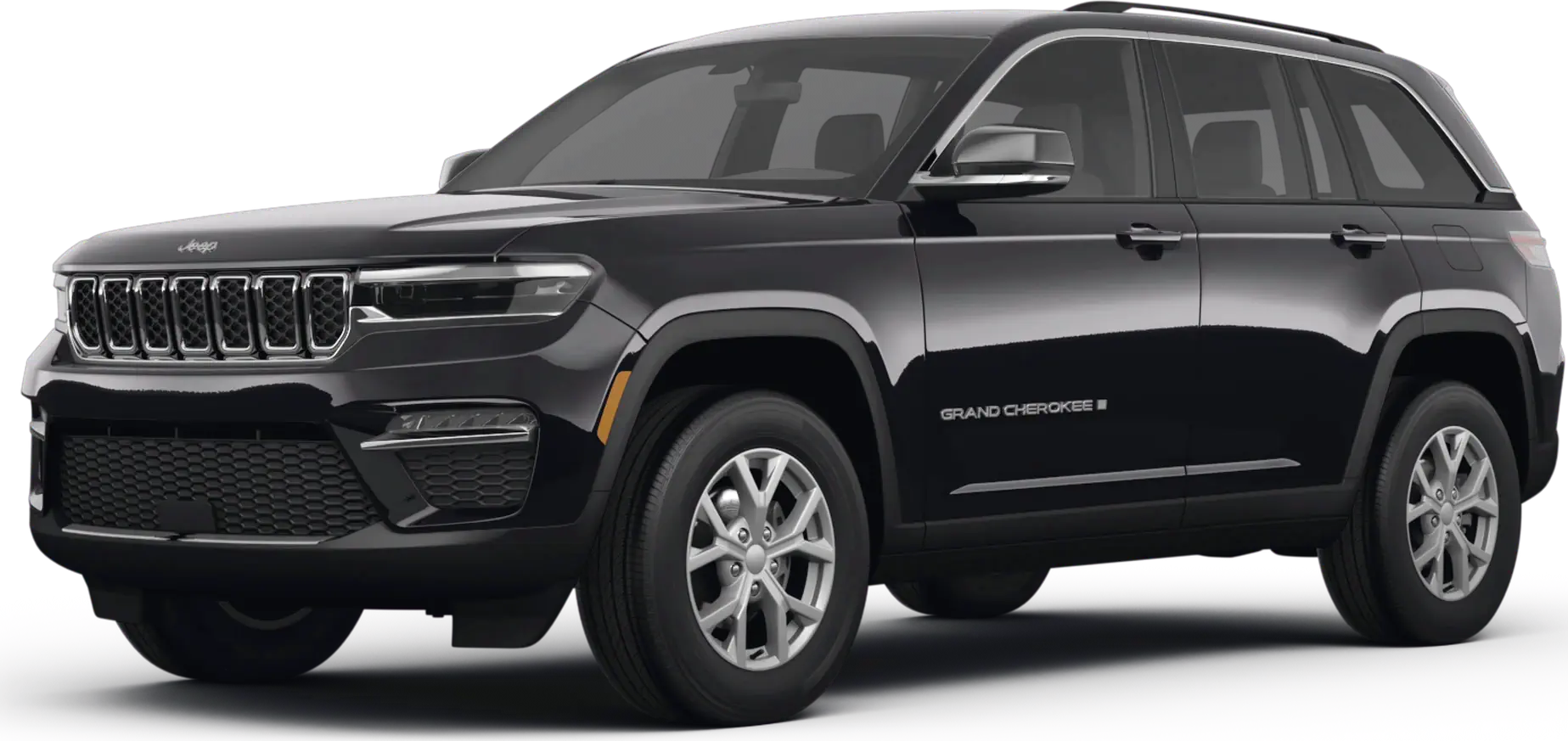
May 18, 2023 NHTSA CAMPAIGN NUMBER: 23V352000
Steering Column Incorrectly Assembled
A loss of steering control increases the risk of a crash.
NHTSA Campaign Number: 23V352
Manufacturer Chrysler (FCA US, LLC)
Components STEERING
Potential Number of Units Affected 89,372
Summary
Chrysler (FCA US, LLC) is recalling certain 2022-2023 Jeep Grand Cherokee and 2021-2023 Jeep Grand Cherokee L vehicles. An incorrectly assembled steering column intermediate shaft may disconnect from the u-joint, and result in a loss of steering control.
Remedy
Dealers will inspect and, if necessary, replace the intermediate shaft and assembly parts, free of charge. Owner notification letters are expected to be mailed July 7, 2023. Owners may contact FCA US, LLC customer service at 1-800-853-1403. FCA US, LLC’s number for this recall is 58A.
Notes
Owners may also contact the National Highway Traffic Safety Administration Vehicle Safety Hotline at 1-888-327-4236 (TTY 1-800-424-9153), or go to www.nhtsa.gov.
Check if your Vehicle has a Recall
New Safety Recall Advanced Communication – 58A
FCA US LLC (FCA US) has announced a safety recall on certain 2021 through 2023 model year (WL) Jeep Grand Cherokee and Grand Cherokee L vehicles.
REASON FOR THIS SAFETY RECALL
Some of the above vehicles may have been built with an incorrectly assembled steering column intermediate shaft which may potentially disconnect from the U-joint. Driver may notice play in steering and/or noise when turning prior to the intermediate shaft disconnecting. A disconnected intermediate shaft may result in a loss of steering control which can cause a vehicle crash without prior warning.
SERVICE ACTION
FCA US will conduct a voluntary safety recall on all affected vehicles to inspect and, if necessary, replace the intermediate shaft and assembly parts. The remedy for this condition is not currently available. Dealers will be notified of the launch of this safety recall by way of established communication methods. This recall is estimated to launch in 2nd Quarter of 2023.
SAFETY RECALL
NORTH AMERICA
Intermediate Shaft
Reference: 58A / NHTSA 23V-352
Remedy available for
2021 – 2023 (WL) Jeep Grand Cherokee L
2022 – 2023 (WL) Jeep Grand Cherokee
| Template Version 1.0 | ||
| Revision | Edition | Detail |
| 1 | May 2023 | Labor Description clarification. |
SYMPTOM DESCRIPTION
About 89,370 of the above vehicles may have been built with an incorrectly assembled steering column intermediate shaft which may potentially disconnect from the U-joint. Driver may notice play in steering and/or noise when turning prior to the intermediate shaft disconnecting. A disconnected intermediate shaft may result in a loss of steering control which can cause a vehicle crash without prior warning.
SCOPE
NOTE: Some vehicles above may have been identified as not involved in this recall and therefore have been excluded from this recall.
IMPORTANT: Some of the involved vehicles may be in dealer new vehicle inventory. Federal law requires you to complete this recall service on these vehicles before retail delivery. Dealers should also consider this requirement to apply to used vehicle inventory and should perform this recall on vehicles in for service. Involved vehicles can be determined by using the VIP inquiry process.
REPAIR TO BE PERFORMED
Inspect and, if necessary, replace the intermediate shaft and assembly parts.
ALTERNATE TRANSPORTATION
Dealers should attempt to minimize customer inconvenience by placing the owner in a loaner vehicle if inspection determines that repair is required, and the
vehicle must be held overnight
PARTS INFORMATION
No parts are required for inspection process.
NOTE: Parts can only be ordered through [email protected]. Please provide the results of the inspection by answering questions below, and provide VIN, Right or Left hand drive, and Dealer Code. The Supply Chain team will order the required part(s) and ship to your dealership.
- Bolt not flush and removed for inspection – Yes/No
- Bolt threads damaged – Yes/No
- White clip missing – Yes/No
- Shaft stop not flush to clip – Yes/No
PARTS RETURN
No parts return required for this campaign.
Render any replaced parts unusable and discard.
SPECIAL TOOLS
No special tools are required to perform the inspection procedure.
These special tools are only required for PHEV repair procedure however not for the inspection.
| Number | Description |
| 126-1587 | Fluke Meter, Multi |
| 2077100080 | High Voltage Test Adapter |
| 2035100082 | Covers, HEV Battery Terminal |
OWNER NOTIFICATION / SERVICE SCHEDULING
All involved vehicle owners known to FCA are being notified of the service requirement by first class mail. They are requested to schedule appointments for this service with their dealers. A generic copy of the owner letter is attached.
SERVICE PROCEDURE
NOTE: The following inspection and repair procedures may be different based on engine type and if vehicle is Right Hand Drive (RHD) or Left Hand Drive (LHD) so please follow the directions carefully.
A. Inspection Procedure
- Position the vehicle on a suitable lift.
- Open the engine compartment hood.
- For vehicles equipped with the following:
- 2.0L PHEV Engine (Sales Code ECX) with RHD or LHD steering.
- 2.0L Turbo Engine (Sales Code EC1) with LHD steering.
Front wheel assembly removal will be necessary on the same side of the vehicle as the steering column in order to complete the inspection process.
NOTE: Engine and Steering combinations other than those listed above will not require this step.
a) Raise and support the vehicle.
b) Remove the front wheel assembly from the same side of the vehicle as the steering column.
c) Inspection access to the steering U-joint coupling through opening as shown (Figure 1).
Inspection may be performed from under hood in engine compartment for vehicles equipped with the following (Figure 2):
- 3.6L Engine (Sales Code ERC) with RHD or LHD steering.
- 5.7L Engine (Sales Code EZH) with LHD steering.
- 2.0L Turbo Engine (Sales Code EC1) with RHD steering.
NOTE: Use a flashlight and mirror and rotate the steering column as necessary for best viewing angle during the following inspection procedure steps.
NOTE: Best viewing angle for inspection may vary depending on vehicle configuration. I-shaft U-joint should be visible from under hood in engine compartment unless previous step directed wheel removal then inspect though wheelhouse opening just in front of suspension strut.
- Visually locate the steering column intermediate shaft to U-joint interface connection for inspection (Figure 3).
- Perform the following inspections (a-c) of the U-joint coupling upper connection:
a) Does the U-joint coupling upper bolt appear to be fully tightened flush against the U-joint coupling or not fully tightened? (Figure 4).
b) Is the white spacer clip present or missing? (Figure 5).
c) Is the intermediate shaft fully inserted into the U-joint coupler with I-shaft stop lip touching the white plastic clip or not fully inserted? (Figure 6).
- Do ANY of the identified conditions (a-c) exist:
a) Bolt is NOT fully tightened flush to U-joint coupling.
b) White plastic clip is MISSING.
c) Intermediate shaft is NOT fully inserted into the U-joint coupling.
YES >>> One or more of the above conditions (a-c) exist, proceed to the Repair Procedure.
NO >>> Install any components removed during inspection and return vehicle to customer or inventory.
- If wheel was removed to perform inspection, tighten the lug nuts to 176 N·m (130 Ft-Lbs).
B. Repair Procedure
CAUTION: Anytime the Steering Column Control Module (SCCM) is mounted on the steering column the steering shaft must be kept from turning or else SCCM damage will occur. Some vehicles do not have an internal lock mechanism, so the steering column shaft must be preventing from rotating through use of a suitable tool.
- For Plugin Hybrid Electric Vehicles (PHEV) Engine (Sales Code ECX) perform a High Voltage Power Down:
NOTE: If vehicle is NOT a PHEV Step 2 may be skipped.
WARNING: Before performing any diagnostic or service procedure, you must thoroughly read and follow all applicable high voltage safety procedures.
a) Prepare the work area and familiarize yourself with all HIGH-VOLTAGE SAFETY PROCEDURES related to personal safety and vehicle safety associated with working on a Plug-In Hybrid Electric Vehicle (PHEV) (Within Service Library, Refer to 12 – Electrified Powertrain System/High Voltage Battery/Standard Procedure).
b) Inspect all orange high voltage cables, and high voltage components labeled with the high voltage symbol for physical damage. If damage is present, extra caution must be taken to avoid contact with unprotected high voltage. Do not insert probes, tools, objects or fluids into damaged high voltage cables or components.
c) Disconnect any charging equipment. Do not plug in the EVSE Recharge Coupler when working on the vehicle.
d) Verify that the Keyless Go button (1) is indicating that the ignition is in the OFF position. If not, press the button to toggle to OFF mode (Figure 7).
e) Remove the cargo floor cover (1) (Figure 8).
f) Remove the fastener (1) then remove the High Voltage Test and Service Module (HVTSM) cover (2) (Figure 9).
g) Use of an insulation tester such as the Fluke Meter, Multi 126-1587 is recommended for PHEV circuit testing (Figure 10). Perform the multi-meter functionality tests per the manufacturer’s directions. If at any point during the procedure, the multi-meter settings are changed, or the probes are repositioned in the meter, verification with a known good power source must be repeated. Always observe these precautions prior to taking a high voltage measurement:
- Use known good test leads.
- Verify the multi-meter leads are rated “CAT III 1,000V”. This should be printed on the multi-meter leads.
- Install the multi-meter leads in the BLACK and RED sockets on the right side of the (BLACK)).
- Test the multi-meter operation by measuring the voltage across the 12-volt Battery.
- Switch the FLUKE 1587 to the DC Volts selection and press the RANGE button until the 1000V range is selected – just one digit (a zero) is displayed.
h) This next step is being performed to confirm that we can measure voltage present through the wiring to the test point connector. Remove the HVIL cover from the orange test point connector and connect the High Voltage Test Adapter 2077100080 into the orange test point connector. There are two test adaptors in the kit. The difference is explained below:
- Test adaptor with orange insulation – This adaptor comes with the HVIL loop in the connector.
- Test adaptor with blue insulation – This adaptor does not have the HVIL loop in the connector.
Connect the Orange test adapter with the HVIL loop to the orange test point connector. The Orange high voltage test connector is used to measure the voltage on the HV cables after the HV battery contactors to confirm power down. These circuits are sense circuits connected through very large resistors inside the high voltage battery to the high voltage bus cables after the contactors. These circuits are safe even when high voltage is present on the circuits due to the large resistors reducing these circuits to milliamperes (Figure 11).
i) Insert the red and black test adapter probes into the right multi-meter ports matching the colors (Figure 12).
- Press the ignition ON.
- With the scan tool, erase all DTCs.
- Press the ignition OFF.
- Remove the scan tool from the DLC.
- Close all the doors.
- Perform sleep cycle. (Wait until the cluster display goes blank).
- Press the ignition ON.
j) Select the volt meter to DC volts, range the meter to whole numbers (no decimal points) and read the battery pack voltage (Figure 12).
- If the volt meter shows over 300 volts, the HV system is powered up and the HV sense circuits from the Battery Pack are not open to the Orange HV test point. Continue to the next step to power down the HV battery.
- If the voltage is reading 0 volts, Assume that the HV Battery Pack is powered up and the HV sense circuits are open from the battery pack to the Orange HV test point connector. Disconnect the green High Voltage Disabling and Lockout (HVDL) connector, check the HV sense circuits for opens, repair or replace as necessary and retest. If the sense circuits test good the HV Battery Pack requires replacement. The battery pack should be handled the same as a pack with welded contactors. Reference the HV BATTERY SERVICING WITH WELDED CONTACTOR(S) procedure at the top of the HV PHEV BATTERY REMOVAL AND INSTALLATION procedure for safely removing a high voltage battery that will not power down (Within Service Library, Refer to 12 – Electrified Powertrain System/High Voltage Battery/BATTERY/Removal and Installation).
k) Press the Keyless Go button to toggle to OFF mode. To ensure that the HV system stays powered down, move the keys at least 20 feet away from the vehicle.
NOTE: The Green connector is the HVDL connector. The HV battery internal HVIL loop circuit passes through this connector, out to the orange high voltage disconnect test connector cover, and back through the HVDL connector again (Figure 13).
l) To open the High Voltage Disabling and Lockout (HVDL) connector, lift the red CPA lock tab on the black portion of the green HVDL connector. Using a small screwdriver or probe, lift the lock arm as shown and lift the black portion of the device until the padlock hole is completely exposed. When the center safety lockout loop of the connector is raised, a hole for a safety lock is exposed.
m) The voltage reading on the multi-meter should change to 0 volts with the green HVDL connector open. (Some residual voltage may be present, up to 2.0 volts may be normal) (Figure 14).
1) Next, remove the black test harness lead from the black multi-meter socket and connect a good lead between chassis ground and the black multi-meter socket and monitor the voltage. Meter should read 0 volts. This is testing for voltage from a stuck contactor on the HV battery + cable at the test point connector.
2) Lastly, switch the red and black leads at the multi-meter and monitor the voltage. Meter should read 0 volts. This is testing for voltage from a stuck contactor on the HV battery – cable at the test point connector.
- If the voltage measured is below 2.0 volts for each measurement, the HV battery is powered down and it is safe to work on the high voltage components with the exception of the high voltage battery internal components. Continue to the next step to power down of the 12-volt system. This will prevent any possibility of the HV battery being powered up.
- If the voltage is greater than 50 volts, an internal condition exists within the high voltage battery such as stuck contactors, that are preventing it from being powered down. This should be accompanied by contactor stuck DTCs. Do not attempt to carry out testing on any of the vehicle’s high voltage components or wiring. The HV Battery Pack requires replacement. Reference the HV BATTERY SERVICING WITH WELDED CONTACTOR(S) procedure at the top of the HV PHEV BATTERY REMOVAL AND INSTALLATION procedure for safely removing a high voltage battery that will not power down (Within Service Library, Refer to 12 – Electrified Powertrain System/High Voltage Battery/BATTERY/Removal and Installation).
- If the voltage is between 2.0 volts and 50 volts, the HV system is safe to work on, however there is a problem that should be diagnosed. Put on PPE safety equipment and disconnect each of the following HV modules one at a time and check the voltage at the test points. If the voltage drops to 2.0 volts or less, the faulted module has been found. Reconnect each module before continuing to the next.
- Integrated Dual Charger Module (IDCM)
- Electronic A/C Compressor (EAC)
- Battery Coolant Heater
- HV Coolant Heater
- Power Inverter Module (PIM)
n) Insert a wire tag, holding pin or padlock into the service lockout loop to be certain that the connector (1) remains open. The HV system is now powered down. The 12-volt system should be powered down also to make certain that the HV battery cannot be powered back up. Continue to the next step to complete the power down procedure (Figure 15).
o) Remove the 12-volt cable (1) from the front lug (2) of the fuse array on the front PDC. Immediately cover the exposed end with an insulating cap from the Covers, HEV Battery Terminal 2035100082. If a cover is not available, a finger from an old insulated safety glove can be cut out and used to cover the terminal. This will remove the power source that supplies the contactors inside the high voltage battery but not completely power down the 12-volt system. If there is a 12-volt cable connected to rear lug (number 6), remove and cover it as well (Figure 16).
p) To completely power down the 12-volt system, remove the rear access panel (1) to expose the rear PDC (Figure 17).
q) Remove the 12-volt fastener (1) and cable (2) from the rear PDC and cover the exposed end with an insulating cap from the Covers, HEV Battery Terminal 2035100082. If a cover is not available, a finger from an old insulated safety glove can be cut out and used to cover the terminal. The 12-volt system should be powered down completely (Figure 18).
- For vehicles equipped with the following:
- 2.0L PHEV Engine (Sales Code ECX) with RHD or LHD steering.
- 2.0L Turbo Engine (Sales Code EC1) with LHD steering.
- 3.6L (Sales Code ERC) RHD steering.
Belly pan removal will be necessary to access the U-joint coupling (Figure 19).
NOTE: Engine and Steering combinations other than those listed above will not require this step.
a) Raise and support the vehicle.
b) Remove the belly pan fasteners and belly pan.
- For vehicles equipped with the following:
Engine cover and air cleaner housing assembly removal will be necessary to access the U-joint coupling (Figure 20).
NOTE: Engine and Steering combinations other than those listed above will not require this step.
a) Disconnect and isolate the battery negative cable.
b) Remove the engine cover.
c) Remove the air cleaner resonator.
d) Remove the air cleaner housing assembly.
- Remove the upper steering column shaft U-joint coupling pinch bolt and examine the bolt threads for any damage then DISCARD the bolt (Figure 21).
- Bolt Threads Damaged: The U-Joint coupling will require replacement. Contact campaign team as directed in the parts section to order the appropriate parts then continue to Step 6 of repair procedure.
- Bolt Threads NOT Damaged: U-Joint coupling may be reused. U-joint coupling replacement step may be skipped. Contact campaign team as directed in the parts section to order the appropriate parts then continue to Step 7 of the repair procedure.
- U-joint coupling replacement is ONLY necessary if bolt thread in previous step were damaged. If bolt threads were NOT damaged, skip this step for U-joint coupling replacement (Figure 22).
U-joint coupling replacement procedure:
a) Grasp the I-shaft near the U-joint coupling then slide the I-shaft back into itself releasing it from the U-joint coupling (Figure 23).
b) Remove and DISCARD the lower steering column shaft coupling pinch bolt (1) (Figure 22).
c) Remove and DISCARD the U-joint coupling from the steering gear shaft.
d) Obtain a NEW U-joint coupling and install it to the steering gear shaft.
e) Obtain a NEW pinch bolt and install it in the U-joint coupling lower hole (1) then tighten the bolt to 45 Nm (33 Ft. Lbs.) (Figure 22).
f) Slide the I-shaft back into the U-joint coupling inserting the I-shaft fully into the U-joint coupling as far as it will go. The white plastic clip will act as a stop (Figure 23).
g) Proceed to the next step of the repair procedure.
- Is the white plastic clip present or missing from the U-joint coupling? (Figure 24)
- White Plastic Clip Present: Continue to next step of repair procedure.
- White Plastic Clip Missing: Obtain a NEW white plastic clip and follow these instructions.
Install the NEW white plastic clip to U-joint coupling:
a) Grasp the I-shaft near the U-joint coupling then slide the I-shaft back into itself releasing it from the U-joint coupling (Figure 23).
b) Install the white plastic clip to the U-joint coupling (Figure 24).
c) Slide the I-shaft back into the U-joint coupling inserting the I-shaft fully into the U-joint coupling as far as it will go. The white plastic clip will act as a stop (Figure 23).
d) Proceed to the next step of the repair procedure.
- The I-shaft needs to be fully inserted into the U-joint coupling until the stop lip on the I-shaft contacts the white plastic clip (Figure 25). If the I-shaft stop lip is not contacting the white plastic clip, grasp the I-shaft near the U-joint coupling then attempt to insert the I-shaft fully into the U-joint until the stop lip contacts the white plastic clip. Can the shaft be fully inserted?
- I-Shaft Stop Lip Contacts White Plastic Clip: Continue to Step 10 of repair procedure.
- I-Shaft Stop Lip NOT Contacting White Plastic Clip and CANNOT Be Inserted Further: Intermediate shaft is oversize. Obtain a NEW intermediate shaft then follow these instructions.
For vehicles equipped with the following:
- 2.0L PHEV Engine (Sales Code ECX) with RHD or LHD steering.
- 2.0L Turbo Engine (Sales Code EC1) with LHD
- 3.6L (Sales Code ERC) RHD steering.
Remove the upper cowl extension silencer as follows:
NOTE: Engine and Steering combinations other than those listed above will NOT require cowl extension silencer removal. All others may proceed directly to Step 9 for replacement of intermediate shaft.
a) Disconnect and isolate the battery negative cable if not done previously.
NOTE: PHEV vehicles should already be powered down.
b) Lift the cap (1) and remove the wiper arm fastener (Figure 26).
c) Put the arm in the service up position, then use a slight fore/aft rocking action to loosen the wiper arm from the pivot shaft and remove the wiper arm. If required, use appropriate tool to remove the wiper arm from the pivot shaft.
d) Using a trim stick, release the clips from under the rear edge of the front fender (3) and the cowl trim (2) (Figure 27).
e) Separate the cowl end caps (1) (Figure 27).
f) Release the push-pin fasteners (1) and remove the corner foam seals (Figure 28).
CAUTION: Use care when working with the retaining channel on the bottom of the windshield. If the retaining channel is damaged the windshield retainer will require replacement.
g) Remove the push-pin fasteners (1) (Figure 29).
h) Lift the front of the cowl panel cover and carefully pull it forward releasing it from the windshield retainer channel.
i) Remove the cowl panel cover from the vehicle.
j) Remove the fasteners (1) that secure the front wiper linkage module to the cowl plenum (Figure 30).
k) Disconnect the wire harness connector from the connector receptacle for the front wiper motor.
l) Remove the front wiper linkage module from the cowl plenum as a unit.
m) Remove the fasteners (1) and remove the foam seals (2) from each side (Figure 31).
n) Remove the shock tower brace nuts (2) and the bolts (1) (Figure 32).
o) Remove the upper cowl extension silencer fasteners (3) (Figure 32).
p) Remove the upper cowl extension silencer and the shock tower brace as an assembly (4) (Figure 32).
q) Proceed to the next step of the repair procedure.
- Intermediate shaft replacement is ONLY necessary if I-shaft cannot be fully inserted into the U-joint coupling as determined in previous step of this procedure. If I-shaft can be fully inserted into the U-joint coupling, skip this step for I-shaft replacement.
Intermediate shaft replacement steps as follows:
a) Remove and DISCARD the intermediate shaft pinch bolt (1) (Figure 33).
b) Remove and DISCARD the intermediate shaft.
) Obtain and install a NEW intermediate shaft using a NEW pinch bolt tightened to 45 Nm (33 Ft. Lbs.).
Only for those vehicles which cowl extension silencer was removed to access the intermediate shaft, reassemble cowl extension silencer in reverse order of removal. Otherwise proceed to the next step of the repair procedure.
Cowl extension silencer installation steps are as follows:
a. Cowl extension silencer fasteners (3) M6 tighten to 8 N·m (71 In. Lbs.) (Figure 32).
b. Shock tower brace bolts M6 (1) tighten to 8 N·m (71 In. Lbs.) (Figure 32).
c. Shock tower brace nuts M6 (2) tighten to 7 N·m (62 In. Lbs.) (Figure 32).
d. Foam seal (2) and fastener (1) (Figure 31).
e. Wiper Linkage Module Bolts (1) tighten to 5 N·m (44 In. Lbs.) (Figure 30).
f. Cowl Panel and fasteners (1) (Figure 29).
g. Foam seal and push-pin fastener (1) (Figure 28).
h. Cowl trim (1) (Figure 27).
i. Wiper arms and nuts (1) tighten to 23 N·m (17 Ft. Lbs.) (Figure 26).
j. Proceed to the next step of the repair procedure.
- Ensure the I-Shaft is fully inserted into the U-joint coupling so that stop is resting against the white plastic clip (Figure 34).
- Obtain a NEW pinch bolt and install it to the U-joint coupling upper hole (1) then tighten the bolt to 45 Nm (33 Ft. Lbs.) (Figure 34).
- For vehicles which engine cover and air cleaner housing assembly was removed (Figure 20):
a) Install the air cleaner housing assembly.
b) Install the air cleaner resonator.
c) Install the engine cover.
- For vehicles which belly pan was removed. Install the belly pan and belly pan fasteners (Figure 19).
- For vehicles which the front wheel assembly was removed. Install the wheel assembly and tighten the lug nuts to 176 N·m (130 Ft-Lbs).
- For non-PHEV vehicles which the battery negative cable was disconnected, it may be reconnected now.
- For PHEV vehicles which were powered down, follow the power up procedure:
a) Remove the high voltage test adapter from the orange high voltage disconnect test connector.
b) Remove the lockout device from the service lockout loop of the green High Voltage Disabling and
Lockout (HVDL) connector at the High Voltage Test and Service Module (HVTSM) (Figure 35).
c) Using a small screwdriver or probe, release the green locking lever and depress the black jumper fully back into the socket (Figure 35).
d) Depress the red CPA lock (Figure 35).
e) Replace the cover on the orange test point connector of the HVTSM (Figure 35).
f) Install the cover over the HVTSM and secure the fastener (Figure 9).
g) Install the cargo floor cover (Figure 8).
h) Remove the cap and connect the 12-volt cable to the rear PDC. Tighten the cable nut to 8 N·m (71 In. Lbs.) (Figure 18).
i) Install the rear PDC access cover (Figure 17).
j) Remove the cap and connect the 12-volt cable to the front lug of the fuse array on the front PDC. Tighten the cable nut to 15 N·m (11 Ft. Lbs.) (Figure 16).
k) Install the PDC cover.
l) Test the vehicle functionality:
- Retrieve the key fob
- With the vehicle in PARK, a driver in the seat, and the brake pedal depressed, press the Keyless Go button.
If the vehicle enters RUN mode without error, power-up has been successful. If the message “Service High Voltage System” appears on the dash cluster display, recheck the seating of both connectors of the HVTSM after keying-off, and then try again. If the error persists, power down the high voltage system and begin diagnostics.
- Lower the vehicle and close engine compartment hood.
- Return the vehicle to customer or inventory.
This notice applies to your vehicle,
[Model Year and Model] VIN XXXXXXXXXXXXXXXXX
58A/NHTSA 23V- 352
LOGO
VEHICLE PICTURE
YOUR SCHEDULING OPTIONS
- RECOMMENDED OPTION Call your authorized Chrysler / Dodge / Jeep® / RAM Dealership
- Call the FCA Recall Assistance Center at 1-800-853-1403. An agent can confirm part availability and help schedule an appointment
- Visit mopar.com, scan the QR code below, or download the Mopar Owner’s Companion App.
QR Code
Get access to recall notifications, locate your nearest dealer, and more through this website or Mopar Owner’s Companion App. You will be asked to provide your Vehicle Identification Number (VIN) to protect and verify your identity. The last eight characters of your VIN are provided above.
DEALERSHIP INSTRUCTIONS
Please reference Safety Recall 58A.
IMPORTANT SAFETY RECALL
Intermediate Shaft
Dear [Name],
This notice is sent to you in accordance with the National Traffic and Motor Vehicle Safety Act.
FCA US LLC has decided that a defect, which relates to motor vehicle safety, exists in certain [2021 through 2023 model year (WL) Jeep Grand Cherokee and Grand Cherokee L] vehicles.
It is extremely important to take steps now to repair your vehicle to ensure the safety of you and your passengers.
WHY DOES MY VEHICLE NEED REPAIRS?
Your vehicle [1] may have been built with an incorrectly assembled steering column intermediate shaft which may potentially disconnect from the U-joint. The driver may notice play in steering and/or noise when turning prior to the intermediate shaft disconnecting. A disconnected intermediate shaft may result in a loss of steering control which can cause a vehicle crash without prior warning.
HOW DO I RESOLVE THIS IMPORTANT SAFETY ISSUE?
FCA US will repair your vehicle [2] free of charge (parts and labor). To do this, your dealer will inspect and, if necessary, replace the intermediate shaft and assembly parts. The estimated time is about 30 minutes for inspection or longer to complete if component replacement is necessary. In addition, your dealer will require your vehicle for proper check-in, preparation, and check-out during your visit, which may require more time. Your time is important to us, so we recommend that you schedule a service appointment to minimize your inconvenience. Please bring this letter with you to your dealership.
TO SCHEDULE YOUR FREE REPAIR,
CALL YOUR CHRYSLER, DODGE, JEEP OR RAM DEALER TODAY
WHAT IF I ALREADY PAID TO HAVE THIS REPAIR COMPLETED?
If you have already experienced this specific condition and have paid to have it repaired, you may visit www.fcarecallreimbursement.com to submit your reimbursement request online. [3] Once we receive and verify the required documents, reimbursement will be sent to you within 60 days. If you have had previous repairs performed and/or already received reimbursement, you may still need to have the recall repair performed.
We apologize for any inconvenience, but are sincerely concerned about your safety. Thank you for your attention to this important matter.
Customer Assistance/Field Operations
FCA US LLC
Mr. Mrs. Customer
1234 Main Street
Hometown, MI 48371
[1] If you no longer own this vehicle, please help us update our records. Call the FCA Recall Assistance Center at 1-800-853-1403 to update your information.
[2] If your dealer fails or is unable to remedy this defect without charge and within a reasonable time, you may submit a written complaint to the Administrator, National Highway Traffic Safety Administration, 1200 New Jersey Ave., S.E., Washington, DC 20590, or you can call the toll-free Vehicle Safety Hotline at 1-888-327-4236 (TTY 1-800-4249153), or go to safercar.gov.
[3] You can also mail in your original receipts and proof of payment to the following address for reimbursement consideration: FCA Customer Assistance, P.O. Box 21-8004, Auburn Hills, MI 48321-8007, Attention: Recall Reimbursement.
Note to lessors receiving this recall notice: Federal regulation requires that you forward this recall notice to the lessee within 10 days.
Chronology :
- On February 27, 2023, the FCA US LLC (“FCA US”) Technical Safety and Regulatory Compliance (“TSRC”) organization opened an investigation into the 2023 MY Jeep Grand Cherokee for a potential loss of steering condition.
- From February 2023, through April 2023, FCA US TSRC conducted an analysis of warranty claims and vehicle manufacturing records and determined that the affected vehicles may have been repaired improperly on the assembly line leading to incorrect installation of the steering column intermediate shaft.
- As of April 26, 2023, FCA US is aware of zero customer assistance records, 15 warranty claims, and zero field reports potentially related to this issue for all markets with dates of receipt ranging from May 28, 2022,
through March 24, 2023. - As of April 26, 2023, FCA US is not aware of any accidents or injuries potentially related to this issue for all markets.
- On May 12, 2023, FCA US determined, through the Vehicle Regulations Committee, to conduct a voluntary safety recall of the affected vehicles.
3 Affected Products
Vehicle
| MAKE | MODEL | YEAR |
| JEEP | GRAND CHEROKEE | 2021-2023 |
5 Associated Documents
Recall Acknowledgement
RCAK-23V352-7086.pdf 645.256KB
Defect Notice 573 Report
RCLRPT-23V352-5968.PDF 215.813KB
Manufacturer Notices(to Dealers,etc) – NSRAC Initial re New Safety Recall Advanced Communication – 58A
Remedy Instructions and TSB
RCRIT-23V352-6764.pdf 1687.898KB
Remedy Instructions and TSB
RCRIT-23V352-7508.pdf 1688.208KB
Latest Recalls Documents
- [Easy to Use—Work Out of the Box] + [FOXWELL 2026 New Version] FOXWELL NT604 Elite scan tool is the 2026 new version from FOXWELL, designed for car owners who want to figure out the cause of issues before fixing car problems by scanning common systems like ABS, SRS, engine, and transmission. The NT604 Elite obd2 scanner diagnostic tool comes with the latest software—no need to waste time downloading software first. Plug the scanner into the OBDII port with OBDII cable to start the diagnosis.
- [Affordable] + [Reliable Car Health Monitor] Will you be confused what happens when the warning light of ABS/SRS/transmission/check engine flashes? Instead of taking your cars to dealership, this FOXWELL scanner will help you do a thorough scanning and detection for your cars and pinpoint the root cause. Note:The device is a diagnostic tool, not a repair tool. To turn off a warning light, you must first physically repair the issue causing it. Only then can the scanner be used to clear the corresponding fault code.
- [5 in 1 Car Diagnostic Scanner] Compared with obd scanners (50-100), NT604 Elite code scanner not only includes their OBDII diagnosis but also serves as ABS/SRS scanner, transmission and check engine code reader. When it’s an odb2 scanner, you can use it to check if your car is ready for annual test through I/M readiness menu. In addition, live data stream, built-in DTC library, data play back and print, all these features are a big plus for it. Note: doesn't support maintenance functions like reset or relearn. For the SRS system, NT604 Elite can read and clear common fault codes not caused by a crash, but crash/collision data cannot be cleared.
- [Fantastic AUTOVIN] + [No extra software fee] Through the AUTOVIN menu, this NT604 Elite car scanner allows you to get your V-IN and vehicle info rapidly, no need to take time to find your V-IN and input one by one. What's more, the NT604 Elite ABS SRS scanner supports 60+ car brands from worldwide (America/Asia/Europe). You don’t need to pay extra software fee. AUTOVIN may not work on some older vehicles or certain vehicle brands. If AUTOVIN fails, please input the vin code manually or go to the Diagnostic Menu to select your vehicle model.
- [Solid protective case KO plastic carrying bag] + [Lifetime update] Almost all same price-level car scanner diagnostic tool only offers plastic bag to hold the scanner.However, NT604 Elite automotive scanner is equipped with solid protective case, preventing your obd2 scanner from damage. Then you don’t need to pay extra money to buy a solid toolbox.

- CEL Doctor: The ANCEL AD310 is one of the best-selling OBD II scanners on the market and is recommended by Scotty Kilmer, a YouTuber and auto mechanic. It can easily determine the cause of the check engine light coming on. After repairing the vehicle's problems, it can quickly read and clear diagnostic trouble codes of emission system, read live data & hard memory data, view freeze frame, I/M monitor readiness and collect vehicle information
- Sturdy and Compact: Equipped with a 2.5 foot cable made of very thick, flexible insulation. It is important to have a sturdy scanner as it can easily fall to the ground when working in a car. The AD310 OBD2 scanner is a well-constructed mechanic tool with a sleek design. It weighs 12 ounces and measures 8.9 x 6.9 x 1.4 inches. Thanks to its compact design and light weight, transporting the device is not a problem. The buttons are clearly labelled and the screen is large and displays results clearly
- Accurate Fast and Easy to Use: The AD310 scanner can help you or your mechanic understand if your car is in good condition, provides exceptionally accurate and fast results, reads and clears engine trouble emission codes in seconds after you fixed the problem. This device will let you know immediately and fix the problem right away without any car knowledge. No need for batteries or a charger, get power directly from the OBDII Data Link Connector in your vehicle
- OBDII Protocols and Car Compatibility: Many cheap scan tools do not really support all OBD2 protocols. AD310 scanner as it can support all OBDII protocols such as KWP2000, J1850 VPW, ISO9141, J1850 PWM and CAN. This device also has extensive vehicle compatibility with 1996 US-based, 2000 EU-based and Asian cars, light trucks, SUVs, as well as newer OBD2 and CAN vehicles both domestic and foreign. Pls confirm with our customer service whether it is compatible with your vehicle before purchasing
- Home Necessity and Worthy to Own: This is an excellent code reader to travel or home with as it weighs less and it is compact in design. You can easily slide it in your backpack as you head to the garage, or put it on the dashboard, this will be a great fit for you. The AD310 is not only portable, but also accurate and fast in performance. Moreover, it covers various car brands and is suitable for people who just need a code reader to check their car
- [All System Diagnostics, Professional-Level Scanner] - BLCKTEC 460T is the ultimate OBD2 diagnostic tool for home mechanics and professionals. It supports all 10 OBD2 modes, reads and clears Engine/Transmission/ABS/SRS codes, performs All-System Diagnostics, offers workshop reset tools, and provides real-time live data. It helps you pinpoint issues, assess your car's condition, and prepare for SMOG checks with ease. NOTE: Function availability depends on your vehicle. Before you buy, be sure to use the Compatibility Checker on BLCKTEC website or contact our customer support to verify that the features you need are supported for your vehicle’s specific year, make, and model.
- [12+ Most Popular Reset Functions] - BLCKTEC 460T OBD2 scanner offers 12+ dealer-level service functions, including Oil Maintenance Reset, ABS Bleeding, EPB Reset, SAS(Steering Angle Sensor) Recalibration, DPF(Diesel Particulate Filter) Reset, Throttle Body Relearn, Battery Reset/Initialization, TPMS Relearn, Transmission Reset, Fluid Change Reset, Maintenance Reset and more, enabling you to perform workshop services like a pro. NOTE: Function availability depends on your vehicle. Be sure to use the Compatibility Checker on BLCKTEC website to verify that the features you need are supported for your vehicle.
- [Real-Time OBD2 and OEM Live Data, Freeze Frame Data] - BLCKTEC 460T helps diagnose vehicle issues when warning lights like Check Engine Light or ABS/SRS Light appear. It offers detailed DTC info, ECU Freeze Frame Data, and real-time OBD2 and advanced OEM live data, including Engine, Transmission, ABS, SRS, and more, making it easy to diagnose and resolve vehicle problems. You can view, graph, record, replay, and overlay up to four live data streams in a single graph for better analysis.
- [AutoVIN, AutoReLink, AutoScan, 3X Faster] - Equipped with AutoVIN technology, 460T automatically retrieves the VIN to save you time. Its AutoScan and AutoReLink features scan all of the vehicle's ECUs and detect any fault codes immediately after you plug the scanner into the vehicle's OBD2 port - no button presses required. Additionally, it regathers DTC and I/M readiness information every 30 seconds, simplifying monitor tests. 460T's advanced technology makes it 3X faster than other products.
- [Get RepairSolutions2, the #1 Auto Repair App for Free] - When paired with RepairSolutions2(RS2) App, 460T becomes even more powerful. RS2's Verified Fix Database built by master technicians, provides the parts needed for the repair. Additionally, RS2 gives you access to OEM warranty info, maintenance schedules, TSB, and dealership recall info, making car care easier than ever. RS2 is free with no subscription fees and it stores your car scan reports in the cloud, allowing you to access, share, or print them anytime and anywhere.
 Scan Tool" title="58A - Steering Column Incorrectly Assembled - 2022-2023 Jeep Grand Cherokee & 2021-2023 Jeep Grand Cherokee L 5">
- 【Warm Tips】Dear friend, we've built this product to last, but in the unlikely event you encounter any technical hiccups, functions not support, received a used product, or just a simple question, please directly c0ntact us via Amazon Message and support @ mythinkcar. com, we're here to help and get it sorted in no time. Not sure if this product is compatible with your vehicle? Just e.mail your VIN at support @ mythinkcar. com for technical support. Note: FCA AutoAuth is a third-party service, additional cost may require.
- 【Professional Car Diagnostic Tool】Tired of renew fees? Thinkscan 689 scanner provides dealer-level advanced functions without annual fees for auto mechanics and repair shops. 34+ Services, 3000+ Active Test, ECU Coding, 140+ Brands Coverage, FCA AutoAuth, CANFD&DOIP Protocol, Component Matching, Power Balance, V.A.G Guided, Compatible with Google Chrome integration, etc. With strong hardware backing, 64G Memory, Android 10, 4-core processors, and 4150mAh battery. Thinkscan 689 brings you the best as your daily business helper and never lets you drop the ball!
- 【34+ Reset Service, Adaptation, Relearn, Calibration, Initialization, Matching】Made for workshops, Thinkscan 689 scanner provides 34+ services for worldwide vehicles: such as Gear/SAS/EPB/TPMS/D.P.F/BMS/ETS/Oil/Brake/AFS/GEARB0X/SUNROOF/SUS Reset, ABS Bleed, Injector coding, etc. Warm tips: Compatibility varies by car model, please reach out to us directly to make sure it works well on your cars.
- 【Real Active Test】Thinkscan 689 scan tool features over 3000+ full bi-directional control ability, to send commands to vehicle’s systems/components, to verify system input/output without using the vehicle's controls, e.g. turn on the radiator fan, modulate the throttle, open/close windows, operate mirrors, Injector Buz Test, turn on interior&exterior lights, sound horn, test door lock actuators, turn on/off front/rear side ACM Solenoid, Vehicle level position calibration, Wheel Speed Sensor Supply.
- 【Comprehensive Solutions with Advanced Features】Take your vehicle customization to the next level with the Thinkscan 689's advanced ECU coding capabilities. This scan tool provides power balance, PMI, unlock hidden features and enhance performance by activating dormant functions, customizing OE settings, matching replaced components, and reprogramming adaptive data to elevate your driving experience. Note: Compatibility varies by car models, please check before order.


- 【Diagnose Check Engine Light in Seconds – No Mechanic Needed】The FOXWELL NT301 OBD2 scanner instantly reads & clears engine fault codes (DTCs) with one click. Simply plug into the 16-pin DLC port, turn ignition on, and get accurate results within seconds—No prior car knowledge required. Save hundreds on dealership fees by knowing exactly what’s wrong before you visit a shop. The #1 choice car scanner for DIYers and car owners who want to take control of their vehicle’s health
- 【Clear & Reset CEL with Confidence】Unlike cheap code readers that just erase codes temporarily, NT301 works like all professional vehicle code readers: It clears the check engine light only after you’ve fixed the underlying issue. If the problem isn’t fully repaired, the fault code will reappear. So you’ll never get a false pass. Use the foxwell scanner to verify your repair work and drive with peace of mind
- 【Sm-og Check Helper – Know Your Pass/Fail Status Before the Test】With dedicated one-click I/M readiness hotkeys and a simple Red-Yellow-Green LED indicator, you’ll instantly know if your vehicle is ready for annual testing. Built-in speaker provides clear audio feedback. No guesswork—just confidence before you head to the test center. One less thing to worry about when inspection day comes
- 【Advanced OBDII Modes – O- 2 Sensor & EVAP Testing】NT301 go beyond basic code reading with enhanced OBD2 modes. Run an EVAP system check to assess fuel tank condition, and use the O- 2 sensor test to optimize air-fuel ratio, boosting fuel economy, cutting em- issions, and saving you money at the pump. The code reader for cars and trucks is like having a mini em-issions lab in your glove box
- 【Live Data Graphing – Spot Engine Issues in Real Time】View and log live sensor data in easy-to-read graphs with this OBD2 scanner diagnostic tool. Monitor ox- ygen sensors, fuel trims, coolant temperature, RPM, and more to spot suspicious values instantly. This obd scanner gives you professional-grade insight without the pro price tag—a feature you won’t find on basic $20 car code readers
SEOCONTENT-START
OMB Control No.: 2127-0004 Part 573 Safety Recall Report 23V-352 The information contained in this report was submitted pursuant to 49 CFR §573 Manufacturer Name : Chrysler (FCA US, LLC) Submission Date : MAY 18, 2023 NHTSA Recall No. : 23V-352 Manufacturer Recall No. : 58A Manufacturer Information : Manufacturer Name : Chrysler (FCA US, LLC) Address : 800 Chrysler Drive CIMS 482-00-91 Auburn Hills MI 48326-2757 Company phone : 1-800-853-1403 Population : Number of potentially involved : 89,372 Estimated percentage with defect : 1 % Vehicle Information : Vehicle 1 : 2022-2023 Jeep Grand Cherokee Vehicle Type : Body Style : SUV Power Train : NR Descriptive Information : Some 2022-2023 MY Jeep Grand Cherokee vehicles may have been built with an incorrectly assembled steering column intermediate shaft. The suspect period began on October 19, 2021, when the first record of improper build of the intermediate shaft on a 2022 MY Jeep Grand Cherokee occurred, and ended on April 4, 2023, when repair station instructions were created. The suspect period was determined using vehicle manufacturing records. Similar vehicles not included in the recall did not have a record of improper build of the intermediate shaft or were not built between September 1, 2022, and December 18, 2022. The total affected vehicles for this model is 53,965. Production Dates : OCT 19, 2021 – APR 04, 2023 VIN Range 1 : Begin : NR End : NR Not sequential Part 573 Safety Recall Report 23V-352 Page 2 The information contained in this report was submitted pursuant to 49 CFR §573 Vehicle 2 : 2021-2023 Jeep Grand Cherokee L Vehicle Type : Body Style : SUV Power Train : NR Descriptive Information : Some 2021-2023 MY Jeep Grand Cherokee L vehicles may have been built with an incorrectly assembled steering column intermediate shaft. The suspect period began on January 27, 2021, when the first record of improper build of the intermediate shaft on a 2021 MY Jeep Grand Cherokee L occurred, and ended on April 4, 2023, when repair station instructions were created. The suspect period was determined using vehicle manufacturing records. Similar vehicles not included in the recall did not have a record of improper build of the intermediate shaft or were not built between September 1, 2022, and December 18, 2022. The total affected vehicles for this model is 35,407. Production Dates : JAN 27, 2021 – APR 04, 2023 VIN Range 1 : Begin : NR End : NR Not sequential Description of Defect : Description of the Defect : An incorrectly assembled intermediate shaft may potentially disconnect from the u-joint. FMVSS 1 : NR FMVSS 2 : NR Description of the Safety Risk : A disconnected intermediate shaft may result in a loss of steering control which can cause a vehicle crash without prior warning. Description of the Cause : NR Identification of Any Warning that can Occur : Driver may notice play in steering and/or noise when turning prior to the intermediate shaft disconnecting. Involved Components : Component Name 1 : INTERMEDIATE SHAFT Component Description : U-JOINT LHD Component Part Number : 68438450AB Part 573 Safety Recall Report 23V-352 Page 3 The information contained in this report was submitted pursuant to 49 CFR §573 Component Name 2 : STEERING COLUMN INTERMEDIATE Component Description : SHAFT LHD Component Part Number : 68408233AA Supplier Identification : Component Manufacturer Name : THYSSENKRUPP NORTH AMERICA Address : 190 S. LaSalle St Suite 1505 Chicago Illinois 60603 Country : United States Chronology : • On February 27, 2023, the FCA US LLC (“FCA US”) Technical Safety and Regulatory Compliance (“TSRC”) organization opened an investigation into the 2023 MY Jeep Grand Cherokee for a potential loss of steering condition. • From February 2023, through April 2023, FCA US TSRC conducted an analysis of warranty claims and vehicle manufacturing records and determined that the affected vehicles may have been repaired improperly on the assembly line leading to incorrect installation of the steering column intermediate shaft. • As of April 26, 2023, FCA US is aware of zero customer assistance records, 15 warranty claims, and zero field reports potentially related to this issue for all markets with dates of receipt ranging from May 28, 2022, through March 24, 2023. • As of April 26, 2023, FCA US is not aware of any accidents or injuries potentially related to this issue for all markets. • On May 12, 2023, FCA US determined, through the Vehicle Regulations Committee, to conduct a voluntary safety recall of the affected vehicles. Part 573 Safety Recall Report 23V-352 Page 4 The information contained in this report was submitted pursuant to 49 CFR §573 Description of Remedy : Description of Remedy Program : FCA US will conduct a voluntary safety recall on all affected vehicles to inspect and, if necessary, replace the intermediate shaft and assembly parts. FCA US has a longstanding policy and practice of reimbursing owners who have incurred the cost of repairing a problem that subsequently becomes the subject of a field action. To ensure consistency, FCA US, as part of the owner letter, will request that customers send the original receipt and/or other adequate proof of payment to the company for confirmation of the expense. How Remedy Component Differs from Recalled Component : This recall is not related to a part defect but rather an assembly issue where the vehicle may have been built with an incorrectly assembled steering column intermediate shaft. The remedy is to properly install the intermediate shaft. Identify How/When Recall Condition was Corrected in Production : NR Recall Schedule : Description of Recall Schedule : **05/18/2023: FCA US will notify dealers and begin notifying owners on or about 07/07/2023. Planned Dealer Notification Date : JUL 07, 2023 – JUL 07, 2023 Planned Owner Notification Date : JUL 07, 2023 – JUL 07, 2023 * NR – Not Reported
**************************************************************************************************************
SAFETY RECALL NORTH AMERICA Intermediate Shaft Reference: 58A / NHTSA 23V-352 FCA US LLC _________________________________________________________ Strictly respect STELLANTIS Group safety, cleanliness, and environmental instructions for any vehicle service. Document exclusively reserved for dealer information. Internal distribution to be ensured by dealer. Reproduction forbidden without the written agreement of STELLANTIS Group. (C) 2023 STELLANTIS Group. All Rights Reserved (tdb) 1/24 Remedy available for 2021 – 2023 (WL) Jeep Grand Cherokee L 2022 – 2023 (WL) Jeep Grand Cherokee Template Version 1.0 Revision Edition Detail 1 May 2023 Labor Description clarification. SYMPTOM DESCRIPTION About 89,370 of the above vehicles may have been built with an incorrectly assembled steering column intermediate shaft which may potentially disconnect from the U-joint. Driver may notice play in steering and/or noise when turning prior to the intermediate shaft disconnecting. A disconnected intermediate shaft may result in a loss of steering control which can cause a vehicle crash without prior warning. SCOPE NOTE: Some vehicles above may have been identified as not involved in this recall and therefore have been excluded from this recall. IMPORTANT: Some of the involved vehicles may be in dealer new vehicle inventory. Federal law requires you to complete this recall service on these vehicles before retail delivery. Dealers should also consider this requirement to apply to used vehicle inventory and should perform this recall on vehicles in for service. Involved vehicles can be determined by using the VIP inquiry process. REPAIR TO BE PERFORMED Inspect and, if necessary, replace the intermediate shaft and assembly parts. ALTERNATE TRANSPORTATION Dealers should attempt to minimize customer inconvenience by placing the owner in a loaner vehicle if inspection determines that repair is required, and the vehicle must be held overnight COMPLETION REPORTING / REIMBURSEMENT Claims for vehicles that have been serviced must be submitted on the DealerCONNECT Claim Entry Screen located on the Service tab. Claims paid will be used by FCA to record recall service completions and provide dealer payments. Use the following labor operation numbers and time allowances: Labor Description Number Hrs Inspect I-Shaft U-Joint (3.6L LHD/RHD, 5.7L LHD, and 2.0L RHD Models Only) 19-58-A1-80 0.2 Inspect I-Shaft U-Joint (2.0L PHEV LHD/RHD and 2.0L LHD Models Only) 19-58-A1-81 0.3 Inspect and Replace U-Joint Pinch Bolt and/or Spacer Clip (3.6L LHD or 5.7L LHD Models Only) 19-58-A1-82 0.5 Inspect and Replace U-Joint Pinch Bolt and/or Spacer Clip (3.6L RHD, 2.0L LHD, 2.0 PHEV LHD/RHD Models Only) 19-58-A1-83 0.8 Inspect and Replace U-Joint Pinch Bolt and/or Spacer Clip (2.0L RHD Models Only) 19-58-A1-84 0.2 Related Operations Labor Description Number Hrs Replace U-Joint (3.6L LHD/RHD, 5.7L LHD, and 2.0L RHD Models Only) 19-58-A1-51 0.2 Replace U-Joint (2.0L LHD and 2.0L PHEV LHD/RHD Models Only) 19-58-A1-52 0.2 Replace Intermediate Shaft (3.6L LHD, 5.7L LHD, 2.0L RHD Models Only) 19-58-A1-53 0.2 Replace Intermediate Shaft (3.6L RHD, 2.0L LHD, and 2.0L PHEV LHD/RHD Models Only) 19-58-A1-54 0.9 PHEV Powerdown 19-58-A1-55 0.5 Add the cost of the replaced parts plus applicable dealer allowance to your claim. NOTE: See the Warranty Administration Manual, Recall Claim Processing Section, for complete recall claim processing instructions. SAFETY RECALL NORTH AMERICA Intermediate Shaft Reference: 58A / NHTSA 23V-352 FCA US LLC _________________________________________________________ Strictly respect STELLANTIS Group safety, cleanliness, and environmental instructions for any vehicle service. Document exclusively reserved for dealer information. Internal distribution to be ensured by dealer. Reproduction forbidden without the written agreement of STELLANTIS Group. (C) 2023 STELLANTIS Group. All Rights Reserved (tdb) 2/24 PARTS INFORMATION No parts are required for inspection process. NOTE: Parts can only be ordered through [email protected]. Please provide the results of the inspection by answering questions below, and provide VIN, Right or Left hand drive, and Dealer Code. The Supply Chain team will order the required part(s) and ship to your dealership. • Bolt not flush and removed for inspection – Yes/No • Bolt threads damaged – Yes/No • White clip missing – Yes/No • Shaft stop not flush to clip – Yes/No PARTS RETURN No parts return required for this campaign. Render any replaced parts unusable and discard. SPECIAL TOOLS No special tools are required to perform the inspection procedure. These special tools are only required for PHEV repair procedure however not for the inspection. Number Description 126-1587 Fluke Meter, Multi 2077100080 High Voltage Test Adapter 2035100082 Covers, HEV Battery Terminal DEALER NOTIFICATION To view this notification on DealerCONNECT, select “Global Recall System” on the Service tab, then click on the description of this notification. OWNER NOTIFICATION / SERVICE SCHEDULING All involved vehicle owners known to FCA are being notified of the service requirement by first class mail. They are requested to schedule appointments for this service with their dealers. A generic copy of the owner letter is attached. SAFETY RECALL NORTH AMERICA Intermediate Shaft Reference: 58A / NHTSA 23V-352 FCA US LLC _________________________________________________________ Strictly respect STELLANTIS Group safety, cleanliness, and environmental instructions for any vehicle service. Document exclusively reserved for dealer information. Internal distribution to be ensured by dealer. Reproduction forbidden without the written agreement of STELLANTIS Group. (C) 2023 STELLANTIS Group. All Rights Reserved (tdb) 3/24 VEHICLE LISTS, GLOBAL RECALL SYSTEM, VIP AND DEALER FOLLOW UP All involved vehicles have been entered into the DealerCONNECT Global Recall System (GRS) and Vehicle Information Plus (VIP) for dealer inquiry as needed. GRS provides involved dealers with an updated VIN list of their incomplete vehicles. The owner’s name, address and phone number are listed if known. Completed vehicles are removed from GRS within several days of repair claim submission. To use this system, click on the “Service” tab and then click on “Global Recall System.” Your dealer’s VIN list for each recall displayed can be sorted by: those vehicles that were unsold at recall launch, those with a phone number, city, zip code, or VIN sequence. Dealers must perform this repair on all unsold vehicles before retail delivery. Dealers should also use the VIN list to follow up with all owners to schedule appointments for this repair. Recall VIN lists may contain confidential, restricted owner name and address information that was obtained from the Department of Motor Vehicles of various states. Use of this information is permitted for this recall only and is strictly prohibited from all other use. ADDITIONAL INFORMATION If you have any questions or need assistance in completing this action, please contact your Service and Parts District Manager. Customer Services / Field Operations FCA US LLC. SAFETY RECALL NORTH AMERICA Intermediate Shaft Reference: 58A / NHTSA 23V-352 FCA US LLC _________________________________________________________ Strictly respect STELLANTIS Group safety, cleanliness, and environmental instructions for any vehicle service. Document exclusively reserved for dealer information. Internal distribution to be ensured by dealer. Reproduction forbidden without the written agreement of STELLANTIS Group. (C) 2023 STELLANTIS Group. All Rights Reserved (tdb) 4/24 SERVICE PROCEDURE NOTE: The following inspection and repair procedures may be different based on engine type and if vehicle is Right Hand Drive (RHD) or Left Hand Drive (LHD) so please follow the directions carefully. A. Inspection Procedure 1. Position the vehicle on a suitable lift. 2. Open the engine compartment hood. 3. For vehicles equipped with the following: • 2.0L PHEV Engine (Sales Code ECX) with RHD or LHD steering. • 2.0L Turbo Engine (Sales Code EC1) with LHD steering. Front wheel assembly removal will be necessary on the same side of the vehicle as the steering column in order to complete the inspection process. NOTE: Engine and Steering combinations other than those listed above will not require this step. a) Raise and support the vehicle. b) Remove the front wheel assembly from the same side of the vehicle as the steering column. c) Inspection access to the steering U-joint coupling through opening as shown (Figure 1). Figure 1 – Inspection Access Location INSPECTION MIRROR VIEW THROUGH OPENING SUSPENSION STRUT SAFETY RECALL NORTH AMERICA Intermediate Shaft Reference: 58A / NHTSA 23V-352 FCA US LLC _________________________________________________________ Strictly respect STELLANTIS Group safety, cleanliness, and environmental instructions for any vehicle service. Document exclusively reserved for dealer information. Internal distribution to be ensured by dealer. Reproduction forbidden without the written agreement of STELLANTIS Group. (C) 2023 STELLANTIS Group. All Rights Reserved (tdb) 5/24 Inspection may be performed from under hood in engine compartment for vehicles equipped with the following (Figure 2): • 3.6L Engine (Sales Code ERC) with RHD or LHD steering. • 5.7L Engine (Sales Code EZH) with LHD steering. • 2.0L Turbo Engine (Sales Code EC1) with RHD steering. NOTE: Use a flashlight and mirror and rotate the steering column as necessary for best viewing angle during the following inspection procedure steps. NOTE: Best viewing angle for inspection may vary depending on vehicle configuration. I-shaft U-joint should be visible from under hood in engine compartment unless previous step directed wheel removal then inspect though wheelhouse opening just in front of suspension strut. 4. Visually locate the steering column intermediate shaft to U-joint interface connection for inspection (Figure 3). 5. Perform the following inspections (a-c) of the U-joint coupling upper connection: Figure 3 – Locate Suspect Steering Connection STEERING COLUMN INTERMEDIATE SHAFT STEERING U-JOINT RACK SHAFT COUPLING Figure 2 – Inspection Access Location RHD STEERING INSPECTION VIEWING LOCATION LHD STEERING INSPECTION VIEWING LOCATION INSPECT THIS CONNECTION SAFETY RECALL NORTH AMERICA Intermediate Shaft Reference: 58A / NHTSA 23V-352 FCA US LLC _________________________________________________________ Strictly respect STELLANTIS Group safety, cleanliness, and environmental instructions for any vehicle service. Document exclusively reserved for dealer information. Internal distribution to be ensured by dealer. Reproduction forbidden without the written agreement of STELLANTIS Group. (C) 2023 STELLANTIS Group. All Rights Reserved (tdb) 6/24 a) Does the U-joint coupling upper bolt appear to be fully tightened flush against the U-joint coupling or not fully tightened? (Figure 4). b) Is the white spacer clip present or missing? (Figure 5). Bolt Fully Flush Bolt NOT Fully Flush Figure 4 – Inspect Bolt Flushness with U-Joint Connection White Clip Present White Clip MISSING Figure 5 – Inspect for White Clip at U-Joint Connection BOLT FLUSH TO JOINT BOLT NOT FLUSH TO JOINT WHITE CLIP PRESENT WHITE CLIP MISSING SAFETY RECALL NORTH AMERICA Intermediate Shaft Reference: 58A / NHTSA 23V-352 FCA US LLC _________________________________________________________ Strictly respect STELLANTIS Group safety, cleanliness, and environmental instructions for any vehicle service. Document exclusively reserved for dealer information. Internal distribution to be ensured by dealer. Reproduction forbidden without the written agreement of STELLANTIS Group. (C) 2023 STELLANTIS Group. All Rights Reserved (tdb) 7/24 c) Is the intermediate shaft fully inserted into the U-joint coupler with I-shaft stop lip touching the white plastic clip or not fully inserted? (Figure 6). 6. Do ANY of the identified conditions (a-c) exist: a) Bolt is NOT fully tightened flush to U-joint coupling. b) White plastic clip is MISSING. c) Intermediate shaft is NOT fully inserted into the U-joint coupling. YES >>> One or more of the above conditions (a-c) exist, proceed to the Repair Procedure. NO >>> Install any components removed during inspection and return vehicle to customer or inventory. • If wheel was removed to perform inspection, tighten the lug nuts to 176 N·m (130 Ft-Lbs). Shaft Inserted to Clip Shaft NOT Fully Inserted to Clip Figure 6 – Inspect Intermediate Shaft Fully Inserted Into U-Joint Coupler I-SHAFT STOP LIP IS FLUSH TO WHITE PLASTIC CLIP WHITE CLIP I-SHAFT STOP LIP I-SHAFT STOP LIP NOT TOUCHING THE WHITE PLASTIC CLIP SAFETY RECALL NORTH AMERICA Intermediate Shaft Reference: 58A / NHTSA 23V-352 FCA US LLC _________________________________________________________ Strictly respect STELLANTIS Group safety, cleanliness, and environmental instructions for any vehicle service. Document exclusively reserved for dealer information. Internal distribution to be ensured by dealer. Reproduction forbidden without the written agreement of STELLANTIS Group. (C) 2023 STELLANTIS Group. All Rights Reserved (tdb) 8/24 B. Repair Procedure CAUTION: Anytime the Steering Column Control Module (SCCM) is mounted on the steering column the steering shaft must be kept from turning or else SCCM damage will occur. Some vehicles do not have an internal lock mechanism, so the steering column shaft must be preventing from rotating through use of a suitable tool. 1. Secure the steering wheel to prevent it from turning. 2. For Plugin Hybrid Electric Vehicles (PHEV) Engine (Sales Code ECX) perform a High Voltage Power Down: NOTE: If vehicle is NOT a PHEV Step 2 may be skipped. WARNING: Before performing any diagnostic or service procedure, you must thoroughly read and follow all applicable high voltage safety procedures. a) Prepare the work area and familiarize yourself with all HIGH-VOLTAGE SAFETY PROCEDURES related to personal safety and vehicle safety associated with working on a Plug-In Hybrid Electric Vehicle (PHEV) (Within Service Library, Refer to 12 – Electrified Powertrain System/High Voltage Battery/Standard Procedure). b) Inspect all orange high voltage cables, and high voltage components labeled with the high voltage symbol for physical damage. If damage is present, extra caution must be taken to avoid contact with unprotected high voltage. Do not insert probes, tools, objects or fluids into damaged high voltage cables or components. c) Disconnect any charging equipment. Do not plug in the EVSE Recharge Coupler when working on the vehicle. d) Verify that the Keyless Go button (1) is indicating that the ignition is in the OFF position. If not, press the button to toggle to OFF mode (Figure 7). e) Remove the cargo floor cover (1) (Figure 8). Figure 7 – Keyless Go Button Figure 8 – Cargo Floor Cover SAFETY RECALL NORTH AMERICA Intermediate Shaft Reference: 58A / NHTSA 23V-352 FCA US LLC _________________________________________________________ Strictly respect STELLANTIS Group safety, cleanliness, and environmental instructions for any vehicle service. Document exclusively reserved for dealer information. Internal distribution to be ensured by dealer. Reproduction forbidden without the written agreement of STELLANTIS Group. (C) 2023 STELLANTIS Group. All Rights Reserved (tdb) 9/24 f) Remove the fastener (1) then remove the High Voltage Test and Service Module (HVTSM) cover (2) (Figure 9). g) Use of an insulation tester such as the Fluke Meter, Multi 126-1587 is recommended for PHEV circuit testing (Figure 10). Perform the multi-meter functionality tests per the manufacturer’s directions. If at any point during the procedure, the multi-meter settings are changed, or the probes are repositioned in the meter, verification with a known good power source must be repeated. Always observe these precautions prior to taking a high voltage measurement: • Use known good test leads. • Verify the multi-meter leads are rated “CAT III 1,000V”. This should be printed on the multi-meter leads. • Install the multi-meter leads in the BLACK and RED sockets on the right side of the Fluke 1587 (VΩ (RED) and COM (BLACK)). • Test the multi-meter operation by measuring the voltage across the 12-volt Battery. • Switch the FLUKE 1587 to the DC Volts selection and press the RANGE button until the 1000V range is selected – just one digit (a zero) is displayed. Figure 9 – HVTSM Cover Figure 10 – PHEV Circuit Testing SAFETY RECALL NORTH AMERICA Intermediate Shaft Reference: 58A / NHTSA 23V-352 FCA US LLC _________________________________________________________ Strictly respect STELLANTIS Group safety, cleanliness, and environmental instructions for any vehicle service. Document exclusively reserved for dealer information. Internal distribution to be ensured by dealer. Reproduction forbidden without the written agreement of STELLANTIS Group. (C) 2023 STELLANTIS Group. All Rights Reserved (tdb) 10/24 h) This next step is being performed to confirm that we can measure voltage present through the wiring to the test point connector. Remove the HVIL cover from the orange test point connector and connect the High Voltage Test Adapter 2077100080 into the orange test point connector. There are two test adaptors in the kit. The difference is explained below: • Test adaptor with orange insulation – This adaptor comes with the HVIL loop in the connector. • Test adaptor with blue insulation – This adaptor does not have the HVIL loop in the connector. Connect the Orange test adapter with the HVIL loop to the orange test point connector. The Orange high voltage test connector is used to measure the voltage on the HV cables after the HV battery contactors to confirm power down. These circuits are sense circuits connected through very large resistors inside the high voltage battery to the high voltage bus cables after the contactors. These circuits are safe even when high voltage is present on the circuits due to the large resistors reducing these circuits to milliamperes (Figure 11). i) Insert the red and black test adapter probes into the right multi-meter ports matching the colors (Figure 12). • Press the ignition ON. • With the scan tool, erase all DTCs. • Press the ignition OFF. • Remove the scan tool from the DLC. • Close all the doors. • Perform sleep cycle. (Wait until the cluster display goes blank). • Press the ignition ON. Figure 11 – High Voltage Test Adapter Figure 12 – PHEV Circuit Testing SAFETY RECALL NORTH AMERICA Intermediate Shaft Reference: 58A / NHTSA 23V-352 FCA US LLC _________________________________________________________ Strictly respect STELLANTIS Group safety, cleanliness, and environmental instructions for any vehicle service. Document exclusively reserved for dealer information. Internal distribution to be ensured by dealer. Reproduction forbidden without the written agreement of STELLANTIS Group. (C) 2023 STELLANTIS Group. All Rights Reserved (tdb) 11/24 j) Select the volt meter to DC volts, range the meter to whole numbers (no decimal points) and read the battery pack voltage (Figure 12). • If the volt meter shows over 300 volts, the HV system is powered up and the HV sense circuits from the Battery Pack are not open to the Orange HV test point. Continue to the next step to power down the HV battery. • If the voltage is reading 0 volts, Assume that the HV Battery Pack is powered up and the HV sense circuits are open from the battery pack to the Orange HV test point connector. Disconnect the green High Voltage Disabling and Lockout (HVDL) connector, check the HV sense circuits for opens, repair or replace as necessary and retest. If the sense circuits test good the HV Battery Pack requires replacement. The battery pack should be handled the same as a pack with welded contactors. Reference the HV BATTERY SERVICING WITH WELDED CONTACTOR(S) procedure at the top of the HV PHEV BATTERY REMOVAL AND INSTALLATION procedure for safely removing a high voltage battery that will not power down (Within Service Library, Refer to 12 – Electrified Powertrain System/High Voltage Battery/BATTERY/Removal and Installation). k) Press the Keyless Go button to toggle to OFF mode. To ensure that the HV system stays powered down, move the keys at least 20 feet away from the vehicle. NOTE: The Green connector is the HVDL connector. The HV battery internal HVIL loop circuit passes through this connector, out to the orange high voltage disconnect test connector cover, and back through the HVDL connector again (Figure 13). l) To open the High Voltage Disabling and Lockout (HVDL) connector, lift the red CPA lock tab on the black portion of the green HVDL connector. Using a small screwdriver or probe, lift the lock arm as shown and lift the black portion of the device until the padlock hole is completely exposed. When the center safety lockout loop of the connector is raised, a hole for a safety lock is exposed. Figure 13 – HVDL Connector SAFETY RECALL NORTH AMERICA Intermediate Shaft Reference: 58A / NHTSA 23V-352 FCA US LLC _________________________________________________________ Strictly respect STELLANTIS Group safety, cleanliness, and environmental instructions for any vehicle service. Document exclusively reserved for dealer information. Internal distribution to be ensured by dealer. Reproduction forbidden without the written agreement of STELLANTIS Group. (C) 2023 STELLANTIS Group. All Rights Reserved (tdb) 12/24 m) The voltage reading on the multi-meter should change to 0 volts with the green HVDL connector open. (Some residual voltage may be present, up to 2.0 volts may be normal) (Figure 14). 1) Next, remove the black test harness lead from the black multi-meter socket and connect a good lead between chassis ground and the black multi-meter socket and monitor the voltage. Meter should read 0 volts. This is testing for voltage from a stuck contactor on the HV battery + cable at the test point connector. 2) Lastly, switch the red and black leads at the multi-meter and monitor the voltage. Meter should read 0 volts. This is testing for voltage from a stuck contactor on the HV battery – cable at the test point connector. • If the voltage measured is below 2.0 volts for each measurement, the HV battery is powered down and it is safe to work on the high voltage components with the exception of the high voltage battery internal components. Continue to the next step to power down of the 12-volt system. This will prevent any possibility of the HV battery being powered up. • If the voltage is greater than 50 volts, an internal condition exists within the high voltage battery such as stuck contactors, that are preventing it from being powered down. This should be accompanied by contactor stuck DTCs. Do not attempt to carry out testing on any of the vehicle’s high voltage components or wiring. The HV Battery Pack requires replacement. Reference the HV BATTERY SERVICING WITH WELDED CONTACTOR(S) procedure at the top of the HV PHEV BATTERY REMOVAL AND INSTALLATION procedure for safely removing a high voltage battery that will not power down (Within Service Library, Refer to 12 – Electrified Powertrain System/High Voltage Battery/BATTERY/Removal and Installation). • If the voltage is between 2.0 volts and 50 volts, the HV system is safe to work on, however there is a problem that should be diagnosed. Put on PPE safety equipment and disconnect each of the following HV modules one at a time and check the voltage at the test points. If the voltage drops to 2.0 volts or less, the faulted module has been found. Reconnect each module before continuing to the next. • Integrated Dual Charger Module (IDCM) • Electronic A/C Compressor (EAC) • Battery Coolant Heater • HV Coolant Heater • Power Inverter Module (PIM) Figure 14 – PHEV Circuit Testing SAFETY RECALL NORTH AMERICA Intermediate Shaft Reference: 58A / NHTSA 23V-352 FCA US LLC _________________________________________________________ Strictly respect STELLANTIS Group safety, cleanliness, and environmental instructions for any vehicle service. Document exclusively reserved for dealer information. Internal distribution to be ensured by dealer. Reproduction forbidden without the written agreement of STELLANTIS Group. (C) 2023 STELLANTIS Group. All Rights Reserved (tdb) 13/24 n) Insert a wire tag, holding pin or padlock into the service lockout loop to be certain that the connector (1) remains open. The HV system is now powered down. The 12-volt system should be powered down also to make certain that the HV battery cannot be powered back up. Continue to the next step to complete the power down procedure (Figure 15). o) Remove the 12-volt cable (1) from the front lug (2) of the fuse array on the front PDC. Immediately cover the exposed end with an insulating cap from the Covers, HEV Battery Terminal 2035100082. If a cover is not available, a finger from an old insulated safety glove can be cut out and used to cover the terminal. This will remove the power source that supplies the contactors inside the high voltage battery but not completely power down the 12-volt system. If there is a 12-volt cable connected to rear lug (number 6), remove and cover it as well (Figure 16). Figure 15 – Service Lockout Loop Figure 16 – 12-Volt Cable at PDC SAFETY RECALL NORTH AMERICA Intermediate Shaft Reference: 58A / NHTSA 23V-352 FCA US LLC _________________________________________________________ Strictly respect STELLANTIS Group safety, cleanliness, and environmental instructions for any vehicle service. Document exclusively reserved for dealer information. Internal distribution to be ensured by dealer. Reproduction forbidden without the written agreement of STELLANTIS Group. (C) 2023 STELLANTIS Group. All Rights Reserved (tdb) 14/24 p) To completely power down the 12-volt system, remove the rear access panel (1) to expose the rear PDC (Figure 17). q) Remove the 12-volt fastener (1) and cable (2) from the rear PDC and cover the exposed end with an insulating cap from the Covers, HEV Battery Terminal 2035100082. If a cover is not available, a finger from an old insulated safety glove can be cut out and used to cover the terminal. The 12-volt system should be powered down completely (Figure 18). Figure 17 – Rear PDC Access Panel Figure 18 – 12-Volt Cable at Rear PDC SAFETY RECALL NORTH AMERICA Intermediate Shaft Reference: 58A / NHTSA 23V-352 FCA US LLC _________________________________________________________ Strictly respect STELLANTIS Group safety, cleanliness, and environmental instructions for any vehicle service. Document exclusively reserved for dealer information. Internal distribution to be ensured by dealer. Reproduction forbidden without the written agreement of STELLANTIS Group. (C) 2023 STELLANTIS Group. All Rights Reserved (tdb) 15/24 3. For vehicles equipped with the following: • 2.0L PHEV Engine (Sales Code ECX) with RHD or LHD steering. • 2.0L Turbo Engine (Sales Code EC1) with LHD steering. • 3.6L (Sales Code ERC) RHD steering. Belly pan removal will be necessary to access the U-joint coupling (Figure 19). NOTE: Engine and Steering combinations other than those listed above will not require this step. a) Raise and support the vehicle. b) Remove the belly pan fasteners and belly pan. 4. For vehicles equipped with the following: • 3.6L (Sales Code ERC) with LHD steering. • 5.7L Engine (Sales Code EZH) with LHD steering. Engine cover and air cleaner housing assembly removal will be necessary to access the U-joint coupling (Figure 20). NOTE: Engine and Steering combinations other than those listed above will not require this step. a) Disconnect and isolate the battery negative cable. b) Remove the engine cover. c) Remove the air cleaner resonator. d) Remove the air cleaner housing assembly. Figure 19 – Belly Pan Figure 20 – Engine Cover and Air Cleaner Housing Assembly SAFETY RECALL NORTH AMERICA Intermediate Shaft Reference: 58A / NHTSA 23V-352 FCA US LLC _________________________________________________________ Strictly respect STELLANTIS Group safety, cleanliness, and environmental instructions for any vehicle service. Document exclusively reserved for dealer information. Internal distribution to be ensured by dealer. Reproduction forbidden without the written agreement of STELLANTIS Group. (C) 2023 STELLANTIS Group. All Rights Reserved (tdb) 16/24 5. Remove the upper steering column shaft U-joint coupling pinch bolt and examine the bolt threads for any damage then DISCARD the bolt (Figure 21). ➢ Bolt Threads Damaged: The U-Joint coupling will require replacement. Contact campaign team as directed in the parts section to order the appropriate parts then continue to Step 6 of repair procedure. ➢ Bolt Threads NOT Damaged: U-Joint coupling may be reused. U-joint coupling replacement step may be skipped. Contact campaign team as directed in the parts section to order the appropriate parts then continue to Step 7 of the repair procedure. 6. U-joint coupling replacement is ONLY necessary if bolt thread in previous step were damaged. If bolt threads were NOT damaged, skip this step for U-joint coupling replacement (Figure 22). U-joint coupling replacement procedure: a) Grasp the I-shaft near the U-joint coupling then slide the I-shaft back into itself releasing it from the U-joint coupling (Figure 23). b) Remove and DISCARD the lower steering column shaft coupling pinch bolt (1) (Figure 22). c) Remove and DISCARD the U-joint coupling from the steering gear shaft. d) Obtain a NEW U-joint coupling and install it to the steering gear shaft. e) Obtain a NEW pinch bolt and install it in the U-joint coupling lower hole (1) then tighten the bolt to 45 N⋅m (33 Ft. Lbs.) (Figure 22). f) Slide the I-shaft back into the U-joint coupling inserting the I-shaft fully into the U-joint coupling as far as it will go. The white plastic clip will act as a stop (Figure 23). g) Proceed to the next step of the repair procedure. Figure 21 – Inspect Bolt Threads THREAD DAMAGE Figure 22 – U-Joint Coupling SAFETY RECALL NORTH AMERICA Intermediate Shaft Reference: 58A / NHTSA 23V-352 FCA US LLC _________________________________________________________ Strictly respect STELLANTIS Group safety, cleanliness, and environmental instructions for any vehicle service. Document exclusively reserved for dealer information. Internal distribution to be ensured by dealer. Reproduction forbidden without the written agreement of STELLANTIS Group. (C) 2023 STELLANTIS Group. All Rights Reserved (tdb) 17/24 7. Is the white plastic clip present or missing from the U-joint coupling? (Figure 24) ➢ White Plastic Clip Present: Continue to next step of repair procedure. ➢ White Plastic Clip Missing: Obtain a NEW white plastic clip and follow these instructions. Install the NEW white plastic clip to U-joint coupling: a) Grasp the I-shaft near the U-joint coupling then slide the I-shaft back into itself releasing it from the U-joint coupling (Figure 23). b) Install the white plastic clip to the U-joint coupling (Figure 24). c) Slide the I-shaft back into the U-joint coupling inserting the I-shaft fully into the U-joint coupling as far as it will go. The white plastic clip will act as a stop (Figure 23). d) Proceed to the next step of the repair procedure. Figure 24 – White Plastic Clip CLIP MISSING Figure 23 – Slide Intermediate Shaft In – Out for Service CLIP PRESENT SAFETY RECALL NORTH AMERICA Intermediate Shaft Reference: 58A / NHTSA 23V-352 FCA US LLC _________________________________________________________ Strictly respect STELLANTIS Group safety, cleanliness, and environmental instructions for any vehicle service. Document exclusively reserved for dealer information. Internal distribution to be ensured by dealer. Reproduction forbidden without the written agreement of STELLANTIS Group. (C) 2023 STELLANTIS Group. All Rights Reserved (tdb) 18/24 8. The I-shaft needs to be fully inserted into the U-joint coupling until the stop lip on the I-shaft contacts the white plastic clip (Figure 25). If the I-shaft stop lip is not contacting the white plastic clip, grasp the I-shaft near the U-joint coupling then attempt to insert the I-shaft fully into the U-joint until the stop lip contacts the white plastic clip. Can the shaft be fully inserted? ➢ I-Shaft Stop Lip Contacts White Plastic Clip: Continue to Step 10 of repair procedure. ➢ I-Shaft Stop Lip NOT Contacting White Plastic Clip and CANNOT Be Inserted Further: Intermediate shaft is oversize. Obtain a NEW intermediate shaft then follow these instructions. For vehicles equipped with the following: • 2.0L PHEV Engine (Sales Code ECX) with RHD or LHD steering. • 2.0L Turbo Engine (Sales Code EC1) with LHD steering. • 3.6L (Sales Code ERC) RHD steering. Remove the upper cowl extension silencer as follows: NOTE: Engine and Steering combinations other than those listed above will NOT require cowl extension silencer removal. All others may proceed directly to Step 9 for replacement of intermediate shaft. a) Disconnect and isolate the battery negative cable if not done previously. NOTE: PHEV vehicles should already be powered down. b) Lift the cap (1) and remove the wiper arm fastener (Figure 26). c) Put the arm in the service up position, then use a slight fore/aft rocking action to loosen the wiper arm from the pivot shaft and remove the wiper arm. If required, use appropriate tool to remove the wiper arm from the pivot shaft. Fully Inserted Not Fully Inserted Figure 25 – Intermediate Shaft Insertion Into U-Joint Coupling SHAFT NOT FULLY INSERTED Figure 26 – Wiper Arms SHAFT FULLY INSERTED SAFETY RECALL NORTH AMERICA Intermediate Shaft Reference: 58A / NHTSA 23V-352 FCA US LLC _________________________________________________________ Strictly respect STELLANTIS Group safety, cleanliness, and environmental instructions for any vehicle service. Document exclusively reserved for dealer information. Internal distribution to be ensured by dealer. Reproduction forbidden without the written agreement of STELLANTIS Group. (C) 2023 STELLANTIS Group. All Rights Reserved (tdb) 19/24 d) Using a trim stick, release the clips from under the rear edge of the front fender (3) and the cowl trim (2) (Figure 27). e) Separate the cowl end caps (1) (Figure 27). f) Release the push-pin fasteners (1) and remove the corner foam seals (Figure 28). Figure 27 – Cowl Trim Figure 28 – Foam Seal SAFETY RECALL NORTH AMERICA Intermediate Shaft Reference: 58A / NHTSA 23V-352 FCA US LLC _________________________________________________________ Strictly respect STELLANTIS Group safety, cleanliness, and environmental instructions for any vehicle service. Document exclusively reserved for dealer information. Internal distribution to be ensured by dealer. Reproduction forbidden without the written agreement of STELLANTIS Group. (C) 2023 STELLANTIS Group. All Rights Reserved (tdb) 20/24 CAUTION: Use care when working with the retaining channel on the bottom of the windshield. If the retaining channel is damaged the windshield retainer will require replacement. g) Remove the push-pin fasteners (1) (Figure 29). h) Lift the front of the cowl panel cover and carefully pull it forward releasing it from the windshield retainer channel. i) Remove the cowl panel cover from the vehicle. j) Remove the fasteners (1) that secure the front wiper linkage module to the cowl plenum (Figure 30). k) Disconnect the wire harness connector from the connector receptacle for the front wiper motor. l) Remove the front wiper linkage module from the cowl plenum as a unit. Figure 29 – Cowl Panel Figure 30 – Wiper Linkage Assembly SAFETY RECALL NORTH AMERICA Intermediate Shaft Reference: 58A / NHTSA 23V-352 FCA US LLC _________________________________________________________ Strictly respect STELLANTIS Group safety, cleanliness, and environmental instructions for any vehicle service. Document exclusively reserved for dealer information. Internal distribution to be ensured by dealer. Reproduction forbidden without the written agreement of STELLANTIS Group. (C) 2023 STELLANTIS Group. All Rights Reserved (tdb) 21/24 m) Remove the fasteners (1) and remove the foam seals (2) from each side (Figure 31). n) Remove the shock tower brace nuts (2) and the bolts (1) (Figure 32). o) Remove the upper cowl extension silencer fasteners (3) (Figure 32). p) Remove the upper cowl extension silencer and the shock tower brace as an assembly (4) (Figure 32). q) Proceed to the next step of the repair procedure. Figure 31 – Foam Seal Figure 32 – Upper Cowl Extension SAFETY RECALL NORTH AMERICA Intermediate Shaft Reference: 58A / NHTSA 23V-352 FCA US LLC _________________________________________________________ Strictly respect STELLANTIS Group safety, cleanliness, and environmental instructions for any vehicle service. Document exclusively reserved for dealer information. Internal distribution to be ensured by dealer. Reproduction forbidden without the written agreement of STELLANTIS Group. (C) 2023 STELLANTIS Group. All Rights Reserved (tdb) 22/24 9. Intermediate shaft replacement is ONLY necessary if I-shaft cannot be fully inserted into the U-joint coupling as determined in previous step of this procedure. If I-shaft can be fully inserted into the U-joint coupling, skip this step for I-shaft replacement. Intermediate shaft replacement steps as follows: a. Remove and DISCARD the intermediate shaft pinch bolt (1) (Figure 33). b. Remove and DISCARD the intermediate shaft. c. Obtain and install a NEW intermediate shaft using a NEW pinch bolt tightened to 45 N⋅m (33 Ft. Lbs.). Only for those vehicles which cowl extension silencer was removed to access the intermediate shaft, reassemble cowl extension silencer in reverse order of removal. Otherwise proceed to the next step of the repair procedure. Cowl extension silencer installation steps are as follows: a. Cowl extension silencer fasteners (3) M6 tighten to 8 N·m (71 In. Lbs.) (Figure 32). b. Shock tower brace bolts M6 (1) tighten to 8 N·m (71 In. Lbs.) (Figure 32). c. Shock tower brace nuts M6 (2) tighten to 7 N·m (62 In. Lbs.) (Figure 32). d. Foam seal (2) and fastener (1) (Figure 31). e. Wiper Linkage Module Bolts (1) tighten to 5 N·m (44 In. Lbs.) (Figure 30). f. Cowl Panel and fasteners (1) (Figure 29). g. Foam seal and push-pin fastener (1) (Figure 28). h. Cowl trim (1) (Figure 27). i. Wiper arms and nuts (1) tighten to 23 N·m (17 Ft. Lbs.) (Figure 26). j. Proceed to the next step of the repair procedure. Figure 33 – Intermediate Shaft SAFETY RECALL NORTH AMERICA Intermediate Shaft Reference: 58A / NHTSA 23V-352 FCA US LLC _________________________________________________________ Strictly respect STELLANTIS Group safety, cleanliness, and environmental instructions for any vehicle service. Document exclusively reserved for dealer information. Internal distribution to be ensured by dealer. Reproduction forbidden without the written agreement of STELLANTIS Group. (C) 2023 STELLANTIS Group. All Rights Reserved (tdb) 23/24 10. Ensure the I-Shaft is fully inserted into the U-joint coupling so that stop is resting against the white plastic clip (Figure 34). 11. Obtain a NEW pinch bolt and install it to the U-joint coupling upper hole (1) then tighten the bolt to 45 N⋅m (33 Ft. Lbs.) (Figure 34). 12. For vehicles which engine cover and air cleaner housing assembly was removed (Figure 20): a) Install the air cleaner housing assembly. b) Install the air cleaner resonator. c) Install the engine cover. 13. For vehicles which belly pan was removed. Install the belly pan and belly pan fasteners (Figure 19). 14. For vehicles which the front wheel assembly was removed. Install the wheel assembly and tighten the lug nuts to 176 N·m (130 Ft-Lbs). 15. For non-PHEV vehicles which the battery negative cable was disconnected, it may be reconnected now. Figure 34 – U-Joint Coupling Upper Bolt SAFETY RECALL NORTH AMERICA Intermediate Shaft Reference: 58A / NHTSA 23V-352 FCA US LLC _________________________________________________________ Strictly respect STELLANTIS Group safety, cleanliness, and environmental instructions for any vehicle service. Document exclusively reserved for dealer information. Internal distribution to be ensured by dealer. Reproduction forbidden without the written agreement of STELLANTIS Group. (C) 2023 STELLANTIS Group. All Rights Reserved (tdb) 24/24 16. For PHEV vehicles which were powered down, follow the power up procedure: a) Remove the high voltage test adapter from the orange high voltage disconnect test connector. b) Remove the lockout device from the service lockout loop of the green High Voltage Disabling and Lockout (HVDL) connector at the High Voltage Test and Service Module (HVTSM) (Figure 35). c) Using a small screwdriver or probe, release the green locking lever and depress the black jumper fully back into the socket (Figure 35). d) Depress the red CPA lock (Figure 35). e) Replace the cover on the orange test point connector of the HVTSM (Figure 35). f) Install the cover over the HVTSM and secure the fastener (Figure 9). g) Install the cargo floor cover (Figure 8). h) Remove the cap and connect the 12-volt cable to the rear PDC. Tighten the cable nut to 8 N·m (71 In. Lbs.) (Figure 18). i) Install the rear PDC access cover (Figure 17). j) Remove the cap and connect the 12-volt cable to the front lug of the fuse array on the front PDC. Tighten the cable nut to 15 N·m (11 Ft. Lbs.) (Figure 16). k) Install the PDC cover. l) Test the vehicle functionality: • Retrieve the key fob • With the vehicle in PARK, a driver in the seat, and the brake pedal depressed, press the Keyless Go button. If the vehicle enters RUN mode without error, power-up has been successful. If the message “Service High Voltage System” appears on the dash cluster display, recheck the seating of both connectors of the HVTSM after keying-off, and then try again. If the error persists, power down the high voltage system and begin diagnostics. 17. Lower the vehicle and close engine compartment hood. 18. Return the vehicle to customer or inventory. Figure 35 – HVDL This notice applies to your vehicle, 58A/NHTSA 23V- 352 YOUR SCHEDULING OPTIONS 1. RECOMMENDED OPTION Call your authorized Chrysler / Dodge / Jeep® / RAM Dealership 2. Call the FCA Recall Assistance Center at 1-800-853-1403. An agent can confirm part availability and help schedule an appointment 3. Visit recalls.mopar.com, scan the QR code below, or download the Mopar Owner’s Companion App. Get access to recall notifications, locate your nearest dealer, and more through this website or Mopar Owner’s Companion App. You will be asked to provide your Vehicle Identification Number (VIN) to protect and verify your identity. The last eight characters of your VIN are provided above. DEALERSHIP INSTRUCTIONS Please reference Safety Recall 58A. IMPORTANT SAFETY RECALL Intermediate Shaft Dear [Name], This notice is sent to you in accordance with the National Traffic and Motor Vehicle Safety Act. FCA US LLC has decided that a defect, which relates to motor vehicle safety, exists in certain [2021 through 2023 model year (WL) Jeep Grand Cherokee and Grand Cherokee L] vehicles. It is extremely important to take steps now to repair your vehicle to ensure the safety of you and your passengers. WHY DOES MY VEHICLE NEED REPAIRS? Your vehicle [1] may have been built with an incorrectly assembled steering column intermediate shaft which may potentially disconnect from the U-joint. The driver may notice play in steering and/or noise when turning prior to the intermediate shaft disconnecting. A disconnected intermediate shaft may result in a loss of steering control which can cause a vehicle crash without prior warning. HOW DO I RESOLVE THIS IMPORTANT SAFETY ISSUE? FCA US will repair your vehicle [2] free of charge (parts and labor). To do this, your dealer will inspect and, if necessary, replace the intermediate shaft and assembly parts. The estimated time is about 30 minutes for inspection or longer to complete if component replacement is necessary. In addition, your dealer will require your vehicle for proper check-in, preparation, and check-out during your visit, which may require more time. Your time is important to us, so we recommend that you schedule a service appointment to minimize your inconvenience. Please bring this letter with you to your dealership. TO SCHEDULE YOUR FREE REPAIR, CALL YOUR CHRYSLER, DODGE, JEEP OR RAM DEALER TODAY WHAT IF I ALREADY PAID TO HAVE THIS REPAIR COMPLETED? If you have already experienced this specific condition and have paid to have it repaired, you may visit www.fcarecallreimbursement.com to submit your reimbursement request online. [3] Once we receive and verify the required documents, reimbursement will be sent to you within 60 days. If you have had previous repairs performed and/or already received reimbursement, you may still need to have the recall repair performed. We apologize for any inconvenience, but are sincerely concerned about your safety. Thank you for your attention to this important matter. Customer Assistance/Field Operations FCA US LLC [Model Year and Model] VIN XXXXXXXXXXXXXXXXX LOGO VEHICLE PICTURE QR Code [1] If you no longer own this vehicle, please help us update our records. Call the FCA Recall Assistance Center at 1-800-853-1403 to update your information. [2] If your dealer fails or is unable to remedy this defect without charge and within a reasonable time, you may submit a written complaint to the Administrator, National Highway Traffic Safety Administration, 1200 New Jersey Ave., S.E., Washington, DC 20590, or you can call the toll-free Vehicle Safety Hotline at 1-888-327-4236 (TTY 1-800-424- 9153), or go to safercar.gov. [3] You can also mail in your original receipts and proof of payment to the following address for reimbursement consideration: FCA Customer Assistance, P.O. Box 21-8004, Auburn Hills, MI 48321-8007, Attention: Recall Reimbursement. Note to lessors receiving this recall notice: Federal regulation requires that you forward this recall notice to the lessee within 10 days. Mr. Mrs. Customer 1234 Main Street Hometown, MI 48371
**************************************************************************************************************
05/19/2023 _____________________________________________________________________ New Safety Recall Advanced Communication – 58A FCA US LLC (FCA US) has announced a safety recall on certain 2021 through 2023 model year (WL) Jeep Grand Cherokee and Grand Cherokee L vehicles. REASON FOR THIS SAFETY RECALL Some of the above vehicles may have been built with an incorrectly assembled steering column intermediate shaft which may potentially disconnect from the U-joint. Driver may notice play in steering and/or noise when turning prior to the intermediate shaft disconnecting. A disconnected intermediate shaft may result in a loss of steering control which can cause a vehicle crash without prior warning. SERVICE ACTION FCA US will conduct a voluntary safety recall on all affected vehicles to inspect and, if necessary, replace the intermediate shaft and assembly parts. The remedy for this condition is not currently available. Dealers will be notified of the launch of this safety recall by way of established communication methods. This recall is estimated to launch in 2nd Quarter of 2023. We ask that you please take the time to ensure that your personnel are aware of this communication and are prepared to execute a customer friendly process for inquiries regarding involved vehicles. Customer Services Field Operations FCA US LLC
**************************************************************************************************************
**************************************************************************************************************
SEOCONTENT-END
This product presentation was made with AAWP plugin.